Indoor Climbing Technique: How to Master Modern Volume Movement 2026
Stop relying on finger strength and start using your body. Learn the specific mechanics of volume climbing to send harder indoor routes.
The Fundamental Shift in Indoor Climbing Technique
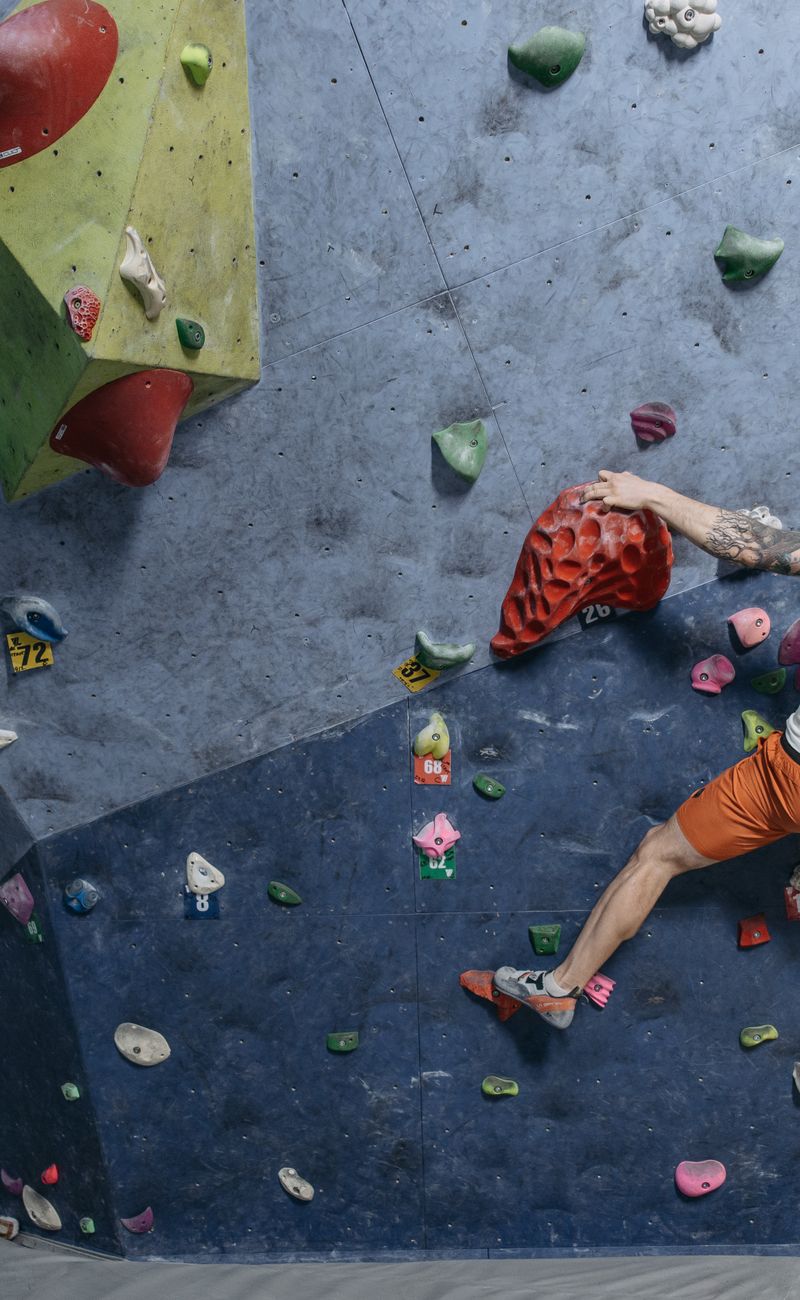
You are likely stuck at a certain grade because you treat every hold like a ledge. In the early days of gym climbing, a hold was something you gripped with your fingers and pulled against. Modern gym setting has evolved into a game of friction, center of gravity, and surface area. If you are still trying to crimp your way through a V5 that is covered in massive fiberglass volumes, you are fighting the route instead of using it. Indoor climbing technique in 2026 is less about how hard you can pull and more about where you place your weight. When you encounter a volume, your primary goal is not to find a grip but to find a point of contact that allows you to shift your hips toward the wall. Most climbers fail on these problems because they stay too far back from the wall, creating a lever arm that pulls them off the hold. You need to understand that the volume is not the hold, the volume is the terrain. You are not grabbing a piece of plastic, you are interacting with a geometric shape that dictates where your center of mass must be to maintain equilibrium.
The most common mistake is the instinctive urge to pull. When you feel yourself slipping off a large, sloper volume, your brain tells you to pull harder. This is a mistake. Pulling harder often pushes your hips away from the wall, which reduces the amount of friction your skin has with the surface. Instead, you must focus on pressing. The secret to indoor climbing technique is the transition from pulling to pressing. You want to drive your weight through your feet and press your chest into the volume. This creates a compressive force that locks you into the shape. If you are slipping, it is usually because your hips are too low or too far out. By shifting your weight laterally and pressing your shoulder into the volume, you change the angle of friction. This is the difference between a climber who struggles through a problem and one who makes it look effortless. You have to stop thinking about the hold as a handle and start thinking about it as a platform for your body.
Many climbers ignore the role of the palms in volume climbing. You cannot climb these shapes with just your fingertips. You need to engage the entire surface area of your hand. This means slapping the volume and using the friction of your palm to create stability. When you use only your fingers on a large volume, you create a pivot point that is too small to support your weight. By engaging the palm and wrist, you distribute the pressure and create a more stable connection. This requires a mental shift. You have to be comfortable with a less secure feeling in your fingers because the stability comes from your body position, not the grip. If you are waiting for a positive edge to feel safe, you will never master modern indoor climbing technique. You have to trust the friction and the physics of your center of gravity.
Optimizing Center of Gravity for Volume Movement
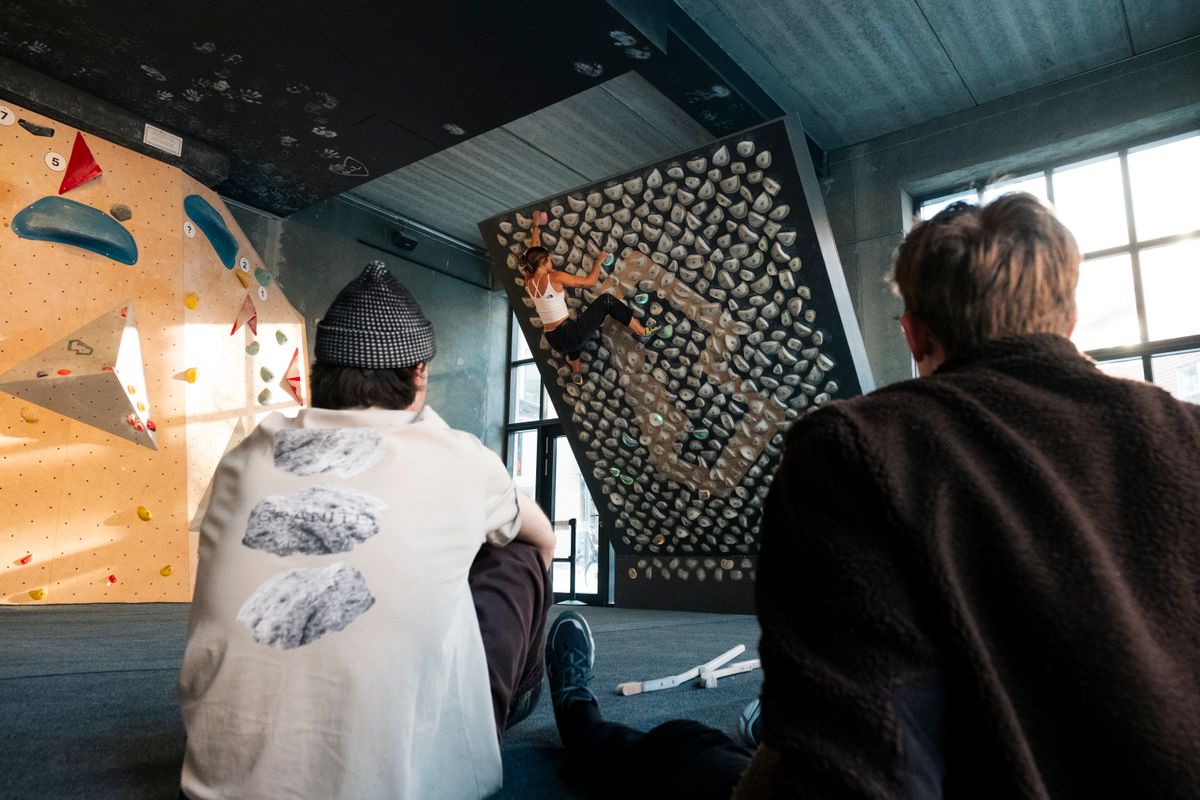
Your hips are the engine of your movement. If your hips are not in the right place, no amount of finger strength will save you. In volume climbing, the goal is to keep your center of gravity as close to the wall as possible. This often means twisting your body into awkward positions that feel counterintuitive. You might find yourself with one hip pressed firmly against a volume while your other leg is stretched out in a wide flare. This is not an accident. By bringing your hip closer to the wall, you reduce the outward pull of gravity. This allows you to put more weight on your feet, which in turn reduces the load on your arms. When you see a pro climber move across a volume, they are not just moving their hands, they are dancing with their hips. They are constantly adjusting their center of mass to find the sweet spot where the friction is highest.
One of the most effective ways to improve your indoor climbing technique is to practice the art of the hip twist. Instead of facing the wall square, try to turn your side to the wall. This allows you to bring your hip closer to the volume and extends your reach without needing to lunge. When you turn your hip in, you effectively shorten the distance between your center of mass and the hold. This is critical for maintaining balance on sloping surfaces. If you stay square to the wall, your weight is pushed outward, and you will likely peel off the volume. The hip twist is a fundamental tool for anyone looking to break through a plateau. It requires a level of flexibility in the hips and core that many climbers overlook. If you cannot comfortably turn your hip into the wall, you are limiting your ability to use the most efficient body positions available.
Another critical aspect of center of gravity is the relationship between your feet and your hands. In traditional climbing, you often think of your feet as just providing upward support. In volume climbing, your feet are used to push your body in specific directions. For example, if you are holding a volume on your right side, pushing hard with your left foot can help drive your body closer to the wall. This is called opposing force. By creating a tension line between your foot and your hand, you lock yourself into the volume. If you just stand on the wall without active foot pressure, you are relying entirely on your upper body to hold you in place. This is an inefficient use of energy and a fast way to pump out. You must actively engage your core to maintain this tension. A loose core leads to a loose body, and a loose body falls off volumes.
Advanced Footwork for Sloping Surfaces
Your feet are the most important part of your indoor climbing technique, yet they are the most neglected. On a volume, the placement of your foot is often more important than the grip of your hand. You cannot simply place your foot on the volume and hope for the best. You must consider the angle of the surface. Most volumes have a specific slope that is designed to be used in a certain way. If you place your foot too high, you might push yourself away from the wall. If you place it too low, you might not have enough leverage to move upward. The key is to find the point of maximum friction. This often means placing your toe on the very edge of the volume or smearing your foot across the flat surface to create as much contact as possible.
Smearing is an art form in indoor climbing. When there is no distinct edge, you must rely on the friction between your shoe rubber and the volume. To smear effectively, you need to apply direct pressure. This means your weight must be centered over your foot. If your foot is angled too far forward or backward, you lose the surface area contact and your foot will slide. Many climbers make the mistake of trying to stand on their toes when smearing. Instead, you should try to engage more of the sole of the shoe. This increases the friction and gives you a more stable base. This is where the quality of your shoe rubber becomes critical. If your shoes are worn down or the rubber is too hard, you will struggle to find grip on the smooth surfaces of modern volumes.
Precision footwork is also about the transition between movements. When you move your hand, your foot must move in synchronization to maintain your balance. If you move your hand first and then your foot, you create a moment of instability where your center of gravity shifts. This is often when climbers fall off. By moving your foot first or simultaneously, you maintain a constant state of equilibrium. This requires a high level of coordination and awareness. You should be consciously thinking about where your foot is at all times. Do not just blindly step on a volume. Look at the angle, feel the texture with your toe, and then commit your weight to it. This deliberate approach to footwork is what separates the intermediate climbers from the advanced ones.
Developing the Mental Game for Dynamic Volume Movement
Volume climbing is often dynamic. It requires you to move quickly and trust that your body position will hold you. This is a huge mental hurdle for many climbers. The fear of slipping off a large volume is different from the fear of falling off a small crimp. On a crimp, you know if you have the hold or you do not. On a volume, the feeling of security is a gradient. You might feel like you are slipping for a second, but if you maintain your body position, you will stay on. The mental challenge is learning to trust that feeling of instability. You have to embrace the slide. If you panic and freeze, you will lose your momentum and fall. If you stay calm and continue to adjust your hips, you can often recover from a precarious position.
To improve your indoor climbing technique, you must practice moving with intent. This means not just trying to reach the top, but focusing on the quality of each movement. When you are projecting a hard volume problem, spend time experimenting with different body positions. Try moving your hip an inch to the left. Try pressing your chest harder into the volume. Try shifting your weight more onto your toes. This experimental approach allows you to find the most efficient beta. Most climbers just try the same movement over and over, hoping that they will eventually be strong enough to do it. Strength is not the answer here. Technique is. By systematically testing different positions, you can find the path of least resistance.
Finally, you must overcome the tendency to overgrip. Many climbers squeeze the volumes as hard as they can, which leads to rapid forearm fatigue. This is a waste of energy. Because volume climbing relies on friction and balance, you only need enough grip to maintain your position. Once you have established your balance and your center of gravity is correct, you can actually relax your grip. This allows you to breathe and recover while still on the wall. Learning to relax in the middle of a hard sequence is a superpower. It allows you to maintain focus and prevents the panic that leads to mistakes. If you are gripping for dear life, you are not climbing, you are hanging on. True indoor climbing technique is about the balance between tension and relaxation.
Stop treating the gym like a strength contest. If you are still trying to muscle through every problem, you are ignoring the most important part of the sport. The modern gym is a laboratory for movement. Every volume is a puzzle that requires a specific body position to solve. Start focusing on your hips, trust your rubber, and stop pulling when you should be pressing. Your grade will increase not when you get stronger, but when you stop fighting the wall and start using it. The hard truth is that your finger strength is likely already enough for the grade you want to climb. What you lack is the technical efficiency to apply that strength. Shift your focus from the fingertips to the hips and you will finally stop plateauing.