Indoor Bouldering Technique: How to Break Through Your Grade Plateau (2026)
Master the specific movements and body positioning required to stop plateauing in the gym and start sending harder indoor bouldering problems.
The Fundamental Flaw in Your Indoor Bouldering Technique
Most climbers hit a wall at V4 or V5 not because their fingers are weak but because their indoor bouldering technique is lazy. You have likely spent the last year simply pulling harder on holds to compensate for poor positioning. This is the trap of the modern gym. Because holds are often oversized and textured for high volume, you can muscle through problems that would be impossible on real rock. You are not getting stronger; you are just getting better at using your biceps to mask a lack of hip mobility. When you hit a plateau, the instinct is to spend more time on the moon board or the campus board. This is a mistake. If you cannot efficiently move your center of gravity over your base of support, more finger strength will only allow you to fail at a higher grade. You need to stop thinking about where your hands go and start thinking about where your hips are in relation to the wall.
The core of the issue is a lack of intentionality. You climb the problem, you fall off, and you immediately jump back on to try the same move with more effort. This is not projecting; it is guessing. To improve your indoor bouldering technique, you must treat every move as a physics problem. Every time you feel a hold is too small or a reach is too far, it is usually a sign that your body is too far from the wall. When your chest is away from the wall, your center of mass pulls you outward, increasing the load on your fingers and decreasing the friction on your shoes. The goal is to keep your hips as close to the wall as possible, which minimizes the outward pull and allows you to utilize the skeletal structure of your body rather than relying solely on muscle contraction.
Many climbers also struggle with the concept of the deadpoint. You see people lunging for holds with a chaotic, uncontrolled motion. This is inefficient. A true deadpoint is a controlled movement where you reach the hold at the exact apex of your upward momentum, the split second where you are momentarily weightless. If you are gripping the hold while you are still moving upward or already falling downward, you are fighting physics. Mastering the deadpoint requires a level of precision in your timing that most gym climbers ignore. You must learn to initiate the move from your legs and time the reach so that your hand meets the hold at the moment of zero velocity. This reduces the impact on your tendons and allows you to stick holds that feel impossible when you simply try to pull through them.
Optimizing Hip Positioning and Center of Gravity
If you want to see immediate gains in your indoor bouldering technique, you must obsess over your hips. The most common mistake is keeping the hips square to the wall. While this works for vertical terrain, it is a liability on overhanging walls. To stay close to the wall on a steep section, you need to turn your hip into the wall. This is the basis of the drop knee and the side pull. By rotating your hip, you shift your center of gravity closer to the wall and change the angle of pull on the hold. This often transforms a difficult hold into a comfortable one because you are now pulling in a direction that aligns with your skeletal structure rather than fighting against it.
Consider the difference between a standard front on position and a twisted position. When you are front on, your weight is distributed evenly, but you are pushed away from the wall by the very act of gripping. When you rotate your hip and engage a drop knee, you create a more stable tripod between your two feet and your hand. This allows you to reach further and hold the position longer without burning out your forearms. This is not just a trick for high grade problems; it is a fundamental requirement for efficient movement. If you are not actively thinking about hip rotation on every single move, you are leaving strength on the table. You should be experimenting with different hip angles on every hold, searching for the one that makes the move feel effortless.
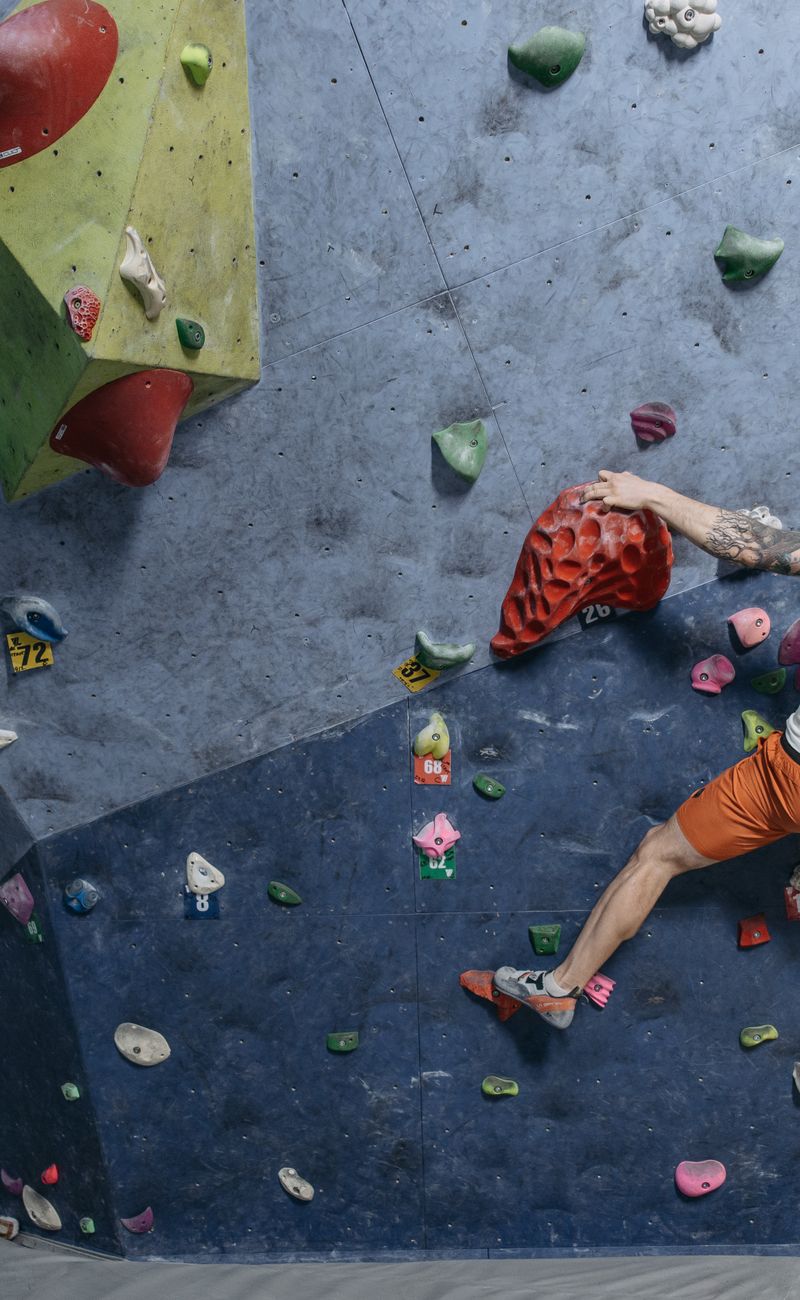
Another critical element of hip management is the use of the flag. Flagging is not just for slabs. An outside flag allows you to shift your weight to the opposite side of your body, preventing the dreaded barn door effect where your body swings away from the wall. When you reach for a hold and feel yourself rotating outward, it is because your center of mass is not supported. By extending your non weight bearing leg out to the side, you create a counterweight that stabilizes your torso. This allows you to maintain tension and keep your chest pressed toward the wall. Many climbers avoid flagging because it feels unnatural, but it is the only way to maintain balance on asymmetric terrain. If you are not flagging, you are fighting your own momentum.
Advanced Footwork and the Science of Friction
Your feet are not just there to keep you on the wall; they are the primary engine of your movement. Most climbers treat footwork as an afterthought, slapping their shoes onto any available hold without considering the precision of the placement. In the realm of indoor bouldering technique, the precision of your foot placement determines whether a move is a struggle or a cruise. You should be placing your toes exactly where they need to be to support the specific direction of pull. If you are pulling a hold toward you, your feet should be positioned to push you away from the wall and upward. If your feet are too low, you are putting all the stress on your arms. If they are too high, you lose the ability to generate upward power.
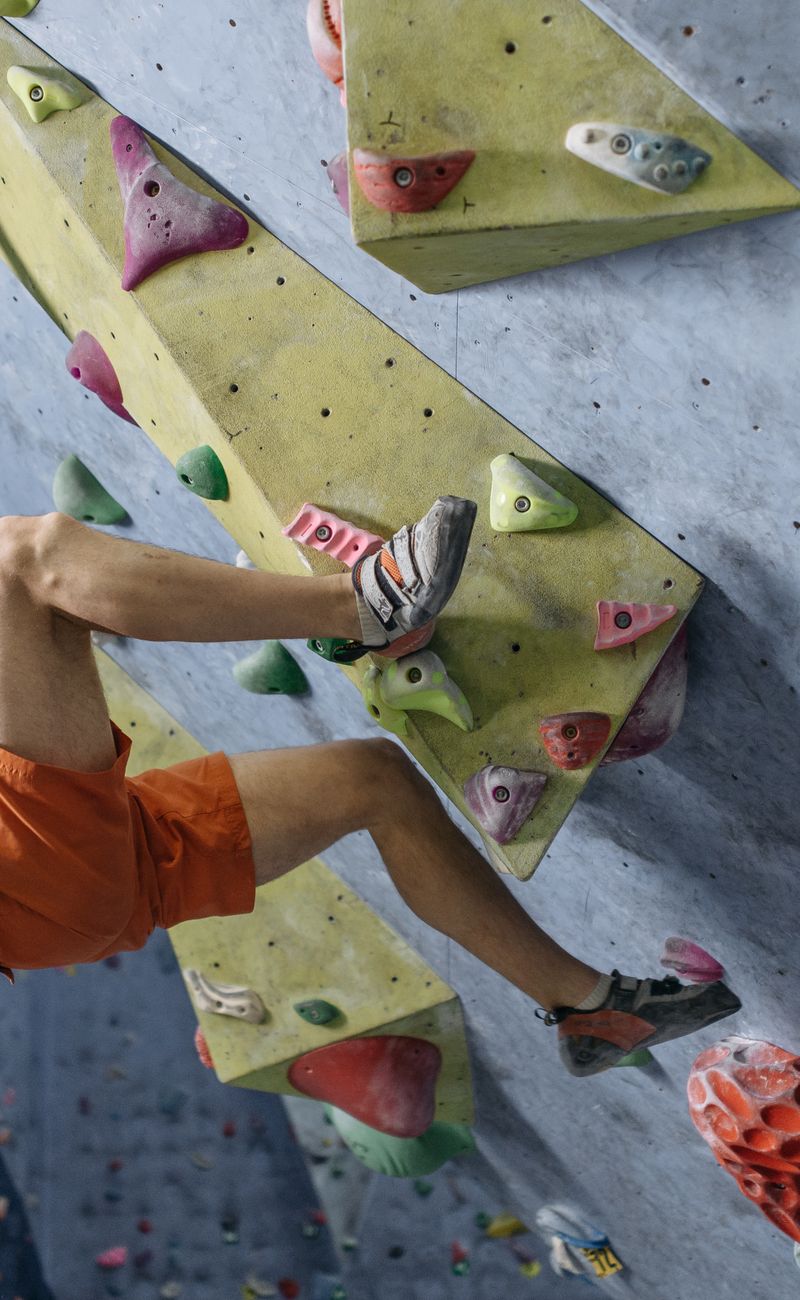
The use of the toe hook and heel hook is where many intermediate climbers plateau. These are not just for steep overhangs; they are tools for changing the vector of force on your body. A heel hook is not just about sticking your heel on a hold; it is about engaging the hamstring to pull your hips closer to the wall. If you are just resting your heel on a hold without actively pulling, you are not utilizing the move. Similarly, a toe hook is used to prevent rotation and provide a point of tension. When you engage a toe hook, you are essentially creating a third point of contact that stops your body from swinging. This allows you to commit your weight to a hold that would otherwise be too unstable to use.
Smearing is another area where gym climbers often fail. Because gym holds are so positive, people forget how to use the wall itself. Smearing is the act of using the friction of the rubber against the flat surface of the wall to create stability. This requires a specific amount of pressure to be applied directly into the wall. If your foot is too loose, you slip. If you are too tense, you lose the surface area of the rubber. Learning to trust the friction of your shoes allows you to move through sections where there are no clear footholds. This is a mental game as much as a physical one. You have to trust that the rubber will hold, provided your body position is correct. If you are slipping, it is rarely the shoes; it is almost always because your weight is not shifted correctly over the smear.
Breaking the Mental Barrier of Projecting
The final piece of the puzzle in your indoor bouldering technique is the mental approach to projecting. Most people approach a hard problem by trying it until they fail, then trying it again the same way. This is a recipe for a plateau. True projecting is an iterative process of elimination. You must analyze why you fell. Was it a lack of strength, or was it a failure in positioning? If you felt the hold was slippery, the problem is likely your center of gravity, not the hold. If you felt you could not reach the hold, the problem is likely your foot placement or your timing with the deadpoint. You must stop blaming your fingers and start questioning your geometry.
One of the most effective ways to break a plateau is to climb problems that feel awkward rather than just hard. If you only climb problems that suit your style, you are not improving your technique; you are just refining your existing strengths. You need to seek out the problems that force you to move in ways that feel uncomfortable. If you hate slabs, spend a month climbing only slabs. If you struggle with dynamic moves, force yourself to find the most efficient way to jump. By expanding your movement vocabulary, you become a more versatile climber. This versatility is what allows you to solve complex problems that other people find impossible. The ability to adapt your body to the hold is the hallmark of an expert climber.
Finally, you must understand the role of tension. Full body tension is the ability to keep every muscle from your fingertips to your toes engaged in a single, cohesive unit. When you lose tension, you lose power. This is often seen when a climber reaches for a hold and their feet pop off the wall. This is not a footwork error; it is a tension error. You must learn to pull with your core and push with your legs simultaneously. This creates a rigid bridge between your points of contact, allowing you to transfer force efficiently. Without this tension, you are just a collection of loose limbs hanging off a wall. When you master the art of tension, you will find that holds you previously thought were too small suddenly become holdable because your body is no longer fighting itself.
Stop looking for the magic training program and start looking at your hips. The difference between a V5 climber and a V8 climber is rarely just raw strength; it is the ability to manipulate their body in space. Your indoor bouldering technique is the only thing standing between you and the next grade. Stop guessing and start analyzing. Every move is a lesson in physics. If you treat the gym like a laboratory instead of a playground, you will break your plateau. The hard truth is that you are probably stronger than the grade you are climbing. You are just too inefficient to send it. Fix your positioning, master your timing, and stop letting your hips drift away from the wall. That is how you actually progress.