Climbing Harness Guide: From Fitting to Inspection
Your harness is the most personal piece of safety gear you own. Here is how to choose the right one, fit it correctly, and know when it is time to retire it.
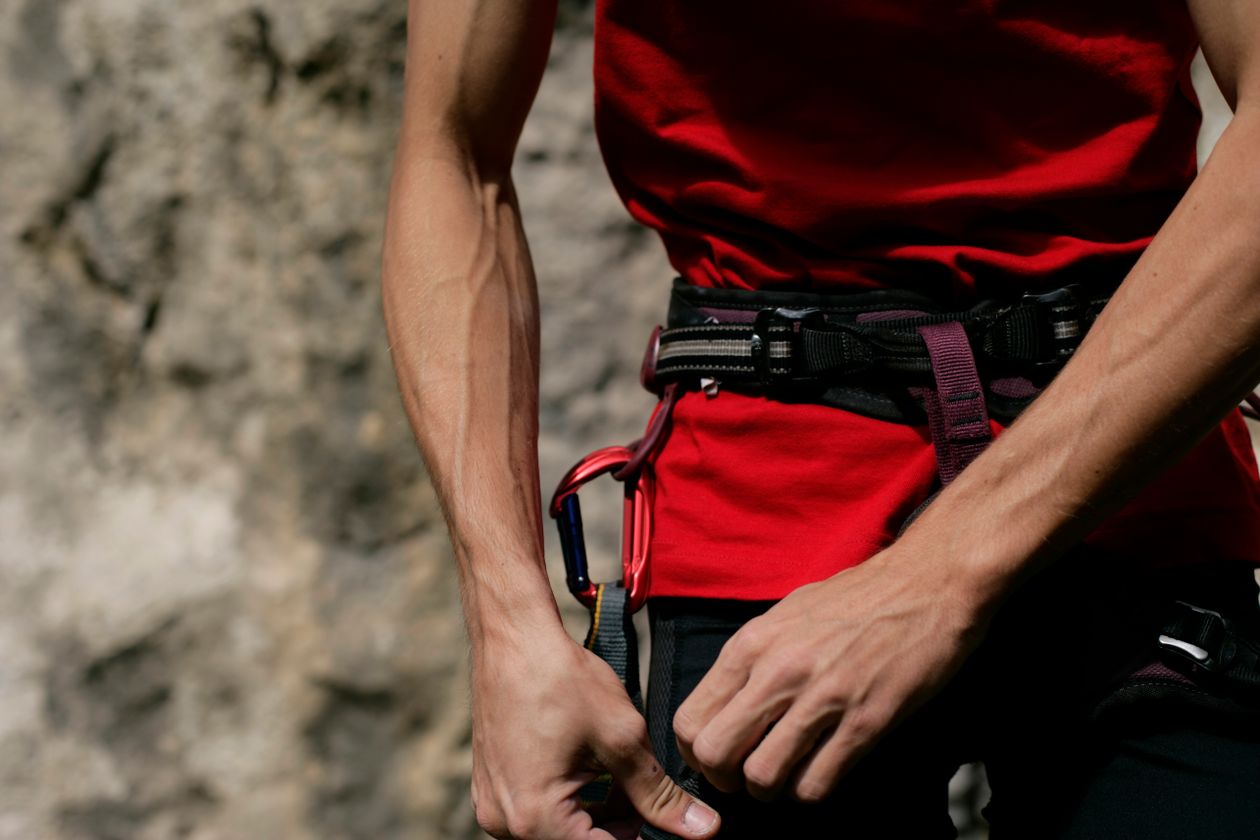
Photo by BOOM Photography via Pexels
Choosing the Right Harness for How You Actually Climb
Most climbers buy a harness based on how it looks or what their local shop has in stock. This is the wrong approach. Your harness is the single piece of gear that connects you to the rope. It needs to fit your body, match your climbing style, and stay comfortable for the duration of the routes you climb. A harness that digs into your hips on pitch three is not just uncomfortable. It is a safety issue, because discomfort makes you rush and rushing on gear is how accidents happen.
Harnesses fall into four categories, and picking the right one is the first step. Sport climbing harnesses are built for movement. They have minimal padding, slim leg loops, and low bulk. They weigh less and pack smaller, which matters when you are hanging at a bolt trying to shake out. The tradeoff is comfort on long hangs. If you primarily sport climb single pitch routes, this is your category.
Trad and multipitch harnesses have more padding, wider leg loops, and more gear loops. When you are carrying a full rack of cams and hanging at belay stations for twenty minutes, the extra padding earns its weight. These harnesses also have larger, stiffer gear loops that keep your rack organized instead of tangled. If you climb trad, big walls, or alpine routes, this is the type you need.
Gym and competition harnesses are the lightest of all. Minimal padding, fixed leg loops, and a single gear loop for quickdraws. These are designed for fast movement on steep terrain where you never hang for more than a few seconds. They are miserable on anything longer than a single gym pitch, so do not buy one for outdoor climbing no matter how sleek it looks.
Adjustable leg loops are worth considering if your leg circumference does not match standard sizing, or if you climb in varying layers throughout the year. The extra buckles add weight and bulk, but they let you dial the fit precisely. Fixed leg loops are lighter and cleaner, but they only work if the size matches your legs. Try both before deciding.
Fitting Your Harness: The Details That Matter
A harness that does not fit is a harness that fails. The waist belt should sit above your hip bones, not on them. If the belt rides down onto your hips, it can invert in a fall. This is not theoretical. It has happened to climbers who bought a size too large or wore their harness too low. The waist belt should be snug at your natural waist, with about two inches of tail extending past the buckle when fully doubled back.
Leg loops should be tight enough that you cannot pull them down past your thighs, but loose enough to slide a hand between the loop and your leg. Too tight and they restrict blood flow during hangs. Too loose and they shift during falls, concentrating force on your waist belt. If your harness has adjustable leg loops, take the time to set them correctly with your climbing layers on, not your street clothes.
Try the harness on in a hanging position if at all possible. Many climbing shops have a suspension point for exactly this reason. A harness that feels fine standing on the ground can feel completely different when you are hanging in it. Pay attention to where the pressure points are. The ideal harness distributes weight across your waist belt and both leg loops evenly. If you feel all your weight concentrated in one spot, the fit is wrong.
For women, harness sizing is particularly important because the waist to hip ratio differs from most men's harness designs. Several manufacturers make women's specific harnesses with a different rise and wider waist belt angle. These are not a marketing gimmick. They address a real anatomical difference that affects both comfort and safety. If you have struggled to find a harness that fits at the waist and the legs simultaneously, a women's specific model may solve the problem.
Check the gear loops before you commit to a harness. Gear loops seem like an afterthought until you are on a route with a full rack and nothing stays where you put it. The number, size, and position of gear loops should match your climbing. Sport climbers need one or two loops for quickdraws. Trad climbers need four loops that can hold a full rack without spilling. Alpine climbers need loops that work with a backpack waist belt. Think through your typical setup before you buy.
Inspection, Care, and When to Retire
Your harness has a lifespan, and ignoring it is not a budget strategy. It is a risk strategy. Most manufacturers recommend retiring a harness after three to five years of regular use, regardless of visible wear. This is conservative, and many harnesses last longer, but you need to inspect yours regularly and honestly.
Start with the tie in points. The loops where you tie in and where you belay from experience the highest forces and the most wear. Look for fuzzing, flattening, or discoloration on the webbing. Run your fingers along the edges. If you feel soft spots where the webbing has compressed or thinned, the harness needs to be retired. The tie in points should feel firm and consistent, not spongy or uneven.
Check the stitching next. Every critical seam on a harness has a pattern of bar tacks or zigzag stitching. If any of these stitches are broken, pulled, or significantly worn, the structural integrity is compromised. This is not something you can fix with a needle and thread. A broken stitch at a stress point means the harness is done.
Buckles are the next inspection point. Most modern harnesses use auto locking buckles, which are safer than the older double back style, but they still need to be checked. The buckle should close and lock smoothly. If the gate sticks, the spring is weak, or the buckle shows visible corrosion or deformation, replace it. A buckle that fails to lock under load is catastrophic. Do not risk it.
Leg loop elastic is the part that degrades fastest. Over time, the elastic loses tension and the leg loops start to sag. When the elastic can no longer hold the leg loops in position, the harness will not distribute force correctly in a fall. If the elastic is stretched out, cracked, or has lost its snap, it is time to replace the harness or the leg loops if they are removable.
Storage matters more than most climbers think. UV exposure degrades nylon. Chemical exposure from car batteries, acid, and even some insect repellents can compromise the webbing. Keep your harness in a dry, dark place when you are not climbing. Do not leave it in a hot car. Do not store it in a garage next to chemicals. Do not use it as a tie down strap for furniture. Treat it like what it is: the piece of gear that keeps you alive when you fall.
When in doubt, retire it. A new harness costs eighty to two hundred dollars. A hospital visit costs more. The peace of mind alone is worth the price. If something looks wrong, feels wrong, or makes you hesitate before committing to a move, the harness has already failed at its job, which is giving you the confidence to climb at your limit.


