Campus Boarding: The High-Risk Protocol for Explosive Power
If you are campus boarding before you can hang 20 seconds on a 20mm edge, you are skipping steps. Master the protocol for explosive power without destroying your tendons.
The Danger of the Campus Board
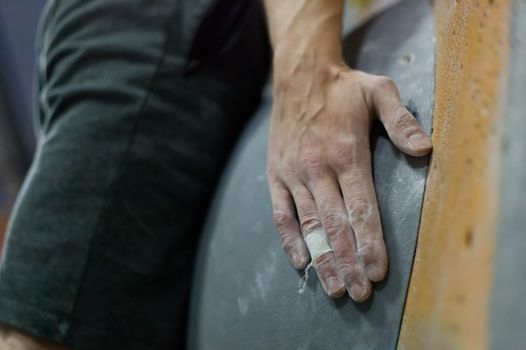
The campus board is the most efficient way to build explosive upper body power, and the fastest way to tear a pulley if you are arrogant. Most gym climbers see a pro using the board and assume that is the missing piece of their training. They jump on the rungs, try to blast through three bars, and wonder why their fingers feel like they are being shredded from the inside. The problem is not the board; it is the lack of biological preparation.
Power is the ability to exert maximum force in minimum time. In climbing, this manifests as the ability to stick a dynamic move or snap through a small hold. However, tendons do not adapt as fast as muscles. Your muscles can get stronger in weeks; your collagen structures take months and years to densify. If you apply max explosive force to a tendon that has not been conditioned through structured isometric loading, you are essentially asking a rubber band to act like a steel cable. It will snap.
Before you touch the campus board, you must be dialed in on the basics. If you cannot perform a clean 10 second hang on a 20mm edge with perfect form, you have no business attempting explosive movements. You are not training power; you are training a future injury. The board is a precision tool, not a playground.
The Entry Protocol: Building the Foundation
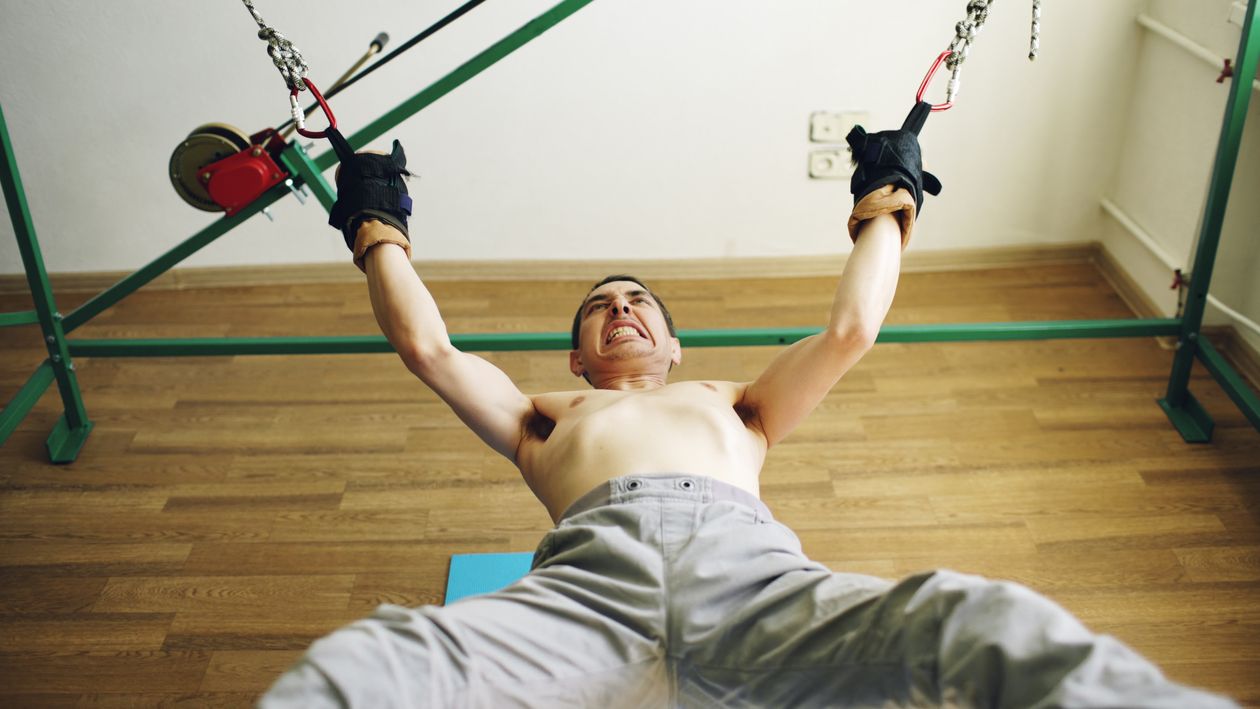
The path to explosive power begins with stability. The first phase of your training should be focused on maximum isometric strength. This means long, controlled hangs on a hangboard. You need to build a baseline of tendon stiffness that can absorb the shock of a dynamic movement. If your fingers are "soft," the shock of hitting a rung will cause the tendon to stretch beyond its elastic limit, leading to micro-tears or full ruptures.
The protocol for foundation building is simple: weighted hangs. Once you can hang your body weight for 10 to 15 seconds on a 20mm edge, start adding weight. The goal is to reach a point where you can hang 50% to 100% of your body weight as additional load. This increases the recruitment of high-threshold motor units and prepares the connective tissue for the violence of the campus board.
Once the foundation is set, move to "slow power" movements. This involves controlled, explosive pulls on a climbing wall or a pull-up bar without the extreme edge requirements of the campus board. This trains the nervous system to fire rapidly without putting the fingers at extreme risk. Only when the muscles and tendons are synchronized should you move to the rungs.
The Campus Protocol: Controlled Explosiveness
When you finally move to the campus board, the goal is not to see how high you can go. The goal is maximum power output per movement. The most common mistake is using momentum and "swinging" to get higher. This is just gymnastics, not climbing power. A true power move is a dead-stop explosive pull.
The protocol for power development is the "Small-to-Big" sequence. Start on the larger rungs to dial in the movement pattern. Focus on the "snap": the moment your center of mass moves upward and your hands lock onto the next rung. There should be no hesitation. If you feel the rung "slip" or if you have to adjust your grip upon contact, the movement was not explosive enough.
For advanced climbers, move to the "Big-to-Small" sequence. This involves pulling from a larger rung to a much smaller one. This mimics real-world climbing where you must transition from a stable hold to a precarious one. The key is the "lock-off." You must be able to stabilize your body instantly upon contact to prevent the momentum from ripping you off the wall.
Volume is the enemy of power. If you are doing ten sets of campus moves, you are training endurance, not power. A power session should be short and high-intensity. Three to five sets of three to five moves is the ceiling. Between sets, you need full recovery. If you are breathing hard, you are not recovered. Your nervous system needs 3 to 5 minutes of complete rest to replenish ATP and reset the neural drive. If you rush the rest, you are just doing a glorified workout, not a power session.
Recovery and the Long Game
The campus board puts a massive load on the central nervous system (CNS). Even if your fingers feel fine, your brain may be fatigued. Overtraining the campus board leads to a "plateau of power" where your moves actually become slower because your CNS is fried. This is the "over-training cope": thinking that more volume equals more power.
The based approach is to use the campus board as a surgical tool. Use it for 4 to 6 weeks during a dedicated power block, then remove it from your routine entirely for several weeks. This allows the tendons to remodel and the CNS to recover. During the off-cycle, return to weighted hangs and technique work. This undulating periodization is how you avoid the injury cycle that plagues so many gym climbers.
Listen to the "twinge." In climbing, there is a difference between the burn of a muscle and the sharp, localized tingle of a tendon. If you feel a twinge in your A2 pulley, the session is over. There is no "pushing through" a tendon injury. Pushing through a muscle burn is growth; pushing through a tendon twinge is a surgery appointment. Stop immediately, ice the area, and return to the foundation protocol.
The campus board is not a shortcut to a higher grade. It is a way to unlock the physical capacity to execute moves that were previously impossible. But that capacity is useless if you are injured. Train for the long game. Build the base, respect the rungs, and only then attempt to fly.