Outdoor Climbing Transition: How to Move from Gym to Crag in 2026
Master the transition from indoor climbing to real rock with a technical guide on safety, gear, and reading natural terrain.
The Fundamental Gap in Outdoor Climbing Transition
Your gym membership is a lie. It tells you that a V5 is a V5, that a hold is a hold, and that the wall is a stable environment where the only variable is your own strength. When you begin your outdoor climbing transition, you realize that the gym was merely a laboratory. Real rock is chaotic. It is unpredictable. It does not have colorful plastic markers to tell you where your hands go. The first thing you must accept is that your indoor grade means nothing until you have spent a season on real stone. You will feel weak not because you lost muscle, but because you do not know how to interact with a surface that was not designed by a route setter to be ergonomic. Indoor climbing is about solving a puzzle that someone else created. Outdoor climbing is about solving a puzzle that nature created, and nature does not care about your comfort.
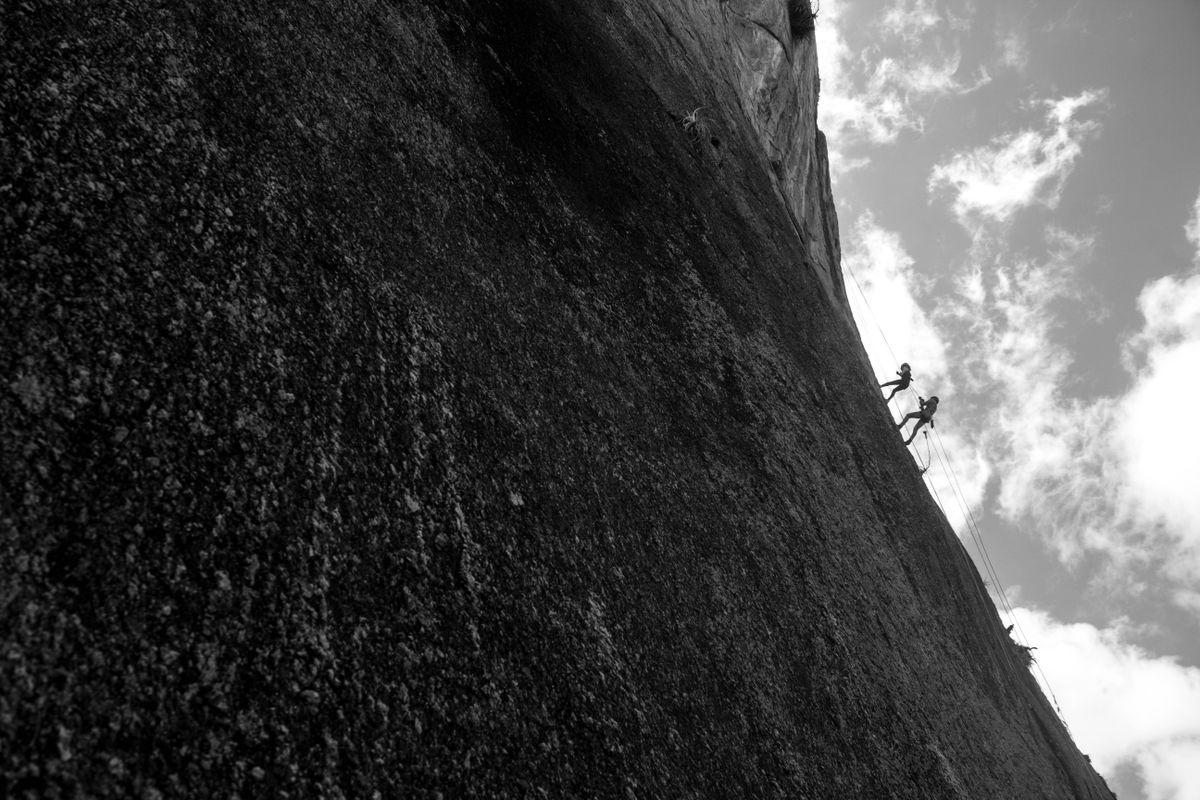
The biggest shock for most climbers is the lack of obvious holds. In the gym, you look for the bright orange volume or the deep pocket. Outdoors, the hold might be a microscopic ripple in the granite or a sharp edge that feels like a razor blade. You have to learn to see the rock differently. You are no longer looking for a hold so much as you are looking for a feature. A feature could be a slight bulge that allows for a palm press or a thin crack that requires a level of finger precision you never used on a plastic hold. This shift in perception is the core of the outdoor climbing transition. If you approach a real cliff with a gym mindset, you will spend your entire day fighting the rock instead of flowing with it. You have to stop looking for the obvious and start looking for the possible.
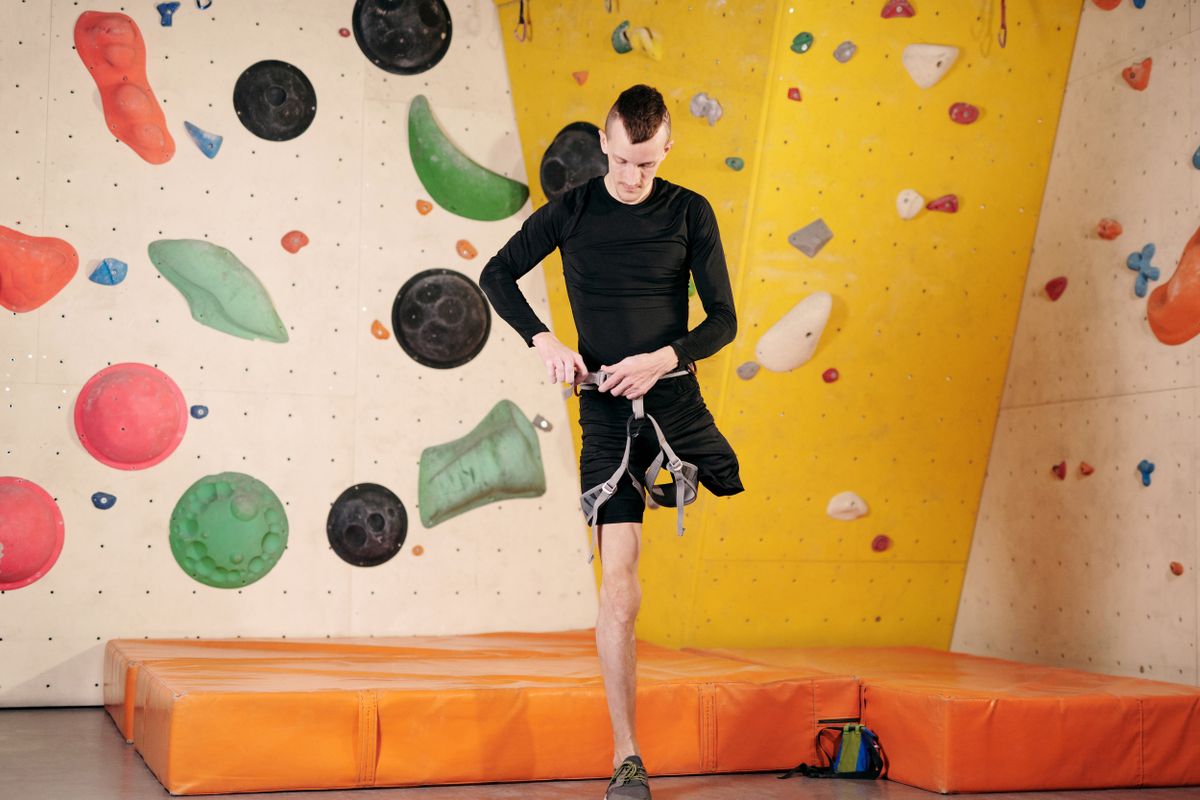
Safety in the gym is passive. You have thick mats and a staff member who ensures the bolts are tightened. Outdoors, safety is active. You are responsible for every piece of gear, every knot, and every decision regarding your fall zone. The transition requires a mental shift from trusting the system to trusting your own competence. You cannot assume a bolt is safe just because it is there. You cannot assume a boulder landing is flat just because it looks flat from the top. The stakes are higher, and the margin for error is thinner. This is why the transition is not just about physical strength but about risk management and situational awareness. You are moving from a controlled environment to an uncontrolled one, and that requires a level of discipline that the gym simply does not demand.
Mastering the Technicalities of Real Rock
The first technical hurdle in your outdoor climbing transition is the concept of friction and texture. Gym holds are made of polyurethane or fiberglass, which are designed to be consistent. Real rock varies by the millimeter. You will encounter limestone that cuts your skin, sandstone that breaks under pressure, and granite that demands a precise level of tension. You need to learn how to use your feet on surfaces that offer no clear ledge. Smearing is a fundamental skill that is often neglected in the gym because gym walls have a high coefficient of friction. On real rock, smearing is an art form. You have to trust that the friction between your rubber and the stone is enough to hold your weight even when there is no visible foothold. This requires a level of commitment and weight distribution that you cannot simulate on a plastic wall.
Reading the rock is the most critical skill you will develop during your outdoor climbing transition. In the gym, the beta is often intuitive because the holds are placed to guide you. Outdoors, the beta is hidden. You have to look at the grain of the rock, the way the water has eroded the surface, and the subtle shifts in color to identify where a hold might be. You must learn to read the line from the ground. This means visualizing the movement, anticipating the crux, and identifying potential rests before you even leave the ground. If you wait until you are ten feet up to figure out where your feet go, you will waste precious energy and likely fail the project. Reading the rock is about pattern recognition. Once you understand how different types of rock form, you can predict where the holds will be.
Footwork outdoors is entirely different from footwork indoors. In the gym, you often use your feet as stabilizers. Outdoors, your feet are your primary source of power. You will find yourself using edges that are thinner than a coin and cracks that require you to jam your toe in and twist. The precision required is an order of magnitude higher. If you misplace a foot on a gym wall, you might slip a few inches. If you misplace a foot on a real cliff, you might lose all your tension and fall. You must learn to trust your feet implicitly. This means placing your foot exactly where it needs to be and not moving it until the movement is complete. The outdoor climbing transition is as much about the feet as it is about the hands.
Gear Management and Environmental Adaptation
Your gear list for the gym is a chalk bag and shoes. For the outdoor climbing transition, your gear becomes your lifeline. You need to understand the difference between a quickdraw and a alpine draw. You need to know how to manage rope drag, which is a non factor in the gym but can make a moderate climb feel impossible outdoors. Rope management is a skill that takes years to master. You have to learn how to clip in a way that minimizes friction and how to organize your gear so that you are not fumbling with a carabiner while you are pumped. The efficiency of your gear management directly impacts your energy levels. If you spend two minutes fighting your rope, you are wasting energy that should be used for the crux.
Crash pad placement is another critical component of the outdoor climbing transition. In the gym, the floor is one giant pad. Outdoors, you have a few pieces of foam that you must strategically place to cover the most likely fall zones. This requires an understanding of physics and a bit of foresight. You have to anticipate where you will fall and ensure that the pads are not only covering the ground but are also flush against each other to avoid gaps. A gap between pads is a recipe for a twisted ankle. You must also learn to spot correctly. Spotting is not about catching the climber; it is about guiding them onto the pads and ensuring they do not land on their head. This is a team effort that requires communication and trust.
The environment is a variable that the gym completely ignores. You will deal with wind, rain, heat, and cold. You will deal with bugs, birds, and crumbling rock. The outdoor climbing transition involves learning how to manage these distractions. You cannot let a gust of wind or a sudden drop in temperature break your focus. You have to learn how to dress for the approach and the climb, ensuring you are warm enough to keep your fingers supple but not so hot that you sweat through your shoes. Environmental awareness also extends to the crag itself. You must learn the ethics of leave no trace, how to avoid disturbing wildlife, and how to respect the local community. Being a climber outdoors means being a steward of the land, not just a consumer of the rock.
The Mental Game of Committing to the Send
The mental barrier is often the hardest part of the outdoor climbing transition. Fear of falling is magnified when there is no gym mat beneath you. Even on a bolted sport route, the psychological weight of being on real rock is different. You have to learn to manage your adrenaline and keep your breathing steady. This is where the concept of the comfort zone comes into play. In the gym, you can push your limits with minimal risk. Outdoors, pushing your limits requires a calculated assessment of risk. You must learn to distinguish between the fear of the unknown and the fear of actual danger. The goal is not to eliminate fear, but to manage it so that it does not dictate your movements.
Projecting outdoors is a slower process than projecting indoors. You cannot simply jump on a route ten times in a row. You have to account for approach times, weather windows, and the physical toll of being outside. This requires a different kind of patience. You have to learn to be okay with failure. You will fall more often outdoors than you ever did in the gym. This is because the rock is less forgiving and the movements are less intuitive. The outdoor climbing transition is a lesson in humility. You will find that your V6 strength is useless if you cannot hold a razor edge for three seconds. This humility is what eventually makes you a better climber. It forces you to focus on technique, efficiency, and mental fortitude rather than just raw power.
The final piece of the outdoor climbing transition is the ability to commit. In the gym, you can hesitate because the environment is safe. Outdoors, hesitation is a liability. Once you have checked your gear, read the beta, and committed to the move, you must execute it with total conviction. Hesitation leads to tension, and tension leads to fatigue. You have to trust your training and your intuition. When you are high on a wall and the wind is blowing, the only thing that matters is the next move. The ability to block out everything except the immediate task is what separates a gym climber from an outdoor climber. This mental toughness is the ultimate goal of the transition. You are not just climbing a route; you are mastering your own mind in an environment that does not care if you succeed or fail.