Climbing Overhangs: How to Stop Pumping Out on Steep Rock
Overhangs punish climbers who rely on upper body strength alone. Here is the complete protocol for climbing steep rock efficiently, from body position to footwork to managing the pump.
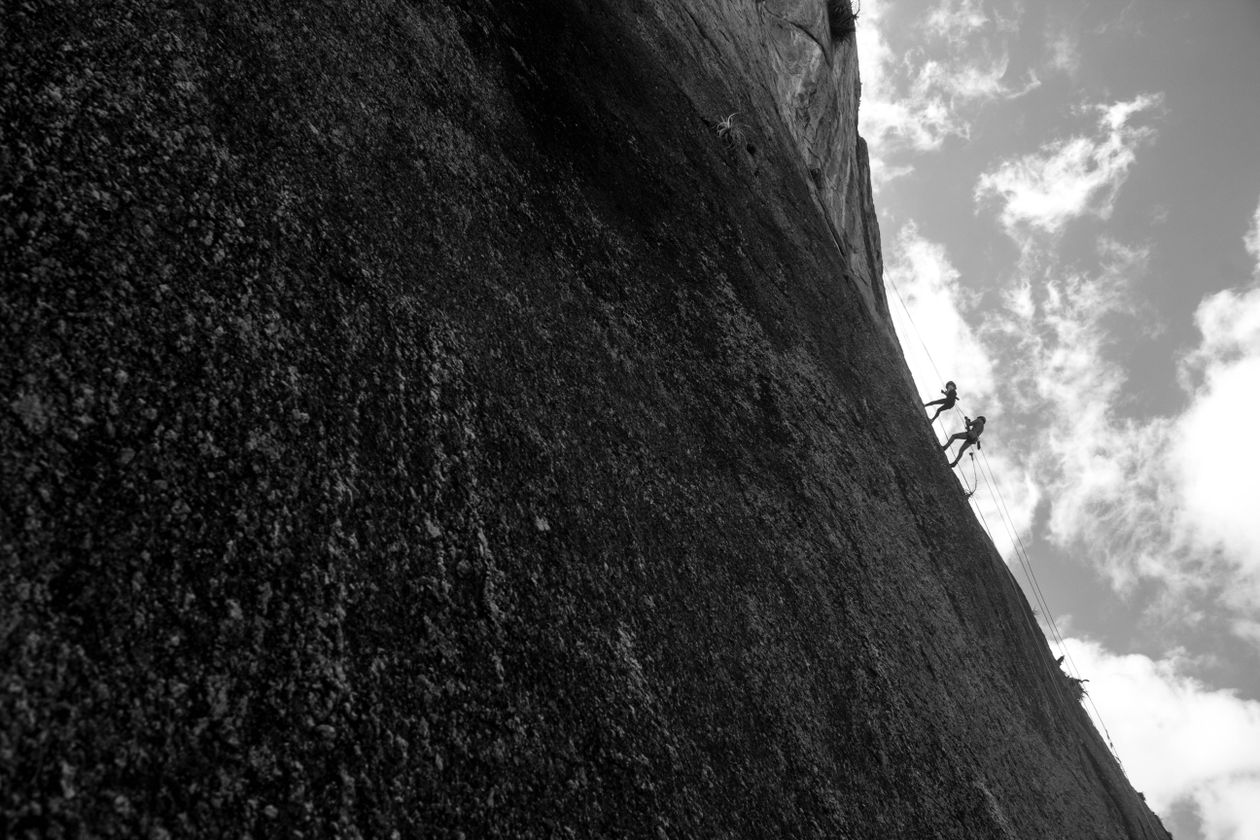
Photo by Felipe Queiroz via Pexels
Why Overhangs Destroy Most Climbers
Every climber remembers their first real overhang. The wall kicks past vertical, your feet cut, and suddenly you are hanging from your arms wondering what happened. The answer is almost always the same: you tried to pull through it. Overhangs do not reward raw pulling power. They reward positioning, timing, and footwork. The climber who floats through the roof is not stronger than you. They are better at keeping their weight on their feet.
The physics are straightforward. On vertical terrain, gravity pulls you into the wall. Your feet stay on because your body weight drives them into the holds. On an overhang, gravity pulls you away from the wall. Your feet cut the moment you lose hip tension or core engagement. This means every move on steep terrain costs more energy than the same move on a vertical face. The climber who manages that energy deficit is the one who sends.
Most climbers hit the steep stuff and immediately try to muscle through. They skip the rest positions, ignore their feet, and flame out halfway up. Then they assume they need to get stronger. What they actually need is to get smarter about how they move on steep terrain. The strength will come. The technique has to be learned first.
Body Position: Drop Your Hips, Keep Your Feet
The single most important concept on overhangs is hip proximity. The closer your hips stay to the wall, the less weight your arms carry. On vertical terrain, your hips naturally sit close because gravity holds you there. On overhangs, your hips want to sag away from the wall. You have to actively pull them in.
This is where most climbers go wrong. They reach for the next hold before establishing their feet, which drops their hips and loads their arms. The correct sequence on steep ground is always: set your feet, engage your core to bring your hips close to the wall, then reach. This feels slow at first. It is not slow. It is efficient. The climber who takes one extra second to set their feet saves ten seconds of arm fatigue later.
Flagging is your best tool on steep terrain. When you cannot get both feet on good holds, extend one leg out to the side or behind you to counterbalance your upper body. A well placed flag can turn a barn door swing into a stable position. Practice flagging on both sides. Most climbers have a dominant flag and a weak one. The weak side will betray you on the routes that matter.
Knee drops and drop knees are another critical tool. By turning one knee down and pressing it against the wall, you create tension through your entire lower body. This tension transfers weight from your arms to your legs. On steep terrain, a good drop knee is worth two grades of pulling power. Find the knee drop positions on every steep route before you commit to the moves.
Footwork on Steep Terrain: Your Feet Are Everything
On an overhang, your feet are not just supporting your weight. They are actively pulling you toward the wall. Every time you press your toes into a foothold on steep terrain, you create tension that unweights your arms. This is why climbing steep routes in stiff shoes is a mistake. You need sensitivity in your toes to feel the holds and press into them precisely.
The most common footwork error on overhangs is the toe drag. Climbers let their feet slide down the wall between holds instead of placing them deliberately. Every toe drag is a micro pump. Over the course of a thirty move overhang, sloppy feet add up to a full grade of fatigue. Place your feet with intention. Look at the hold, watch your toe land, press into it. Then move your hands.
Heel hooks are not just for roofs. On any terrain steeper than vertical, a heel hook can lock your body position and free up a hand. The key is placing the heel high enough to create real tension. A low heel hook on an overhang just adds weight to your arms. Aim for a hook that pulls your hips into the wall. If you feel your core engage when you set the hook, you have found the right position.
Toe hooks serve a similar purpose. When you cannot find a heel placement, a toe hook on a feature or edge can create the same body tension. The trick is committing to the hook. Most climbers half commit, keeping one foot on a smearing hold while barely hooking with the other. A full commitment to the toe hook, with your leg engaged and your hip pulled close, gives you the stability to make the next hand move without cutting feet.
Smearing on overhangs feels counterintuitive because you are pressing into a wall that wants to push you away. But on steep rock, friction is still your friend. A confident smear on a textured surface, combined with strong core engagement, can hold body weight that looks impossible from the ground. The key is pressing hard and trusting the rubber. Hesitant pressure on a smear always slides. Committed pressure sticks.
Managing the Pump: Recovery and Pacing on Steep Routes
Pump management is what separates climbers who fall from climbers who send on steep terrain. The forearm pump on overhangs builds faster than on any other angle because your arms are carrying more weight for longer durations. You cannot outrun the pump on steep ground. You have to manage it.
The first rule of pump management is to find rest positions. On an overhang, rest positions are not obvious. They are rarely the big jug you expect. They are often smaller holds where you can get your feet high, straighten one arm, and shake out. Learning to spot these micro rests is a skill that comes from climbing steep routes repeatedly. Look for positions where you can match feet, flag, or drop a knee. These are your recovery windows.
Shake out with purpose. Alternating arms between shakes is obvious, but most climbers do not shake long enough on each arm before switching. Three to five seconds per arm is the minimum for meaningful recovery on steep terrain. Five to eight seconds is better if the hold allows it. Do not rush the shake because you feel anxious about the next move. The anxiety comes from the pump, and the pump gets worse when you rush.
Pacing on overhangs is different from pacing on vertical or slab terrain. On vertical routes, you can often climb steadily from bottom to top. On overhangs, the strategy is to climb the hard sections fast and recover in the easy sections. This means identifying the crux moves before you leave the ground and planning to arrive at them with fresh arms. If the crux is at the top, climb the bottom as fast as you can without rushing. Save every second of forearm capacity for the moves that matter.
Breathing is not optional on steep terrain. Most climbers hold their breath through hard sequences on overhangs, which spikes their heart rate and accelerates the pump. Force yourself to exhale on every move. The rhythm of exhale, move, exhale, move keeps your heart rate manageable and delays the onset of the full forearm pump that ends attempts.
Finally, accept that steep climbing will always pump you out more than other angles. The goal is not to avoid the pump entirely. The goal is to arrive at the top of the route with just enough left to clip the anchors. If you are completely pumped at the top, you paced it right. If you are completely pumped at the bottom, you need better footwork, not more pull ups.