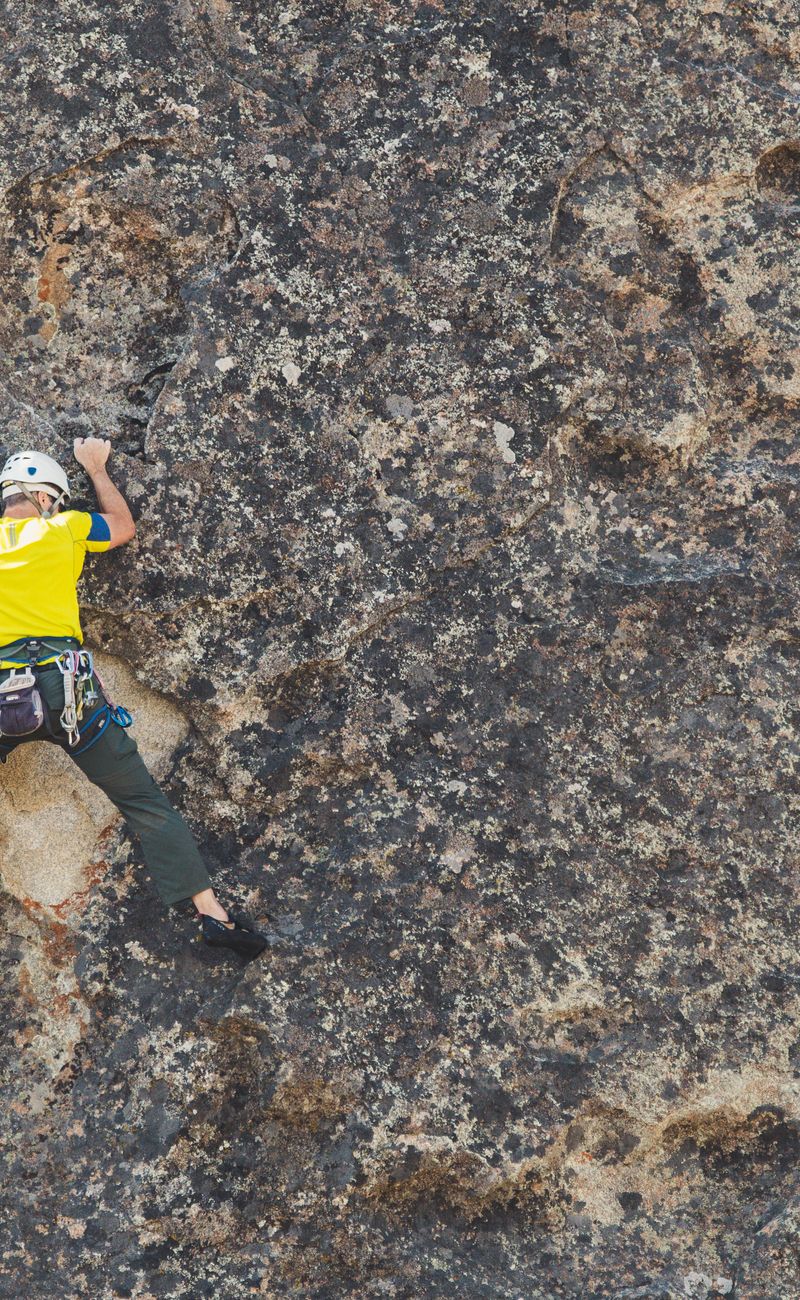
Outdoor Climbing Transitions: How to Move from Gym to Crag in 2026
Learn the exact technical and mental shifts required to translate indoor strength into outdoor sends with this comprehensive outdoor climbing transitions guide.
The Reality of Outdoor Climbing Transitions
Your indoor strength is a lie until it works on real rock. Most climbers spend a year or more in a commercial gym building a massive base of power and endurance on plastic holds that are designed for ergonomics. When you finally step onto a real cliff, you find that a V3 in the gym feels like a V6 on granite. This is not because you are weak. It is because your brain does not know how to interpret the visual data of a natural rock face. The outdoor climbing transitions process is not about getting stronger. It is about recalibrating your eyes and your fingertips to a world where there are no bright colors to tell you where to go and no padded floors to catch your mistakes.
The first thing you must accept is that the gym has conditioned you to trust the hold. In a gym, if a hold is there, it is meant to be used. On real rock, a feature might look like a hold but actually be a polished slab of limestone that offers zero friction. Or, you might overlook a tiny ripple in the rock that is the only way to make the move. This cognitive shift is the hardest part of the transition. You have to stop looking for holds and start looking for textures. You need to stop trusting your eyes and start trusting your touch. If you spend your first few outdoor sessions trying to climb the rock like it is a gym wall, you will exhaust yourself and fail on routes that are well within your physical capability.
The mental game changes entirely when you are fifty feet up a pitch with a rope that has slack. In the gym, the fear is managed by a controlled environment. Outdoors, the fear is raw and unpredictable. You are dealing with wind, temperature shifts, and the knowledge that a fall might not be a clean drop onto a mat. Managing this anxiety is a technical skill. If you let the fear dictate your movement, you will overgrip, burn through your forearm strength in ten moves, and shake out prematurely. You must learn to decouple the fear of falling from the execution of the move. This means practicing your falls in a safe environment before you commit to the crux of a project. If you cannot fall comfortably, you cannot climb at your limit.
Mastering Outdoor Rock Reading and Beta
Reading rock is a language that takes years to master, but you can accelerate the process by changing how you analyze a route. In the gym, beta is often linear. You see a hold, you move to it. Outdoors, beta is about geometry and friction. You need to look for the dip in the rock, the way the grain of the sandstone runs, and how the weight of your body interacts with the angle of the wall. When you are struggling with outdoor climbing transitions, it is usually because you are trying to pull through a move when you should be shifting your center of gravity. Real rock rewards efficiency over raw power. A small shift in your hip position can turn a desperate reach into a balanced glide.
Footwork is where most gym climbers fail. Plastic holds are designed to be stood on. Real rock requires you to trust tiny edges and smears that feel nonexistent. You have to learn the difference between a positive edge and a friction dependent smear. In the gym, you can often get away with sloppy feet because the holds are deep. Outdoors, if your foot is off by two millimeters, you will pop off the wall. You must develop a habit of precise foot placement. This means looking at your foothold until your shoe is exactly where it needs to be, then locking it in before you move your upper body. Do not just slap your foot onto the rock and hope for the best. Precision is the only way to survive on a slab or a steep overhang where the holds are minimal.
Beta sharing is a double edged sword. While it is helpful to have a mentor show you the sequence, relying too heavily on others prevents you from developing your own reading skills. The goal of outdoor climbing transitions is to build your own intuition. Spend time on easier routes attempting to find the sequence yourself before asking for help. Analyze why a certain move felt hard. Was it the hold, or was it your body position. Did you fail because you lacked strength, or because you were fighting the natural angle of the rock. When you start asking these questions, you stop being a gym climber and start becoming a real climber.
Technical Safety and Anchor Management
Safety in the gym is a curated experience. Outdoors, you are the safety officer. This is the most critical part of outdoor climbing transitions because a mistake here has permanent consequences. You must move beyond the basic knowledge of how to tie a knot and start understanding the physics of a fall. This includes knowing how to manage rope drag and how to build a redundant anchor that can withstand the forces of a lead fall. You should be able to tie your figure eight and your clove hitch in your sleep, even while your hands are shaking from the cold or the adrenaline of a hard pitch.
Gear management is an art form. In the gym, you have a belayer and a rope. Outdoors, you have a rack, slings, quickdraws, and a variety of protection devices. Learning where to place a piece of gear is not just about finding a hole in the rock. It is about understanding the direction of pull. If you place a cam or a nut without considering where your body will be during a fall, you risk pulling the gear out of the rock. You need to study the geology of the crag you are visiting. Limestone requires different protection strategies than granite or sandstone. A piece of gear that is bombproof in one rock type might be useless in another.
Belaying outdoors is fundamentally different from belaying in a gym. You are often dealing with uneven terrain, wind that can blow the rope into crevices, and the need to communicate over long distances where shouting is not effective. You must establish clear, concise communication signals with your partner. There is nothing more dangerous than a misunderstanding during a transition at the anchor. You need to be proficient in cleaning a route, which means removing all gear without causing a dangerous fall or dropping equipment on the people below. Efficiency at the anchor is what separates the professionals from the amateurs. If you spend an hour fumbling with your knots at the top of a pitch, you are wasting valuable daylight and energy.
Managing Environmental Factors and Logistics
The environment is a constant variable that the gym completely ignores. Temperature affects everything from the friction of the rock to the elasticity of your skin. On a hot day, your hands will sweat, and the rubber on your shoes will feel soft and greasy. On a cold day, your fingers will numb, and you will lose the ability to feel the small edges. Part of the outdoor climbing transitions process is learning how to manage your gear and body in response to these changes. This means knowing when to use a thin layer of chalk to keep your hands dry and when to avoid over chalking, which can actually reduce friction on certain rock types.
Approach and descent are often overlooked but are essential components of the outdoor experience. A three mile approach through a forest can drain your energy before you even touch the rock. You need to train your body for the hiking aspect of climbing. This includes wearing the right footwear and carrying a pack that does not throw off your balance. The descent is even more critical. Many climbers find themselves in dangerous situations because they did not plan how to get down from the top of a cliff. Whether it is a walk down or a series of rappels, you must have a detailed plan and the gear to execute it safely.
Respect for the land is not an optional add on. It is a requirement. The outdoor climbing community relies on access, and access is granted based on how climbers treat the environment. This means following Leave No Trace principles, packing out all your trash, and staying on designated trails. Using too much chalk can leave unsightly white streaks on the rock that can permanently damage the aesthetic of a crag. Be mindful of your impact. The goal is to leave the rock exactly as you found it. When you treat the wilderness with respect, you ensure that the next generation of climbers will have the same opportunities you have.
The Psychological Shift to Outdoor Performance
The final piece of the outdoor climbing transitions puzzle is the mental shift from a performance mindset to a process mindset. In the gym, success is measured by the grade of the problem you sent. Outdoors, success is measured by the quality of the experience and the safety of the execution. You will have days where you feel strong but the conditions are wrong. You will have days where you are terrified but the movement is easy. Learning to navigate these emotional swings is what allows you to progress. If you tie your self worth to your outdoor grade, you will burn out quickly because the learning curve is much steeper than it is in the gym.
Commitment is a specific skill that must be developed. There is a difference between being brave and being reckless. Commitment is the ability to push through the fear of a fall to execute a move you know you are physically capable of doing. This is often the bottleneck for gym climbers. You might have the strength to climb V7, but if you cannot commit to a dynamic move ten feet above your last piece of gear, you will never send an outdoor V7. You build this commitment through gradual exposure. Start with easy leads where the falls are small and controlled. Slowly increase the risk and the height until your brain accepts the danger as part of the process.
Patience is your most valuable asset. A project outdoors can take weeks or months, whereas a gym project might take a few sessions. You have to deal with rain, crowds, and equipment failure. The outdoor experience is designed to break your ego. It forces you to slow down and appreciate the nuance of the rock. Instead of rushing to the top, learn to enjoy the struggle of the project. The satisfaction of a send on real rock is exponentially higher than a send in the gym because you have overcome not just the physical challenge, but the elements and your own mental barriers. This is the true essence of the outdoor climbing transition.