IndoorMaxx
Indoor Climbing Mental Game: The Complete Fear and Confidence Guide (2026)
Master the psychological side of indoor climbing with proven mental training strategies. Learn to overcome fear, build unshakeable confidence, and send harder problems with expert psychological techniques for 2026.
Climbmaxxing Today · 15
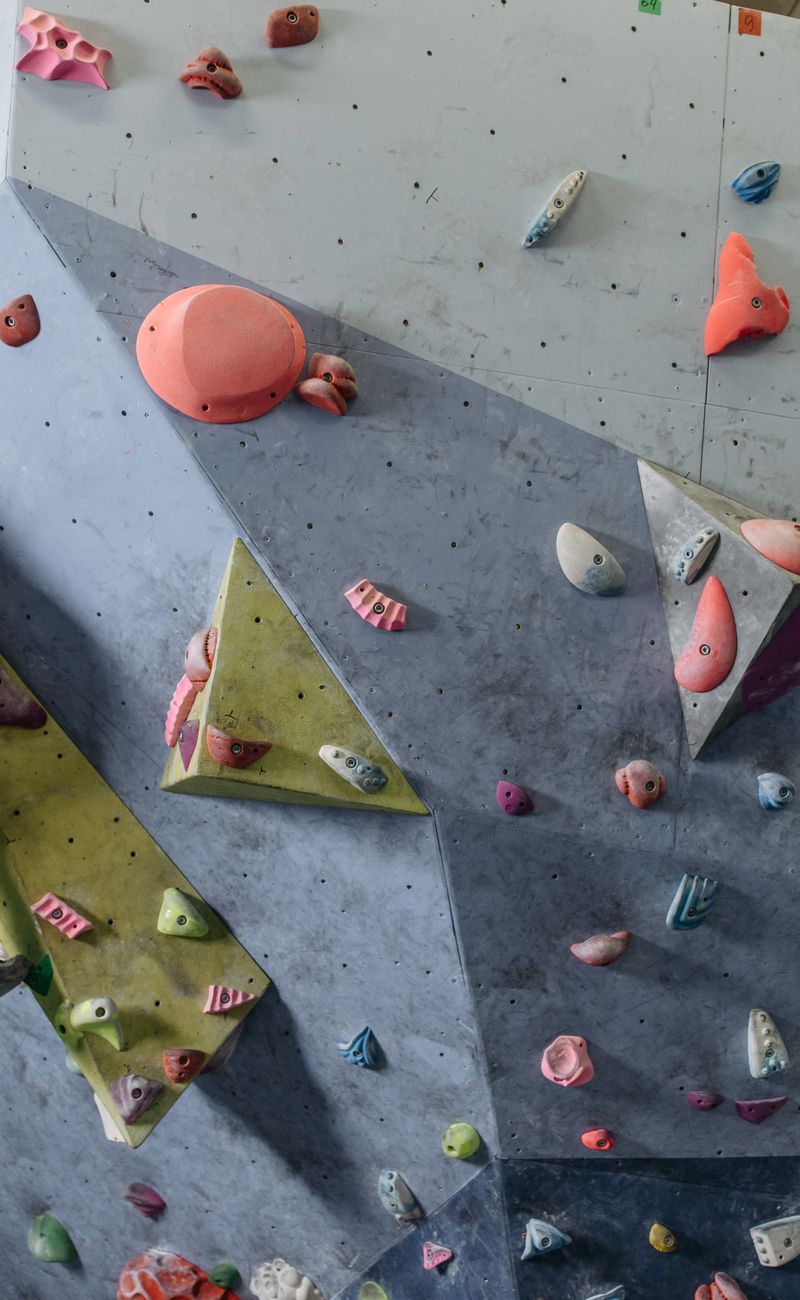
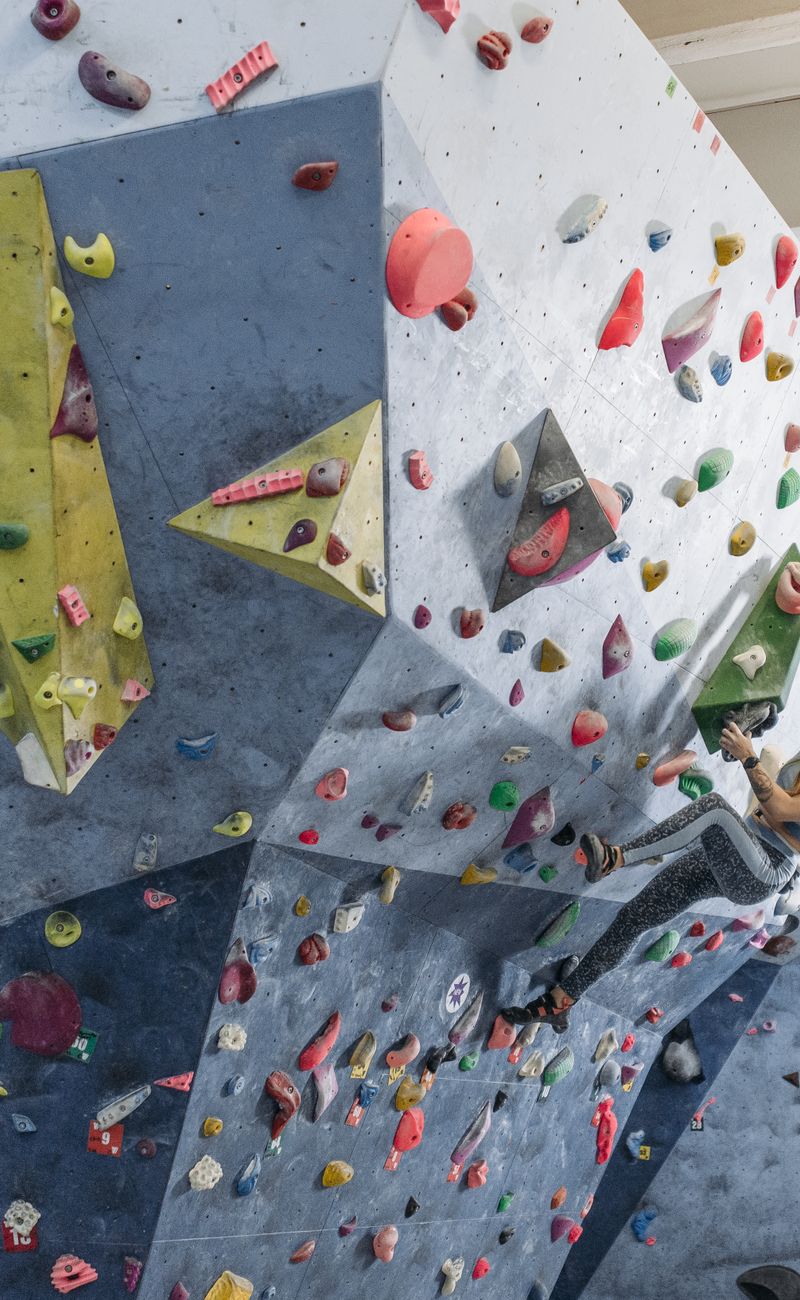
Photo: Tima Miroshnichenko / Pexels
Fear is not the problem. Unmanaged fear is.
You have felt it. The moment you clip the draw and look up at the final sequence, your breathing shortens. Your grip tightens. The holds that felt positive on the ground now look smaller, further away, less certain. This is fear. It is not weakness. It is not a character flaw. It is your nervous system doing exactly what it evolved to do: protect you from danger.
The problem with indoor climbing is that your body cannot tell the difference between a 40-foot whip on a wire and a 15-foot fall onto a crash pad. Your autonomic nervous system responds the same way to both scenarios because the threat detection systems are ancient and not particularly sophisticated. What you need to understand is that fear itself is information. Fear is your body telling you that something is uncertain, that the outcome is not guaranteed, that there is risk involved. The climber who learns to process that information and act despite it will always outperform the climber who waits until fear disappears before committing.
Here is what most climbers get wrong about the mental game: they believe the goal is to eliminate fear. You cannot eliminate fear. Fear is a biological response to perceived threat. What you can eliminate is the paralysis that accompanies fear. What you can develop is the capacity to execute technique, movement, and decision-making while fear is present. This is the actual skill. This is what separates climbers who plateau from climbers who continue to progress year after year.
The indoor climbing environment creates a specific version of this challenge. You are not managing natural hazards, rock quality, or weather. You are managing a controlled environment that has been artificially designed to be difficult, and you are managing it repeatedly session after session. The mental fatigue from this repetition compounds in ways that outdoor climbing does not always demand. You are not just climbing routes. You are climbing routes in a fluorescent-lit room surrounded by other people who are also projecting, also failing, also trying to make their bodies do things that bodies were not designed to do. The psychological load is real and it accumulates.
Understanding the mechanics of fear response
When you experience fear while climbing, your sympathetic nervous system activates. Heart rate increases. Blood vessels constrict in your extremities to prioritize blood flow to major muscle groups. Your palms sweat to improve grip surface texture. Your pupils dilate. Digestion stops. Your cortisol and adrenaline levels rise. This is the fight-or-flight response, and it is happening every time you step onto a route that pushes your current limits.
The problem is that many of these physiological responses are counterproductive for climbing. Increased heart rate and blood vessel constriction in your forearms mean less blood delivery to the exact muscles you need to grip. Sweaty palms might seem helpful for friction but excess moisture creates a lubricating effect that reduces friction coefficient on modern gym volumes and coated holds. The tensing of major muscle groups that should prepare you to fight or sprint actually restricts the range of motion you need for high-stepping, torsioning, and dynamic movement. Your body is preparing you for a threat response that is the opposite of what technical climbing requires.
This is why the first intervention for fear management is physiological regulation. Before you can work on mental skills, you need to be able to regulate your body's stress response. The most accessible tool for this is controlled breathing, and the specific protocol that works is not just deep breathing. You need to extend your exhale beyond your inhale. The physiological mechanism here is the vagal nerve, which runs from your brainstem down through your chest and regulates your parasympathetic nervous system. When you deliberately extend your exhale, you activate the parasympathetic system, which counteracts the sympathetic activation from fear. The ratio you want is approximately one to two: inhale for a count of four, exhale for a count of eight. You do this for a minimum of five breath cycles before you attempt the move that is causing fear.
This is not a relaxation technique. This is nervous system intervention. You are physically changing your heart rate variability, your cortisol distribution, and your muscle perfusion by controlling your breath. The climber who cannot breathe through fear will not be able to climb through it either. Practice this on the ground before you need it on the wall. The time to develop breath regulation is not when you are hanging exhausted above a crux. The time to develop it is during easy climbing, during warm-up routes, during every single climb when you deliberately focus on extending your exhale and monitoring your heart rate. Build the skill when you do not need it so it is available when you do.
The anatomy of a redpoint and why it requires a different mental mode
Outdoor climbers have long understood the difference between a flash attempt and a redpoint attempt. A flash is an onsight or near-onsight, where you are figuring out beta while executing movement at the limit of your ability. A redpoint is a worked route where you have assembled all the pieces of the puzzle and are now executing a known sequence with the goal of completing the route clean. The psychological demands of these two modes are fundamentally different, and most indoor climbers never make this distinction explicit in their training.
When you are flashing a route, your cognitive load is very high. You are reading beta, processing hold size and texture, managing body position, and monitoring fatigue accumulation all simultaneously. This is not the time to also manage fear because you simply do not have the cognitive bandwidth. The appropriate response to fear during a flash attempt is to back off, downclimb, or fall in a controlled location. You cannot effectively train yourself to push through fear while also learning a route. Your first on a project should always be about information gathering, not performance.
A redpoint attempt is different. You already know the route. You have done every move, visualized the sequence, and built some version of muscle memory for the specific movements required. Your cognitive load is lower because the unknowns have been reduced. This is where you introduce mental training. This is where you practice breathing through fear, managing self-talk, and committing to sequences that previously caused hesitation. The redpoint attempt is a performance context, and performance contexts require different psychological preparation than exploration contexts.
Most climbers conflate these modes and wonder why they fail to make progress on their projects. They spend too many attempts trying to redpoint before they have actually learned the route. Or they spend too many sessions in exploration mode without ever transitioning to performance mode. The mental game of projecting requires you to track which mode you are in at any given moment and adjust your expectations and interventions accordingly. Exploration mode tolerates falls, hesitation, and uncertainty. Performance mode requires commitment, breath regulation, and deliberate action despite the fear that is present.
Building confidence through systematic exposure
Confidence is not a personality trait. Confidence is a neurological pattern that gets established through repeated successful experience. Your brain does not believe in your ability to climb a V7 because you want it to or because someone told you that you could. Your brain believes in your ability to climb a V7 because it has evidence: repeated successful ascents of routes at that grade or harder. Confidence is earned through evidence. You build it the same way you build finger strength, through progressive overload and systematic exposure to challenge.
The protocol for building climbing confidence follows a logical structure. You identify the specific aspect of climbing that is causing fear. This might be dynamic movement, exposed positions, falling, or committing to marginal holds. You then break that specific skill into a graduated series of exposures ranging from low-risk to high-risk. For falling specifically, this might look like: taking controlled falls on top-rope at the end of a session when you are fatigued, taking falls on lead climbing at safe heights, taking falls on lead climbing at the top of routes, taking falls during redpoint attempts at the point where failure occurs. Each stage reduces the uncertainty and increases the evidence base for your brain.
The critical element of this process is that you must complete each stage multiple times before advancing. One successful fall does not constitute evidence. Five successful falls from a given position begins to establish a pattern. Ten successful falls from that position makes the fall feel normal rather than exceptional. Your brain is conservative. It requires overwhelming evidence before it will update its threat assessment. Do not rush this process. If you attempt to skip stages, your fear will simply migrate to the new context. You will find that fear of falling follows you to the next grade and the next grade because you never actually did the evidence-building work.
The indoor climbing environment is actually ideal for this work because the fall risk is significantly lower than outdoor climbing. Your pad is always in the same place, the height is consistent, the landing surface is known. Use this predictability. Use the consistency of your gym to build evidence rapidly rather than waiting for outdoor conditions to align with your confidence training. You do not need to wait for perfect conditions to work on mental game. You can do it every session in your regular climbing environment.
Self-talk management and the internal dialogue of projecting
The conversation you have with yourself on the wall is either helping or hurting your performance, and there is no neutral option. Your self-talk during climbing is either producing anxiety, sustaining fear, and reinforcing doubt, or it is producing calm focus, affirming capability, and directing attention. Most climbers have never examined what they are actually saying to themselves during climbing, which means they have never taken control of that dialogue.
The first step is awareness. Next time you are on a route, pay attention to the specific words and phrases that appear in your internal monologue. You might be surprised by what you find. Common negative self-talk patterns include: this hold is too small, I cannot do this move, my fingers are slipping, I am going to fall, I should have started lower. These phrases are not neutral observations. They are threat-focused attention cues that activate the sympathetic nervous system and increase fear response. Your attention follows your self-talk. If your self-talk is focused on threat, your attention will be focused on threat, and threat-focused attention degrades performance.
The intervention is not positive affirmation in the way that pop psychology suggests. Telling yourself you are strong and capable while your body is trembling and your palms are sweating will actually increase cognitive dissonance and potentially increase anxiety. The effective intervention is neutral technical direction. Replace negative self-talk with specific movement cues that redirect your attention to external factors. Instead of this hold is too small, say grip the left edge and pull right. Instead of I cannot do this move, say drop knee and flag right. Instead of I am going to fall, say controlled breathing, extend exhale, wait for the shakeout. Your brain cannot hold two thoughts simultaneously. A technical cue displaces an emotional cue.
This practice requires preparation. You cannot generate effective technical cues in the moment if you have not thought about them beforehand. Before each redpoint attempt, you should have specific beta, specific body positions, and specific breathing patterns in mind. You should have identified the likely failure points, not to anticipate failure but to have prepared responses when fear arises at those points. The climber who walks up to a redpoint attempt without a plan is leaving their mental game entirely to chance.
The decision to commit and the cost of hesitation
Every fall in climbing is ultimately a decision. Your body makes that decision faster than your conscious mind can process it. The moment your grip fails or your foot slips or your balance shifts beyond recovery, your nervous system has already decided that the situation exceeds your capability. But many falls are not physiological failures. They are psychological failures, decisions made by your conscious mind to let go before you had to, to step off before you had to, to bail before you had explored the actual limit of the situation.
This distinction matters for several reasons. If your falls are physiological, you need to train harder, climb more, and build more strength and technique. If your falls are psychological, you need to train your decision-making, examine your relationship with uncertainty, and practice commitment under fear. Most climbers who believe they need to get stronger actually need to get braver. They are not physically unable to complete the route. They are psychologically unwilling to endure the discomfort required to complete it.
The moment of commitment is a specific skill. It is not the same as recklessness. Commitment means that after you have assessed risk, identified the plan, and made the decision to proceed, you execute that plan without further deliberation. Hesitation happens when you assess, identify, decide, and then reassess mid-execution. Reassessment in the middle of a move sequence is one of the primary causes of falls. Your body is capable of movements that your conscious mind finds uncomfortable. Once you have committed, you must stay committed until the move is complete.
The protocol for practicing commitment is to identify sequences in your routes where you habitually hesitate and deliberately commit to them with full effort even if the outcome is doubt. This means going faster than you think you should, pulling harder than feels necessary, and extending further than your initial comfort zone. The goal is not to be reckless. The goal is to teach your nervous system that commitment does not automatically result in catastrophic failure. You are gathering evidence that your body can do things that your fear says it cannot.
Rest, recovery, and the psychology of the session
Mental fatigue is real and it compounds across a climbing session in ways that physical fatigue does not. After a certain number of attempts at your limit, your psychological resilience decreases regardless of how strong your fingers feel or how good your skin looks. This is why many climbers find that their best attempts happen early in a session when they are still warm but also still fresh mentally. As the session progresses, mental reserves deplete, fear tolerance decreases, and commitment quality degrades.
The management strategy for this is counterintuitive for many climbers who have been taught to climb as much as possible. You must schedule rest into your sessions, and that rest must include psychological rest, not just physical rest. Between redpoint attempts, you should be off the wall for a period long enough to let your heart rate recover, your breathing normalize, and your mental state reset. This is typically five to ten minutes minimum for hard efforts. During this rest, you should not be staring at the route, analyzing beta, or talking about the attempt. You should be physically resting, breathing deliberately, and allowing your nervous system to return toward baseline.
Session structure matters. Your most important attempts should happen when you are freshest mentally, which means early in the session after adequate warm-up but before mental fatigue sets in. Do not save your project attempts for the end of the session and then wonder why you cannot commit. Structure your session so that your performance attempts are prioritized for mental freshness. Save the mileage climbing, the social climbing, and the experimental climbing for after your primary work is complete.
Your fear will be there on every send
The climbers you admire who send hard routes are not free of fear. They experience the same physiological responses, the same hesitation, the same doubt. What they have developed is the capacity to act despite those responses. They have built the neurological patterns that allow them to execute technique while fear is present. They have practiced commitment until commitment becomes the default response rather than hesitation.
You will not eliminate fear by climbing more. You will not eliminate fear by getting stronger or learning better technique or buying better shoes. You will eliminate fear by facing it repeatedly in controlled conditions, gathering evidence that you can do hard things, and building the physical and mental skills to act despite discomfort. This takes time. This takes intention. This takes willingness to fail in front of other people, to look weak, to admit that you are scared.
Your gym is your laboratory. Your routes are your progressive exposure. Your climbing partners are your witnesses. Every time you attempt a route at your limit, you are conducting an experiment in human capability. Every fall is data. Every successful move is evidence. Your confidence is being built one repetition at a time whether you are paying attention to that process or not. The climber who pays attention to it accelerates the process. The climber who ignores it wonders why they are still afraid after years of climbing.
Commit to your next redpoint attempt the way you commit to your training. Make it specific, measurable, and intentional. Have a plan for the fear that will be there. Use your breath, your technical cues, and your commitment practice. Fall if you must. Fall if the route demands it. But fall because the route was too hard for your current ability, not because your mind gave up before your body did. That distinction is where progress lives.