Indoor Bouldering Technique: How to Break Through Your Grade Plateau in 2026
Master the specific movement patterns and technical refinements needed to stop stalling at your current grade and start sending harder indoor bouldering problems.
The Reality of the Indoor Bouldering Plateau
You have reached a point where simply pulling harder does not work. You can spend every single day at the gym for six months, but if you are relying on raw strength to bypass poor movement, you will hit a ceiling that no amount of hangboarding can fix. Most climbers hit a wall around V4 or V5 because they have developed enough basic strength to muscle through lower grades, but they lack the technical precision required for the next level. Breaking through your indoor bouldering technique plateau requires a shift in how you perceive the wall and how you interact with the holds. You are likely over gripping, over pulling, and fighting the angle of the wall instead of using it to your advantage. The difference between a climber who struggles with a V6 and one who sends it effortlessly is rarely a matter of finger strength. It is a matter of center of gravity, hip proximity, and the ability to generate momentum from the lower body.
To move past this stage, you must stop treating bouldering as a series of pulls and start treating it as a series of balance problems. When you look at a problem, you probably see the holds you need to grab. You need to start seeing the space between the holds and how your body needs to shift to make the next move effortless. If you are shaking on a hold that should be stable, the problem is not your grip; it is your position. Your weight is likely too far away from the wall, creating a lever arm that forces your fingers to work twice as hard as they should. Mastering indoor bouldering technique means minimizing the energy cost of every move. If you are wasting energy fighting your own center of mass, you will have nothing left for the crux. The goal is to make the hardest move feel like the most natural movement possible through precise body positioning.
Many climbers fall into the trap of thinking that they need more power when they actually need more efficiency. Power is a finite resource. Technique is the tool you use to preserve that resource. When you watch a professional climber, they do not look like they are fighting the wall. They look like they are flowing across it. This flow is not magic; it is the result of meticulous hip placement and a deep understanding of how to shift weight. If you want to see your grade jump in 2026, you have to stop guessing at beta and start analyzing the physics of your movement. This means spending more time on the ground analyzing your center of gravity and less time blindly jumping at holds and hoping for the best.
Optimizing Hip Position and Center of Gravity
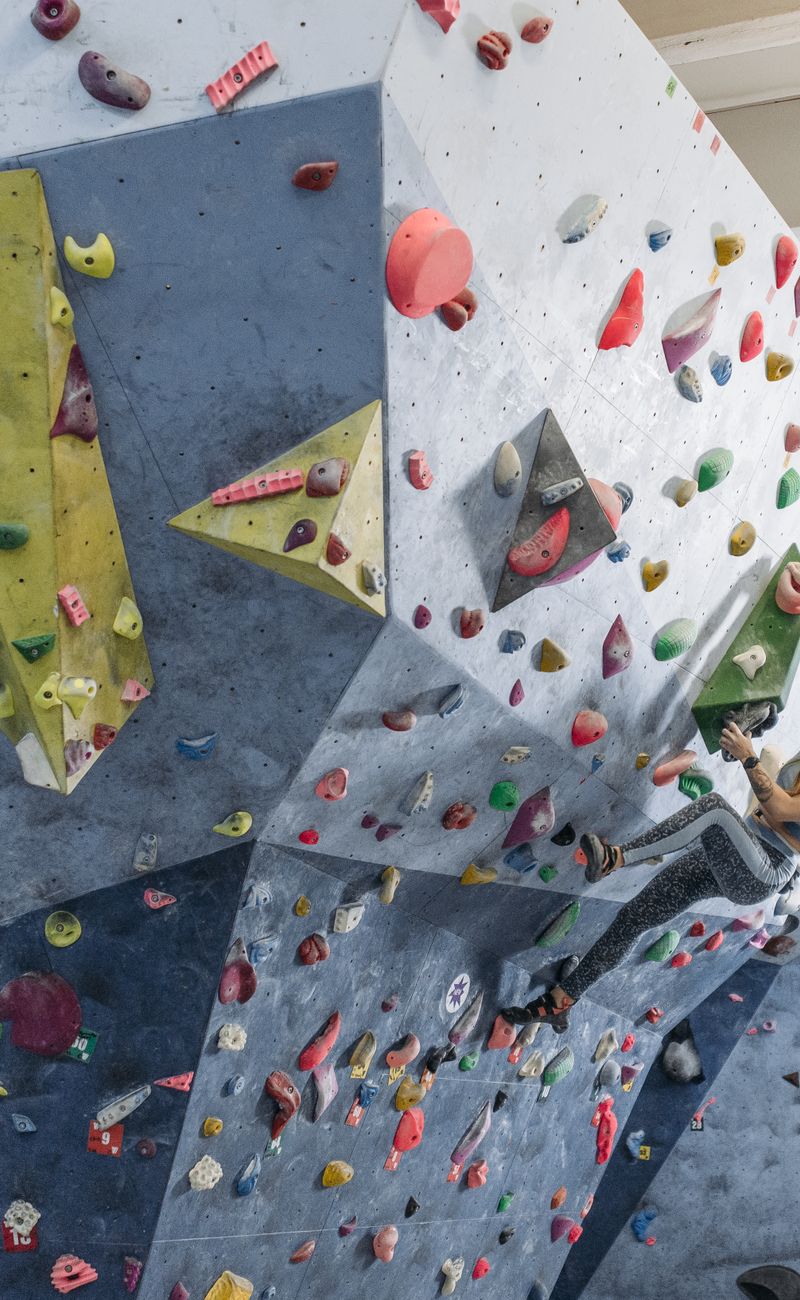
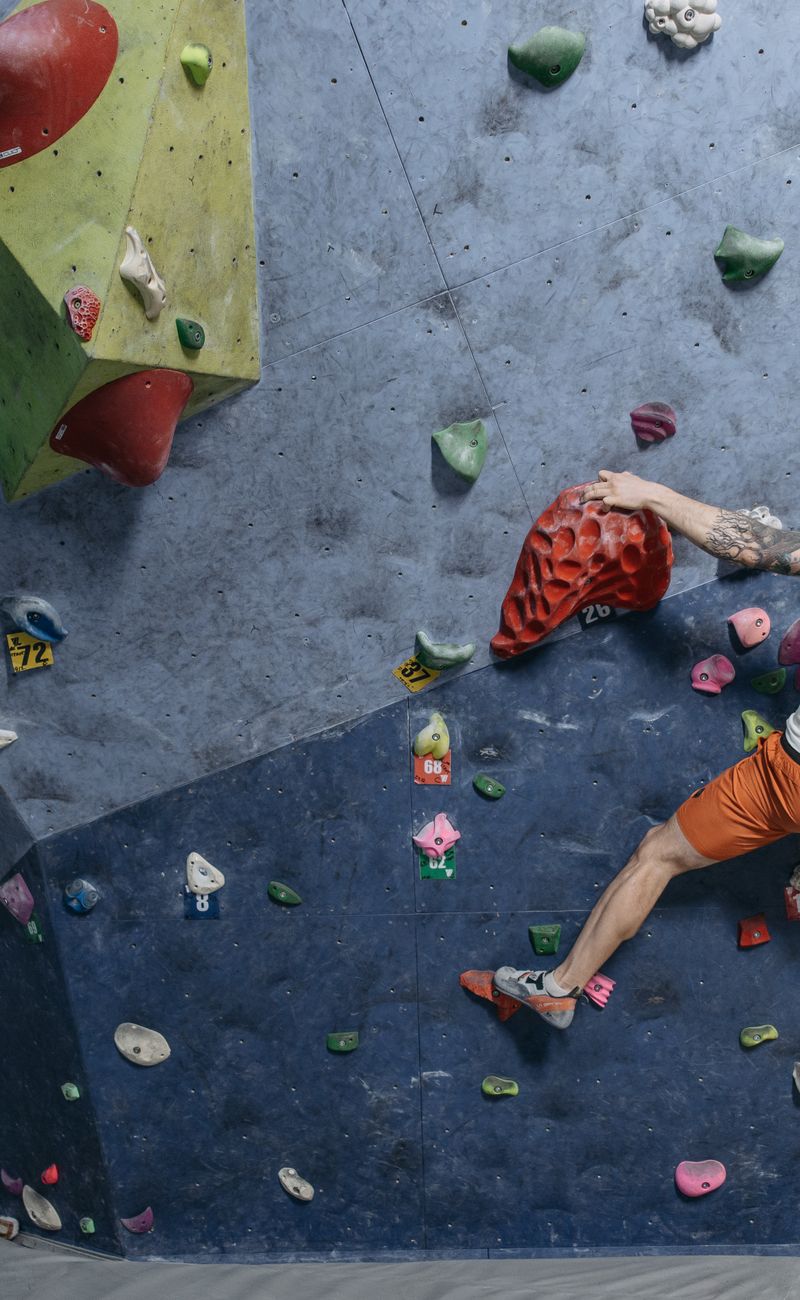
The most common mistake in indoor bouldering is keeping the hips too far from the wall. When your hips drift away, your weight shifts outward, putting immense pressure on your fingertips and forcing your arms to do all the work. To fix this, you must focus on bringing your pelvis as close to the wall as possible. This is not just about pressing your stomach against the plastic; it is about rotating your hips. By turning your hip into the wall, you shift your center of gravity directly under the hold you are gripping. This allows you to put more weight on your feet and reduces the load on your upper body. If you are climbing a steep overhang, this becomes even more critical. The moment your hips drop away from the wall, you are fighting a losing battle against gravity. You must consciously pull your hips in, often by twisting your body into a side-on position relative to the wall.
Using a side-on position allows you to keep your center of gravity closer to the wall while maintaining a stable base. Instead of facing the wall chest-on, try rotating your hip and shoulder toward the wall. This movement allows you to reach further and maintain better balance on small footholds. It also opens up your range of motion, allowing you to use a gaston or a side-pull more effectively. When you are in a chest-on position, you are often pushing your weight away from the wall. By switching to a side-on orientation, you transform a pulling move into a balancing move. This is a fundamental aspect of indoor bouldering technique that separates intermediate climbers from advanced ones. You should practice this on easy problems where you can focus entirely on your hip orientation without the fear of falling.
Another critical element of hip management is the use of the flag. Flagging is not just for when you do not have a foothold; it is a proactive tool for balance. By extending your non-weight-bearing leg against the wall, you create a counterweight that prevents your body from swinging away from the wall, a phenomenon known as barn-dooring. A rear flag allows you to shift your weight backward to reach a distant hold, while a side flag helps you maintain stability on vertical terrain. If you find yourself swinging wildly when you let go of a hold, you are likely not flagging correctly. You should be using your legs to actively manage your balance, treating the wall as a surface to push against rather than just a place to put your feet. The more you can use your legs to stabilize your core, the less your arms will fatigue.
Advanced Footwork and Weight Transfer
Most climbers use their feet as mere anchors, but high level indoor bouldering technique requires using your feet as primary drivers of movement. Precision is everything. If your foot slips by even a few millimeters, the resulting instability travels up your body and manifests as a shake in your grip. You must commit to your foot placements. This means placing your toe exactly where it needs to be and trusting it. Stop scratching and readjusting your feet multiple times before making a move. This habit not only wastes energy but also prevents you from maintaining the momentum necessary for dynamic moves. Practice precision by climbing a low grade problem and focusing on placing each foot perfectly on the first attempt, without any adjustments.
Weight transfer is the art of moving your center of mass from one foot to another without losing stability. Many climbers make the mistake of shifting their weight too quickly or too slowly. The key is to move your center of gravity toward the hold you are about to grab before you actually reach for it. If you reach for a hold while your weight is still centered over your previous position, you will feel a sudden jerk in your shoulder and a loss of balance. Instead, shift your hips toward the target hold first. This creates a natural trajectory for your body to follow. When you combine this with a deep press into your footholds, the move becomes a fluid transition rather than a desperate lung. This is the secret to making hard moves feel easy.
You also need to master the difference between edging and smearing. Edging is about using the stiff edge of your shoe on a small crystal or a thin lip. This requires precise pressure and a high degree of trust in your rubber. Smearing, on the other hand, is about maximizing the surface area of your shoe against a flat or slightly textured wall. Smearing is an active process; you must push your weight through the shoe to create friction. If you are just placing your foot on the wall without applying pressure, you are not smearing, you are just standing. In indoor climbing, where holds are often spaced far apart, the ability to smear effectively on the wall can be the difference between sending a project and falling off. You should practice smearing on large volumes, focusing on how shifting your weight changes the amount of friction you have.
The Mechanics of Dynamic Movement and Momentum
There is a common misconception that dynamic movement is just about jumping. In reality, dynamic movement is about the controlled application of momentum. When a move is too far to reach statically, you must use a deadpoint. A deadpoint is a controlled dynamic move where you reach the target hold at the exact moment your upward momentum ceases. This is the point of weightlessness, where the hold is easiest to grip because you are not yet pulling your full weight down. To execute a perfect deadpoint, you must generate power from your legs and core, driving your body upward and toward the hold. If you reach too early, you will pull yourself off the wall. If you reach too late, you will be falling downward as you hit the hold, which often results in a dry fire.
Generating this momentum requires a coordinated effort between your lower and upper body. You cannot simply pull with your arms to create a dynamic move. The power must come from the legs. By pushing explosively off your footholds, you create the upward trajectory needed to reach distant holds. This is where most climbers fail; they try to jump with their arms. To improve your indoor bouldering technique in this area, practice the movement in slow motion first. Understand where your center of gravity is and how it needs to move. Then, gradually increase the speed. The goal is to find the minimum amount of force required to reach the hold. Over-shooting the move leads to instability and wasted energy.
Momentum also plays a role in how you handle slopes and volumes. When dealing with large, rounded volumes, you cannot rely on a traditional grip. You must use your entire body to press into the volume. This often involves a combination of a deep smear and a strong core engagement to keep your body from rotating away. When moving between volumes, try to maintain a constant flow of motion. Any hesitation in your movement causes you to lose momentum, forcing you to restart the move with more effort. Think of your movement as a series of connected arcs. Each move should feed into the next, using the energy from the previous movement to propel you forward. This is the essence of high level bouldering, where the physical effort is minimized by the strategic use of physics.
Mental Approach to Projecting and Beta Refinement
Breaking a plateau is as much a mental game as it is a physical one. Most climbers approach a project by trying the same sequence of moves over and over, hoping that they will eventually be strong enough to do it. This is a recipe for stagnation. Instead, you should approach beta refinement as an iterative process. If you fail a move three times in a row, stop. Do not try it a fourth time. Instead, analyze why you failed. Did your foot slip? Did your hips drift? Did you reach for the hold too early? By identifying the specific point of failure, you can adjust your indoor bouldering technique to solve the problem. This might mean shifting your foot two inches to the left or rotating your hip more aggressively. Small adjustments in position often yield massive results in performance.
You should also be wary of the beta you get from others. While a partner can provide a helpful hint, their body type and strength profile are different from yours. What works for a shorter climber with high flexibility will not work for a taller climber with more reach. You must learn to adapt beta to your own proportions. If a suggested move feels awkward or forced, it is probably not the right move for you. Experiment with different orientations and foot placements until the move feels intuitive. The best beta is the one that allows you to use your strengths and minimizes your weaknesses. This willingness to experiment is what allows climbers to push past their limits and discover new ways to move on the wall.
Finally, you must embrace the feeling of discomfort. Projecting hard problems requires you to operate at the edge of your capability. This means you will feel unstable, you will feel weak, and you will fall many times. The key is to remain clinical about your failures. Instead of getting frustrated, treat every fall as a data point. The more you understand exactly how you are falling, the closer you are to understanding how to succeed. Stop treating the gym as a place to just workout and start treating it as a laboratory for movement. When you combine a disciplined training cycle with a relentless focus on technical refinement, the grade plateaus will disappear. The only thing standing between you and the next grade is your commitment to the details of your movement.