Best Climbing Shoes for Bouldering: Choosing Your 2026 Performance Pair
Stop buying shoes based on pro endorsements. Learn how to select the best climbing shoes for bouldering based on rubber compounds, tension, and foot shape.
Understanding Rubber Compounds and Friction
Your choice of rubber is the only thing standing between you and a dry fire off a mediocre hold. Most climbers treat rubber as a commodity but the reality is that the friction coefficient varies wildly between brands and compounds. When you are searching for the best climbing shoes for bouldering you have to decide if you need a sticky rubber that smears on polished limestone or a harder rubber that resists deformation on tiny edges. Soft rubber allows the shoe to mold to the hold which increases the surface area of contact. This is critical for volumes and large slopers where you need to maximize friction. However soft rubber compresses under load. If you are standing on a micro edge that is barely a millimeter wide soft rubber will fold and you will pop off. Hard rubber maintains its structural integrity and pushes back against the rock. This is why some shoes feel like pillows and others feel like planks of wood. You cannot have both in one shoe. You must choose based on the specific demands of your current project. If you spend your time on steep overhangs with big holds you want that soft flexibility to pull your toes into the wall. If you are attacking vertical slabs with crystals for holds you need the rigidity of a harder compound to support your weight without your calf muscles screaming from the effort.
The wear rate of your rubber also dictates how often you will be spending money on resoles. Soft rubber wears down significantly faster especially on abrasive sandstone. Many climbers make the mistake of buying a high performance shoe and then wearing it for the entire session including the warm up. This is a waste of resources. You should wear a flat comfortable shoe for your easy climbs and only switch to your aggressive bouldering shoes when you are actually projecting. The rubber is a consumable tool. Treat it like a precision instrument. If you notice the edges of your toes starting to round off you have already lost the precision that makes the shoe effective. A rounded toe cannot hook a tiny edge. Once the rubber is gone the shoe becomes a liability. You should be monitoring the thickness of your sole every single session. When you can feel the hold through the rubber more than you feel the support of the shoe it is time for a resole. Do not wait until you have a hole in the toe because that ruins the structural tension of the upper and makes the shoe useless for high tension moves.
The Mechanics of Shoe Tension and Downturn
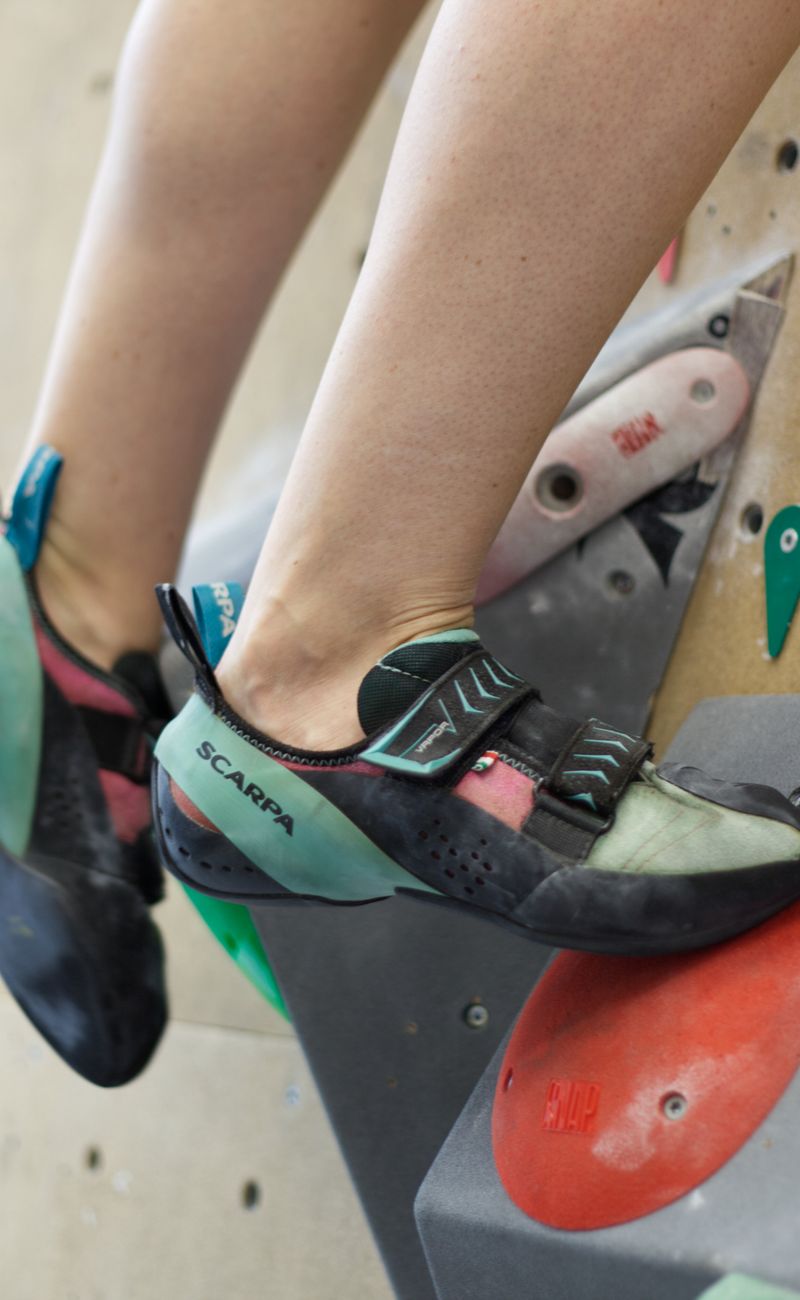
Downturn is not a fashion statement. It is a mechanical advantage designed to keep your foot engaged on overhanging terrain. When a shoe is flat your toes point forward which is great for standing on a ledge but terrible for pulling into a wall. An aggressive downturn allows you to use your toes as hooks. This shifts the center of gravity and allows you to put more weight on your feet while you are fighting for a hold. However too much downturn in a shoe that does not fit perfectly will cause your heel to slip. If your heel is popping out of the shoe every time you try to load it you are wasting the primary benefit of the downturn. The best climbing shoes for bouldering provide a balance between an aggressive angle and a secure heel lock. You want the tension to pull your heel down and into the back of the shoe. This is achieved through the tensioning rand which is the rubber strip that wraps around the heel and connects to the sole. A high tension rand acts like a spring. It pulls the shoe tight against your foot and snaps it back into place after you move. If the rand is too loose the shoe will feel sloppy and you will lose precision. If it is too tight you will deal with hotspots and blisters that end your session early.
The shape of the toe box also plays a massive role in how you interact with the rock. Pointed toes are superior for precision and fitting into small pockets. Rounded toes provide a better surface area for smearing. Most high end bouldering shoes opt for a pointed profile to allow for those critical micro edges. But this precision comes at a cost. The more pointed the shoe the more pressure is concentrated on a single point of your toe. This is why breaking in a new pair of shoes is a painful process. You are essentially molding the leather or synthetic upper to the specific anatomy of your foot. If you buy shoes that are too small you are not increasing your precision. You are simply cutting off circulation to your toes. When your toes go numb you lose the proprioception required to feel the hold. You cannot trust a hold you cannot feel. The goal is a tight fit that eliminates internal movement without causing systemic pain. If your foot is sliding around inside the shoe you are fighting the gear instead of the climb. The shoe should feel like a second skin that extends your skeletal structure into the rock.
Heel Hooks and Toe Hooking Precision
The heel is often an afterthought for beginners but for anyone projecting V5 and above the heel is a primary point of contact. A good bouldering shoe must have a well designed heel cup that does not slide off when you apply lateral pressure. Many shoes fail here because the heel is too wide or too shallow. When you engage a heel hook you are using the rubber on the back of the shoe to pull your body toward the wall. If the rubber is too smooth or the shape is wrong you will simply slide off the hold. Look for shoes with a rubber wrap that extends from the sole up into the heel cup. This ensures that no matter the angle of the hook you have friction. Some shoes feature a specialized rubber patch on the heel specifically for this purpose. This is a critical detail when selecting the best climbing shoes for bouldering because a failed heel hook often means a failed project. You need to trust that the shoe will stay on your foot while you are hanging by a single toe and a heel hook on a steep roof.
Toe hooking is the other side of the coin. This is where the rubber on the top of the toe box comes into play. If you are doing a toe hook to prevent yourself from swinging off the wall you need rubber that extends high up onto the upper. Some shoes have a completely rubberized toe cap which provides maximum friction but can be stiff. Others have a small patch of rubber which is more flexible but offers less surface area. The key is the friction of the rubber and the stiffness of the toe. If the toe is too soft it will collapse under the pressure of a hook and you will slip. If it is too stiff it may not mold to the shape of the hold. You should test the toe hook by trying to pull your body weight with your toes on a volume. If the shoe shifts or the rubber slides you have a gear problem. Precision toe hooking allows you to stabilize your body in positions that would otherwise be impossible. It transforms a dynamic move into a static one which is the secret to climbing harder grades with less effort.
Matching Your Shoe to Your Foot Anatomy
The biggest lie in climbing is that you should size down two numbers. This is terrible advice that leads to injuries and poor performance. The best climbing shoes for bouldering are the ones that match your specific foot shape. Some people have wide forefoots and narrow heels. Others have high arches and narrow toes. If you try to force a narrow shoe onto a wide foot you will experience crushing pressure that kills your foot strength. You need to find a brand that matches your morphology. Some brands are known for a wider toe box while others are narrow and aggressive. If you have a Greek foot where the second toe is longer than the big toe you need a shoe with a deeper toe box to avoid jamming that second toe. If you have an Egyptian foot where the toes are similar in length a more tapered shoe might work better.
The material of the upper also determines how the shoe will evolve over time. Leather shoes stretch. A lot. If you buy leather shoes that fit perfectly out of the box they will be too big within a month. You have to account for the stretch and buy them tighter than you think you need. Synthetic shoes do not stretch nearly as much. They maintain their shape and tension for the life of the shoe. This is a massive advantage for consistency. You know that the shoe that fits today will fit the same way in six months. However synthetic shoes have a longer break in period because they do not mold to the foot as easily as leather. You have to be patient with synthetics. You cannot just wear them for an hour and expect them to be comfortable. You have to wear them through multiple sessions to let the materials soften. The choice between leather and synthetic is a choice between a custom fit that evolves and a consistent fit that stays the same. Both have their place depending on whether you prefer a shoe that adapts to you or a shoe that you adapt to.
Strategic Shoe Rotation for Maximum Performance
No single pair of shoes can do everything. If you are serious about your progression you need a rotation. Using the same pair of shoes for warming up and projecting is a recipe for premature gear failure. Your warm up shoes should be flat and comfortable. They should allow your feet to breathe and should not be so tight that they cause fatigue before you even hit your project. This preserves the high tension rubber of your aggressive shoes for the moves that actually require them. When you switch into your performance shoes you are signaling to your brain that it is time for maximum effort. This psychological shift is as important as the physical one. The best climbing shoes for bouldering are useless if they are worn out by the time you reach the crux of the route.
You should also consider having a dedicated pair for different styles of climbing. A shoe designed for steep bouldering will be miserable on a vertical slab. On a slab you want a flatter profile that allows you to put more rubber in contact with the rock. An aggressive downturned shoe on a slab will actually push you away from the wall because the toe is pointing down and away from the surface. By having a flat shoe for slabs and a downturned shoe for overhangs you are optimizing your equipment for the terrain. This is not about having too much gear. It is about using the right tool for the job. If you try to use a hammer to turn a screw you will just damage the wood. If you try to use a downturned shoe on a slab you will just fall off. A professional approach to gear means analyzing the requirements of the climb and selecting the shoe that provides the mechanical advantage needed for that specific style of movement.
Maintaining Your Gear for Longevity
The moment you take your shoes out of the box the clock starts ticking toward the first resole. Most climbers ignore maintenance until there is a hole in the toe but that is the wrong way to handle high performance gear. You should be cleaning your rubber after every session. Dust and chalk build up on the soles and create a layer of lubrication that reduces friction. Use a damp cloth to wipe away the debris. This restores the tackiness of the rubber and ensures you are getting the maximum grip possible. If your shoes start to feel slippery it is often just a layer of grime. Cleaning them is a free way to increase your performance.
Storage also matters. Do not leave your shoes in a hot car or in direct sunlight. Extreme heat can degrade the glues that hold the shoe together and can cause the rubber to soften and lose its structural integrity. Store your shoes in a cool dry place. If they get wet do not put them on a radiator to dry because the intense heat will shrink the leather and crack the rubber. Let them air dry naturally. If you are using leather shoes you can use a foot powder to keep the insides dry and prevent odors. But the most important part of maintenance is knowing when to resole. Do not wait until the rubber is gone. When you see the midsole starting to peak through the rubber you are at the limit. A professional resole can bring a pair of shoes back to life while maintaining the break in you have already spent months achieving. This is more sustainable and often more comfortable than buying a brand new pair and starting the painful break in process all over again. Your shoes are an investment in your ability to send. Treat them with the respect they deserve and they will hold you on the smallest edges when everything else is failing.