Rest Day Protocol: Why Your Recovery Is Sabotaging Your Sends
You are not plateauing because you do not train hard enough. You are plateauing because you do not rest hard enough. The complete rest day protocol for climbers.
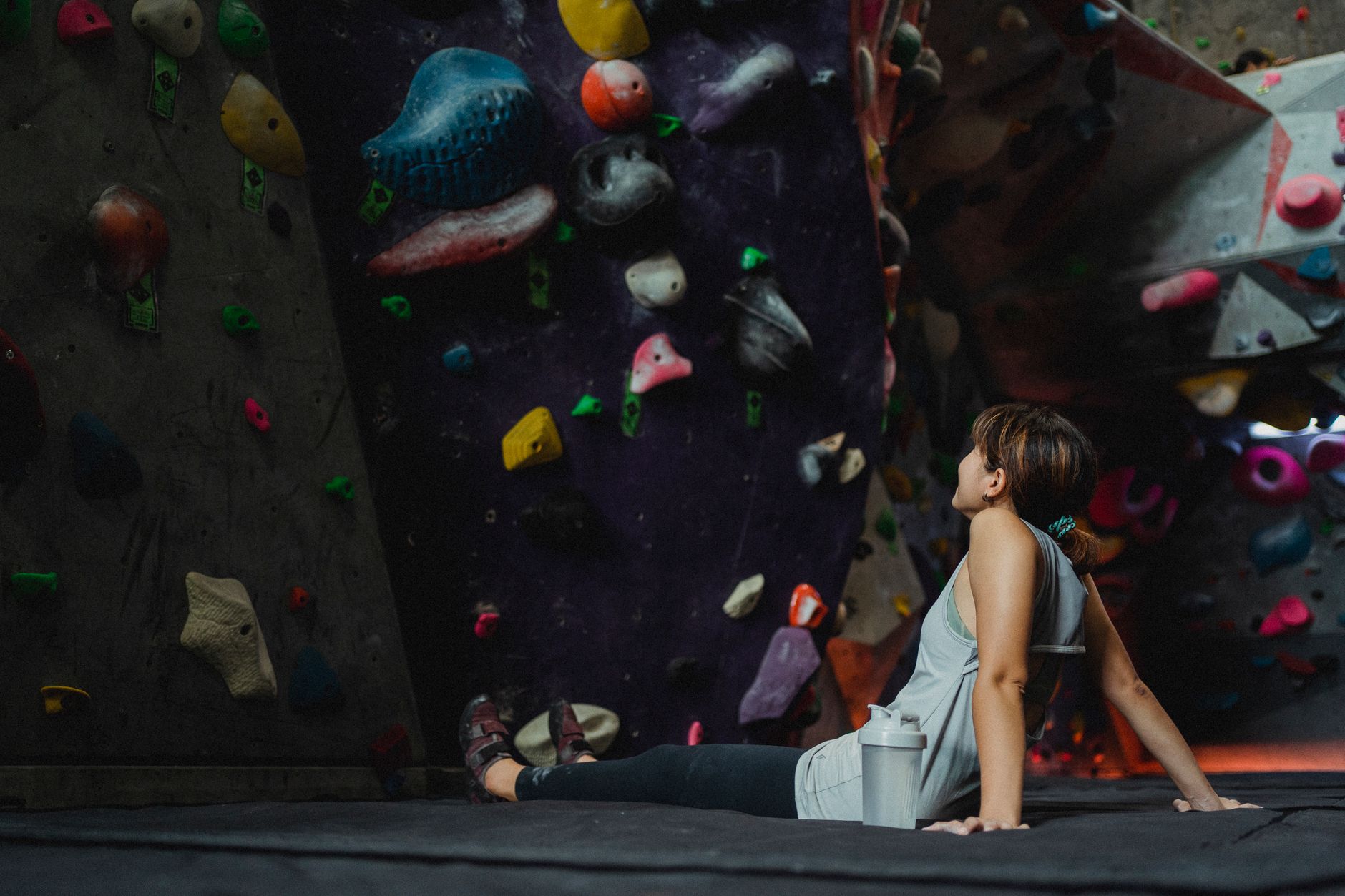
Every climber knows someone who climbs five, six, even seven days a week. They are always at the gym. They are always at the crag. They post about their sessions on social media every day. And somehow, they never get any stronger. Their project grade has not moved in a year. Their fingers hurt all the time. Their shoulders click. They are perpetually one session away from sending, but that session never comes. The problem is not their training. The problem is their rest. Or rather, the complete absence of it.
Climbing is a sport of micro-trauma. Every session damages connective tissue in your fingers, elbows, and shoulders. Every hard pull on a small edge creates micro-tears in your tendons. Every powerful move through a crux loads your pulleys and joint capsules with forces they were not designed to handle repeatedly. This damage is not the problem. The problem is that most climbers never give their bodies enough time to repair it. They return to the wall before the tissue has healed, re-damage it before the repair is complete, and slowly accumulate a deficit of unrepaired micro-trauma that eventually manifests as a full-blown injury. Then they rest for six weeks and wonder why they got hurt. The answer is simple. They got hurt because they never rested when they should have, only when they were forced to.
The Science of Climbing Recovery: What Actually Happens When You Rest
When you climb hard, you create micro-tears in your muscle fibers and stress your tendons and pulleys. This is normal. It is the stimulus that drives adaptation. But adaptation only occurs during recovery, not during training. The sequence is: stimulus, damage, recovery, adaptation. If you skip the recovery phase, you skip the adaptation phase. You are left with damage that never gets repaired and a body that never gets stronger.
Muscle tissue recovers relatively quickly. After a hard climbing session, most muscle fibers are repaired within 48 to 72 hours. This is why many climbers feel ready to climb again after two days of rest. Their muscles are ready. But tendons and pulleys are a different story. Connective tissue has far less blood supply than muscle, which means the repair process is dramatically slower. A flexor tendon in your finger can take 72 to 100 hours to recover from a hard session. A pulley that has been stressed near its limit may need even longer. When you climb on day two after a hard finger session, your muscles feel fine but your tendons are still damaged. You are climbing on tissue that has not healed. Over weeks and months, this creates cumulative stress that leads to tendonitis, pulley strains, and eventually ruptures.
The recovery timeline also varies by the type of climbing you did. Bouldering, with its high-intensity, short-duration moves, creates more connective tissue stress per move than sport climbing or endurance sessions. A hard bouldering day requires more recovery time than a volume day of moderate routes. Power days, where you are working near-maximal moves, require the most recovery. Endurance days, where you are climbing well below your max, require the least. This is why a well-structured training cycle rotates power and endurance sessions and places rest days strategically after the highest-intensity days.
The Rest Day Protocol: How to Actually Recover
A rest day is not a day where you do nothing. That is a myth that leads to stiffness, lethargy, and longer recovery times. Active recovery is superior to passive recovery for almost every metric that matters: blood flow, waste removal, tissue repair, and mental refreshment. The protocol is not complicated, but it requires discipline.
Sleep is the foundation. Eight hours minimum. Nine is better. If you are climbing hard four days a week, your body is repairing tissue damage during sleep. Every hour you cut from sleep is an hour of repair time you lose. The climbers who send their projects are not the ones who stay up until 1am watching route videos. They are the ones who go to bed at 10pm and wake up at 6am ready to perform. Melatonin is not a sleep aid for climbers who train hard. It is a crutch. If you need melatonin to fall asleep, your circadian rhythm is disrupted, which means your recovery hormones are not cycling correctly. Fix the rhythm, not the symptom.
Hydration and nutrition are the second pillar. Your body cannot repair tissue without the raw materials. Protein intake on rest days should match or exceed your training days, at 1.6 to 2.0 grams per kilogram of body weight. This is not the time to cut calories. Caloric restriction on rest days slows tendon repair and increases cortisol, which directly inhibits collagen synthesis. Eat full meals, prioritize protein, and drink enough water that your urine is pale yellow throughout the day.
Active recovery on rest days means light movement that increases blood flow without creating additional tissue stress. Walking for 30 to 45 minutes is ideal. Easy hiking on flat terrain. Gentle mobility work: hip openers, thoracic rotations, shoulder circles. Foam rolling for the forearms, lats, and calves. What active recovery does not mean is light climbing, easy bouldering, or "just one lap on the hangboard." If it loads your fingers, it is not recovery. It is training. And training on a rest day defeats the entire purpose.
The Scheduling Protocol: When to Climb and When to Stop
The optimal training frequency for most climbers is three to four sessions per week, depending on intensity and experience level. Beginners should cap at three. Intermediate climbers can handle four if one session is low-intensity endurance work. Advanced climbers projecting at their limit should not exceed four sessions, and two of those should be dedicated project days with full rest before and after.
The most common effective schedule is a three-on, one-off pattern with built-in intensity management. Day one is power and limit bouldering. Day two is endurance and volume. Day three is technique and moderate bouldering. Day four is a full rest day. Day five is a project day. Day six is a second rest day or active recovery only. Day seven starts the cycle again. This gives you four climbing days and two to three rest days per week, with the hardest sessions preceded and followed by rest.
The critical insight most climbers miss is that the day before a project day is more important than the project day itself. If you climb hard the day before your project day, you are projecting on tired tendons and depleted glycogen. Your fingers will not be at full capacity. Your power will be down five to ten percent. You will fall on moves you could do fresh, and then you will convince yourself that the project is too hard for you. It is not too hard. You are just too tired to do it. A full rest day before a project day is not optional. It is the single highest-leverage scheduling decision you can make.
If you are feeling chronic soreness in your fingers, elbows, or shoulders that does not resolve with a single rest day, you are under-recovered. Take two full rest days. If the soreness resolves, your schedule was too aggressive. Reduce frequency by one session per week and see if performance improves. If the soreness does not resolve after two rest days, you may be dealing with an incipient injury. Stop climbing for a week. See a physical therapist who specializes in climbing injuries. The cost of one week off is minimal. The cost of a pulley rupture is six to twelve months.
Signs You Need More Rest (And Signs You Are Coping)
There is a specific kind of climber who copes about rest. They say things like "I just need to warm up more" when their fingers hurt. They say "I will take it easy today" and then climb at 90 percent intensity for three hours. They say "rest days make me feel weak" as if the weakness they feel on day one back is not their body operating at reduced capacity because they never let it recover. These are the same climbers who get injured, plateau, and blame everything except the obvious cause: they never stop climbing long enough to get stronger.
The signs that you need more rest are clear if you are honest with yourself. Waking up with sore fingers that do not loosen until midday. A persistent low-grade ache in the medial epicondyle of your elbow. Joints that pop and click more than usual. A decrease in your max hang time on the hangboard that persists across multiple sessions. An inability to complete problems you sent two weeks ago. Mood disturbances: irritability, poor sleep, lack of motivation. These are all signs that your body is in a recovery deficit. The protocol is to rest, not to push through.
The hardest part of rest is not the physical inactivity. It is the mental discomfort. Climbers are addicted to progress, and progress feels like it happens during training. It does not. Training is the damage. Rest is the repair. Adaptation only happens during repair. Every day you rest is a day your body is getting stronger. Every day you climb on under-recovered tissue is a day you are getting weaker. The climbers who send at their limit are not the ones who train the most. They are the ones who rest the most effectively. Stop treating rest days as failures. Start treating them as the most important training days on your calendar.