Antagonist Training for Climbers: Stop Neglecting the Other Half of Your Body
Climbing trains pulling muscles obsessively and ignores everything else. The result is imbalances, injury, and a ceiling you cannot break through. Here is the complete antagonist protocol.
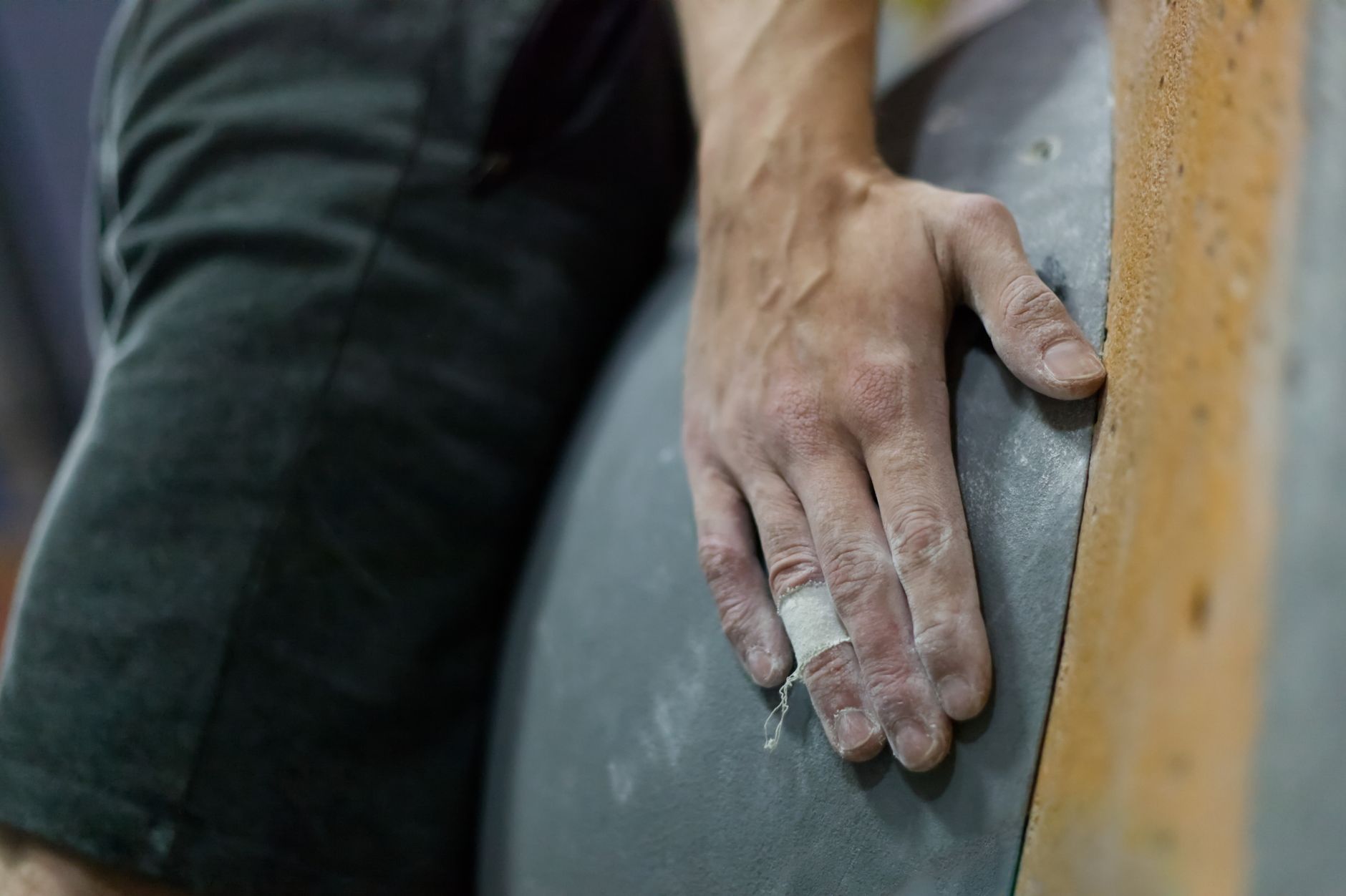
Photo: Cesar Guillotel / Pexels
The Imbalance Problem: Why Climbers Get Hurt
Climbing is a pulling sport. Every move you make on the wall trains your biceps, lats, forearms, and finger flexors. Over months and years of climbing, these muscles become strong. Really strong. Meanwhile, the muscles that oppose them, the triceps, chest, anterior deltoids, and wrist extensors, get nothing. They atrophy from neglect. The result is a body that is strong in one direction and weak in the other, and that imbalance is the root cause of most climbing injuries.
The research is clear on this. Climbers who train antagonist muscles get injured less frequently and recover faster when they do get injured. The most common climbing injuries, medial epicondylitis, lateral epicondylitis, shoulder impingement, and rotator cuff strains, are all linked to muscular imbalances. Your biceps pull on the elbow. Your triceps are supposed to oppose that pull. When the triceps are too weak to balance the biceps, the elbow joint takes the load, and the tendons around it inflame. The same pattern plays out at every joint in the climbing chain: shoulder, elbow, wrist, and fingers.
This is not a minor concern. It is the biggest controllable variable in climbing longevity. You cannot control your genetics, your age, or the rock type at your local crag. You can control whether you spend twenty minutes twice a week training the muscles that keep your joints healthy. The climbers who climb into their fifties and sixties without chronic pain are not the ones with the best genes. They are the ones who balanced their training.
The other benefit is performance. A stronger pushing muscle group means better stability on the wall. When you are pressing out a mantle, reaching for a far hold with your chest open, or locking off on an overhang, your antagonist muscles are working. They are stabilizing your shoulder, decelerating your arm at the end of a dynamic move, and keeping your joints aligned under load. Weak antagonist muscles mean less stability, less control, and less power when you need it most.
The Push Protocol: Exercises That Actually Matter
Not all antagonist exercises are created equal. You do not need a full gym routine. You need a targeted set of exercises that address the specific imbalances climbing creates. Here are the movements that matter, in order of priority.
Push-ups. The single most important antagonist exercise for climbers. Push-ups train the chest, anterior deltoids, and triceps in exactly the pattern that opposes climbing movement. They require no equipment and can be done anywhere. Start with three sets of ten to fifteen standard push-ups. If you cannot do ten, do knee push-ups or incline push-ups until you can. If you can do fifteen easily, progress to decline push-ups with your feet elevated, or diamond push-ups with your hands close together to emphasize the triceps. The goal is not to become a push-up champion. The goal is balanced strength at the shoulder and elbow.
Overhead press. Climbing trains the lats to pull the arm down and back. The overhead press trains the deltoids to push the arm up and forward. This is the opposing movement. You can use dumbbells, a barbell, or resistance bands. Three sets of eight to twelve reps, twice a week. The weight should be heavy enough that the last two reps are challenging but not so heavy that your form breaks down. If you do not have weights, pike push-ups are a reasonable substitute: get into a downward dog position and press your head toward the ground between your hands.
Triceps dips. The triceps are the most neglected muscle group in climbing. They are the antagonist to the biceps, and the biceps get worked on every single climbing move. Dips can be done on parallel bars, on the edge of a bench, or on the floor. Three sets of eight to fifteen reps. If you cannot do a full dip, start with bench dips with your hands on a chair behind you and your feet on the floor. Progress to full dips on parallel bars. The triceps also get trained during push-ups, but dips isolate them more effectively and allow you to add weight as you get stronger.
Wrist extensions. This is the most overlooked antagonist exercise in climbing, and it might be the most important for injury prevention. Climbing trains the wrist flexors and finger flexors relentlessly. The wrist extensors, the muscles on the top of your forearm that open your hand and bend your wrist back, get almost no work. This imbalance contributes to medial and lateral epicondylitis, the two most common elbow injuries in climbing. Use a light dumbbell, one to three kilograms, and perform wrist extensions over the edge of a bench or your knee. Three sets of fifteen to twenty reps, twice a week. This exercise is boring. It feels like it does nothing. It is preventing the injury that will sideline you for three months. Do it anyway.
Reverse flys. Climbing trains the lats and rhomboids to pull the shoulder back and down. The reverse fly trains the rear deltoids and mid-trap to pull the shoulder blade back and up, opposing the typical climbing posture of rounded shoulders and a hunched upper back. Use light dumbbells, two to five kilograms, and perform three sets of twelve to fifteen reps. This exercise also helps prevent shoulder impingement, which is the most common shoulder injury in climbers and one of the most frustrating to rehab.
Programming: How to Fit Antagonist Work Into a Climbing Schedule
The biggest barrier to antagonist training is not the exercises. It is the schedule. Climbers already feel like they do not have enough time to climb. Adding more training feels impossible. Here is the reality: antagonist training takes twenty minutes, twice a week. That is forty minutes total. If you have time to scroll your phone for forty minutes, you have time to do antagonist work.
The best time to do antagonist training is after a climbing session, not on a rest day. You are already at the gym. You are already warm. Adding twenty minutes of push-ups, dips, and wrist extensions at the end of a session is easy. It does not cut into your climbing time, and it does not require a separate trip to the gym. Do your climbing session first, when you are fresh. Then do your antagonist work as a cooldown. The climbing is the priority. The antagonist work is the maintenance that lets you keep climbing.
Here is a sample twice-weekly protocol. Do it at the end of your second and fourth climbing sessions each week, or on any two non-consecutive days if you climb less than four times per week.
Session A: three sets of push-ups, three sets of overhead press, three sets of wrist extensions. Rest sixty to ninety seconds between sets. Total time: approximately fifteen minutes.
Session B: three sets of dips, three sets of reverse flys, three sets of wrist extensions. Rest sixty to ninety seconds between sets. Total time: approximately fifteen minutes.
Alternate between Session A and Session B. This gives you balanced coverage of all the major antagonist muscle groups over a two-session cycle. The wrist extensions appear in both sessions because they are the single most important exercise for elbow injury prevention, and they recover quickly because the load is so light.
Progressive overload applies to antagonist training just like it applies to climbing training. When you can complete all sets and reps with good form, increase the difficulty. For bodyweight exercises, progress to a harder variation. For weighted exercises, add weight in small increments, one to two kilograms at a time. Do not add weight or difficulty until you can complete all prescribed reps with clean form for two consecutive sessions.
Do not skip this work during a deload week. In fact, deload weeks are the best time to emphasize antagonist training, because your pulling muscles are resting while your pushing muscles are getting stronger. This is the window where you can make the most progress on the imbalance. A deload week with consistent antagonist work is more valuable for long-term climbing health than a deload week where you do nothing.
Common Mistakes and Misconceptions
The most common mistake is treating antagonist training like bodybuilding. You are not trying to get huge. You are trying to achieve balance. Training your chest and triceps to be as strong as your lats and biceps is the goal, not building a massive bench press. Use moderate weights, moderate volumes, and focus on control and stability, not max effort. If you are sore for three days after antagonist training, you did too much. Scale it back.
The second mistake is doing antagonist work before climbing. Push-ups before a climbing session fatigue the muscles you need for stability on the wall. You will climb worse, not better. Always do antagonist work after climbing, or on a separate day. The only exception is wrist extensions, which can be done before climbing as part of a warm-up because the load is so light.
The third mistake is ignoring antagonist work because you "do not have injuries." This is like ignoring dental hygiene because you do not have cavities. Antagonist training is preventive, not reactive. By the time you have an injury, you have already lost weeks or months of climbing. The entire point is to prevent the injury from happening in the first place.
The fourth mistake is inconsistency. Doing antagonist work for two weeks, forgetting about it for a month, and then doing it again for a week does not work. The adaptations from antagonist training are specific and reversible. If you stop training the wrist extensors, they lose strength within two weeks. Consistency matters more than intensity. Two sessions per week, every week, for months, is what builds the balance that keeps you healthy.
The last misconception is that climbing is enough exercise and anything else is a waste of time. This is the most dangerous belief in climbing. Climbing is excellent exercise for the pulling chain. It is terrible exercise for everything else. The climbers who succeed long-term are the ones who recognize that climbing is a specialized activity that creates specialized imbalances, and that those imbalances require targeted correction. Twenty minutes, twice a week. That is the cost of climbing without pain for the next twenty years. Pay it.