Outdoor Climbing Transition: How to Move from Gym to Crag (2026)
Stop failing on easy outdoor projects. Learn the technical requirements and movement shifts needed to transition from indoor bouldering to outdoor rock.
The Brutal Reality of the Outdoor Climbing Transition
Your gym grade is a lie and you know it. You might be flashing V6 in the gym with oversized holds and predictable textures, but the moment you step onto real rock, you find yourself struggling on a V2. This is the outdoor climbing transition. The gym is a controlled environment where the holds are bolted to the wall and the beta is literally painted in neon colors. Outdoor climbing is a chaotic system of friction, micro-edges, and psychological warfare. The gap between indoor and outdoor performance is not usually a lack of strength. It is a lack of literacy. You do not know how to read the rock, you do not understand how to use your feet on irregular surfaces, and you are likely terrified of the void. If you want to stop being the person who can only climb in a climate controlled warehouse, you have to stop treating the crag like a gym with a different backdrop.
The most common mistake climbers make during this phase is trying to apply gym logic to a cliff. In the gym, if a hold looks like a jug, it is a jug. Outdoors, a hold that looks like a jug might be a polished sloper that requires a specific center of gravity to stay attached. The texture of the rock changes everything. Sandstone requires a different grip than limestone or granite. The humidity in the air changes the friction coefficient of the rock in real time. Your gym shoes are designed for rubber on plastic, but outdoor shoes need to handle a variety of edge types and often require a more aggressive downturn to hook into narrow pockets. You are not just learning a new location; you are learning a new language. This transition is where most people quit because the ego hit of dropping three grades is too much to handle. You have to accept that you are a beginner again, regardless of what your gym profile says.
To bridge this gap, you must shift your focus from raw power to precision. In the gym, you can often muscle through poor footwork because the holds are generous. Outdoors, poor footwork results in a dry fire and a fall. The outdoor climbing transition requires a fundamental rewrite of how you interact with the surface. You need to stop looking for the hold and start looking for the feature. A feature might be a slight ripple in the rock or a tiny crystal that provides just enough friction to keep you from sliding. This requires a level of focus and patience that the fast paced environment of a bouldering gym does not teach. You have to slow down, breathe, and actually feel the rock with your fingertips and toes before you commit your weight to a move.
Mastering Real Rock Footwork and Friction
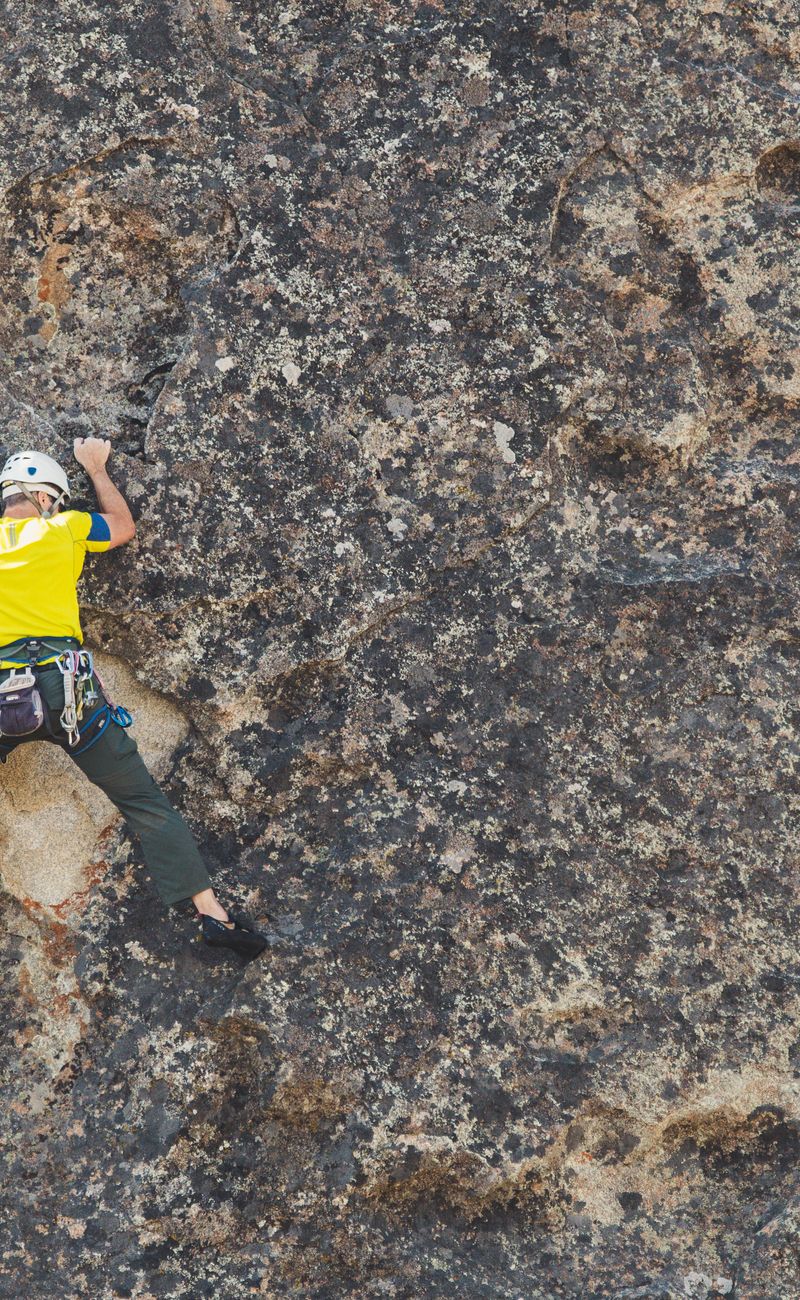
Footwork in the gym is often an afterthought. You step on a bright orange block and you are set. On real rock, the footwork is the entire game. Most climbers fail the outdoor climbing transition because they try to stand on things that are not actually holds. They look for a ledge when they should be looking for a smear. Smearing is the act of using the friction between your shoe rubber and the flat surface of the rock to maintain balance. This is a skill that is rarely developed in the gym because gym walls are usually too smooth or the holds are too prominent to force you to smear. To master this, you need to learn how to distribute your weight across the sole of your shoe rather than just trusting the tip of the toe. You have to trust the rubber. If you do not trust the friction, you will overgrip with your hands, burn through your forearm endurance, and fall long before you reach the top.
Edge precision is another area where gym climbers struggle. In a gym, an edge is a clearly defined lip. Outdoors, an edge might be a microscopic ridge of quartz that is only two millimeters wide. If your foot is off by a fraction of an inch, you will slip. This requires a level of toe precision that only comes from hours of deliberate practice. You cannot just slap your foot onto the rock and hope it sticks. You must place your toe exactly where the friction is highest. This means looking at your feet until the moment they touch the rock, not looking up at the next hold and hoping for the best. The psychological shift here is moving from a mindset of grabbing to a mindset of balancing. You are not just climbing up; you are balancing your center of mass over a series of unstable points.
Friction is the invisible variable that dictates whether a move is possible. You will find that a move you could do easily at 6 AM is impossible at 2 PM because the rock has warmed up. This is the reality of the outdoor climbing transition. You have to learn to read the temperature and the humidity. If the rock is too warm, the rubber on your shoes becomes soft and slides. If it is too cold, your fingers lose the blood flow necessary to maintain a grip. Learning to manage your skin is also a part of this. Gym skin is soft. Outdoor skin needs to be calloused and tough. If you go straight from a week of indoor climbing to a weekend of granite, you will rip your skin off in two hours. You need to gradually acclimate your hands to the abrasive nature of real rock by spending more time on textured surfaces and using a pumice stone to manage callouses before they become problematic.
The Mental Game of Commitments and Falling
The biggest hurdle in the outdoor climbing transition is not physical; it is mental. In a gym, the floor is a giant marshmallow. You can fall ten feet and barely feel it. Outdoors, the landing is a mixture of jagged rocks, dirt, and uncertainty. Even with crash pads, the fear of a bad landing can paralyze a climber. This fear manifests as tension in the body. When you are tense, you breathe shallowly, your muscles tighten, and you lose the fluidity required for hard moves. You cannot climb at your limit if you are terrified of the fall. Learning to manage this fear is a technical skill, not just a psychological one. You must learn how to fall correctly, how to spot for your partner, and how to assess the landing zone before you even touch the rock.
Commitment is the difference between a send and a fall. In the gym, you can hesitate on a move, shake out, and then try again. Outdoors, hesitation is often the cause of failure. When you are on a thin edge with your feet smearing, the moment you stop moving is the moment you start sliding. The outdoor climbing transition requires you to develop a level of commitment that the gym does not demand. You have to decide that you are going to make the move and execute it with total confidence. This does not mean ignoring danger, but it does mean trusting your training and your gear. The mental game is about narrowing your focus until the only thing that exists is the next hold and the current position of your hips.
Reading the rock is where the mental game meets the physical game. In the gym, the route is laid out for you. Outdoors, you have to find the line. This involves looking at the rock from the ground and visualizing where your hands and feet will go. You have to look for the subtle changes in rock color or texture that indicate a hold. This is a skill that takes years to master. You will spend a lot of time staring at a wall, trying to figure out if that small indentation is a finger pocket or just a shadow. The outdoor climbing transition is essentially a lesson in observation. You have to become a student of the geology of the area. You start to notice that certain types of cracks always lead to certain types of holds. You learn that a vertical streak of white minerals often indicates a path of least resistance.
Optimizing Your Outdoor Protocol for Success
To successfully navigate the outdoor climbing transition, you need a protocol that differs from your gym routine. You cannot just show up and climb. You need to prepare your body and your mind for the specific demands of the crag. This starts with your warm up. In the gym, you might do some jumping jacks and a few easy climbs. Outdoors, you need a more comprehensive warm up to prevent injury on unpredictable holds. Your joints and tendons need to be fully primed because a slip on a real rock edge can put significantly more stress on your fingers than a plastic hold. Spend more time on dynamic stretching and progressive loading before you attempt your project. This ensures that your body is ready for the sudden, high intensity bursts of power required by outdoor climbing.
Your approach to projecting must also change. In the gym, you might try a move twenty times in a row. Outdoors, that is a recipe for failure. The friction is limited, and the rock is abrasive. If you try a move twenty times, you will wear down your skin and exhaust your mental energy. Instead, focus on high quality attempts. Spend more time on the ground analyzing the movement. Talk to your partner about the beta, but do not let them dictate your movement. Every body is different, and what works for someone else might be impossible for you. The outdoor climbing transition is about finding the version of the route that fits your specific morphology. This means experimenting with different foot positions and body angles rather than blindly following someone else's advice.
Recovery is the final piece of the puzzle. Outdoor climbing is significantly more taxing on the central nervous system than indoor climbing. The stress of the environment, the unpredictability of the holds, and the mental load of safety management all add to the fatigue. You cannot climb at the same volume you do in the gym. If you try to spend eight hours a day at the crag doing max effort attempts, you will burn out or get injured. Learn to listen to your body. When your grip starts to fail or your focus wavers, stop. The goal of the outdoor climbing transition is longevity. You want to build a sustainable relationship with the rock. This means knowing when to push and when to walk away for the day. The rock will still be there tomorrow, but your tendons will not be if you push them past the breaking point.
Ultimately, the transition from the gym to the outdoors is a transition from a consumer of climbing to a practitioner of the craft. You are no longer just using a service provided by a gym; you are engaging with the natural world. This requires a higher level of responsibility, a greater degree of humility, and a willingness to fail repeatedly. The reward is a feeling of accomplishment that no gym send can replicate. When you finally stick that micro edge and pull through a crux on real rock, you are not just beating a route; you are mastering an environment. Stop worrying about your grade and start focusing on your literacy. Learn the rock, trust your rubber, and commit to the movement. That is how you actually maximize your outdoor performance.