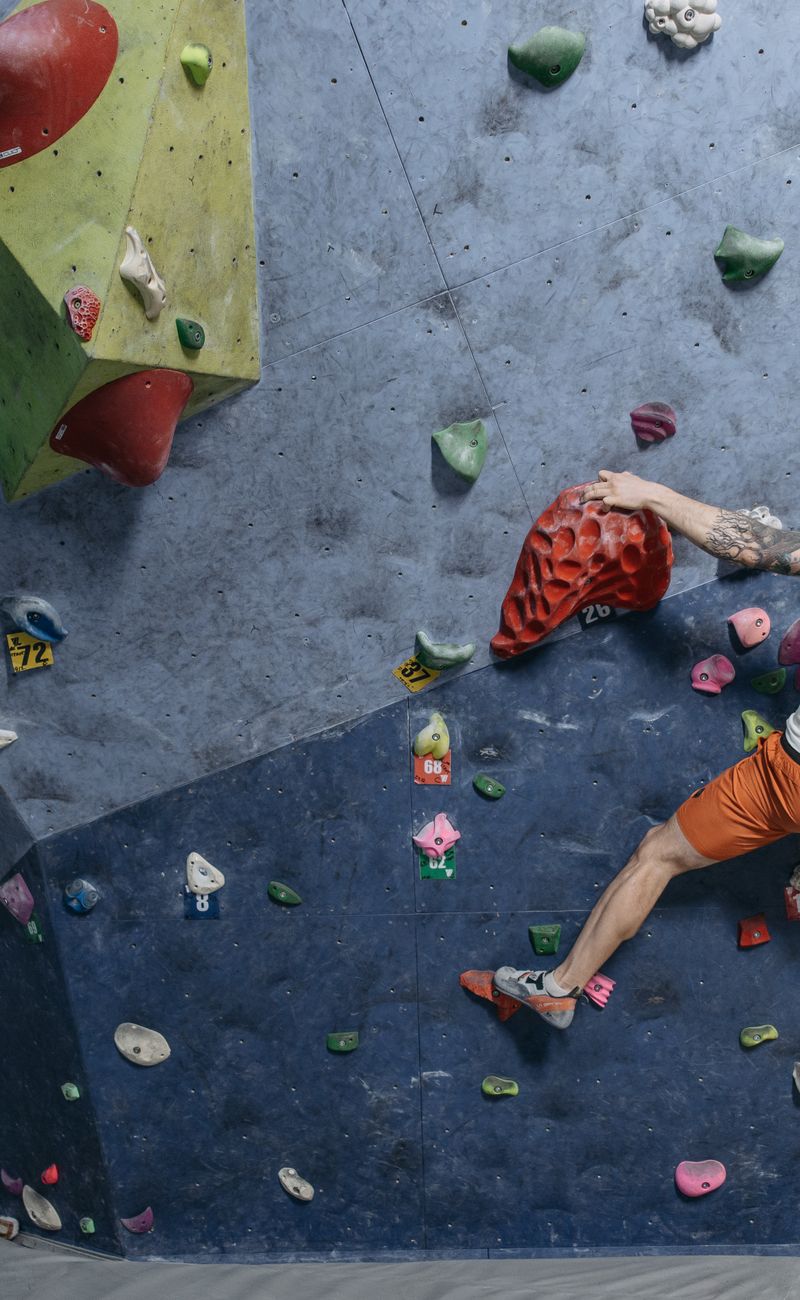
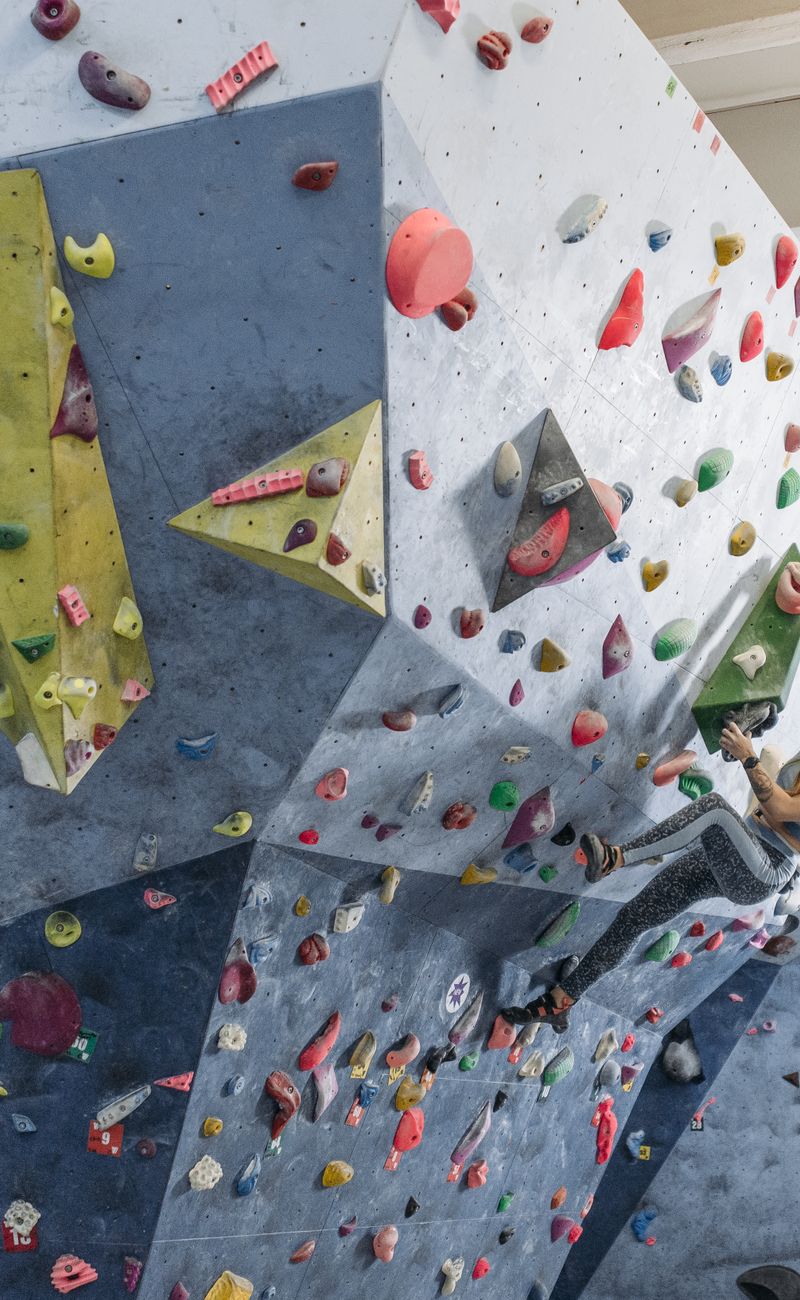
Indoor Bouldering Volume Technique: How to Master Large Holds in 2026
Stop treating volumes like big holds and start treating them like terrain. A technical guide to maximizing friction and center of gravity on indoor volumes.

The Fundamental Misunderstanding of Volume Friction
Most climbers treat a volume as if it is just a very large hold. They look for a flat spot, slap their hand or foot onto it, and try to pull themselves upward. This is why you keep sliding off the wall on V5s that look like they should be easy. A volume is not a hold. A volume is a change in the geometry of the wall. When you encounter a volume, you are not looking for a grip in the traditional sense, you are looking for a way to create a new angle of pressure against the surface. The secret to indoor bouldering volume technique is understanding that friction is a product of the angle between your contact point and your center of gravity. If you are pulling straight down on a volume that is slanted away from you, you are fighting physics. You will slip because there is no opposing force keeping you pinned to the surface.
To stop the slide, you must shift your weight so that your force is perpendicular to the surface of the volume. This means your hips need to move closer to the wall or further away depending on the slant. If a volume is sloping outward, you cannot simply pull; you must push your hips into the wall to create a compressive force. This compression is what generates the friction necessary to stay on the hold. Many climbers fail here because they are afraid to move their hips. They keep their torso rigid and try to use raw arm strength to overcome a lack of friction. This is a waste of energy and a guaranteed way to blow the move. You need to think about how to wedge yourself into the space between the volume and the rest of the wall. The volume is a tool to change your body position, not just a place to put your hands.
Footwork on volumes is where most of the battle is won or lost. You cannot simply step on a volume and expect it to hold you. You must engage your toes and apply pressure in the direction that opposes the slope. If the volume is angled downward, you need to keep your heel low to drive your toe into the surface. If the volume is a large vertical slab protruding from the wall, you need to use a smear or a precise edge depending on the texture. The mistake is treating the foot as a passive anchor. Your foot should be an active driver of your center of gravity. By shifting your weight over your foot on a volume, you unload the tension from your arms and allow your core to stabilize the movement. This is the core of indoor bouldering volume technique: using the geometry of the hold to create stability through pressure rather than grip.
Precision Body Positioning for Sloping Volumes
When you face a large sloping volume, your instinct is to grab it and pull. This is the wrong approach. On a slope, the only thing keeping you on the wall is the friction created by the angle of your pull. If you pull straight down, you are merely sliding your hand across the surface. To maximize friction, you need to pull in a direction that pushes your body into the volume. This often requires a counter intuitive movement where you move your hips away from the wall to create a more acute angle with the hold. This allows you to use your shoulder girdle to lock into the slope and create a stable platform for your next move. If you feel yourself slipping, the answer is rarely to grip harder, as there is nothing to grip. The answer is to change the angle of your body.
Core tension is the glue that holds these movements together. On volumes, your core is not just for stability; it is the mechanism that transfers power from your feet to your hands. If your core is slack, your hips will sag, and the angle of pressure on the volume will vanish. This results in the dreaded pop off where your hand suddenly loses grip and you fly backward. To prevent this, you must maintain a rigid midsection that keeps your hips pinned to the wall. Think about pulling your belly button toward the wall. This keeps your center of gravity in the optimal position to maintain friction on the slope. When you move from one volume to another, the transition must be fluid. Any momentary lapse in core tension will cause a shift in your center of gravity, which will immediately translate to a loss of friction on the hold.
Another critical aspect of body positioning is the use of the opposite foot. To maintain pressure on a volume, you often need to flag or use a heel hook on a separate part of the wall to create an opposing force. For example, if you are pressing your right foot into a volume, flagging your left leg out to the side can shift your weight and prevent you from rotating off the wall. This creates a tripod of stability. Without this opposing force, you are simply balanced on a slope, and the slightest movement will send you sliding. You must consciously plan where your non working leg is going to be. If you are just letting your legs dangle, you are ignoring half of the equation. Indoor bouldering volume technique requires a holistic view of the body where every limb is contributing to the creation of friction.
Advanced Volume Tactics and Center of Gravity
The most difficult volume moves often involve coordination and a rapid shift in the center of gravity. These are the moves where you have to jump or dynamic move onto a volume and stick it. The secret here is not just speed, but the precise moment of impact. You cannot land on a volume with a dead weight. You must land with your body already in the position required to create friction. If you jump onto a sloping volume and land with your hips far from the wall, you will bounce off. You must aim to land with your hips already moving toward the wall, effectively slamming your center of gravity into the hold to create instant friction. This requires a high level of spatial awareness and a willingness to commit to the move with total confidence.
Dealing with volumes that act as platforms requires a different set of skills. When a volume is large enough to stand on, climbers often make the mistake of standing too high on the hold. This raises your center of gravity and makes you unstable. To maximize your stability, you should aim to keep your center of gravity as low as possible. This means stepping lower on the volume and keeping your knees bent. By staying low, you create a more stable base and make it easier to shift your weight laterally. If you stand tall on a volume, you are effectively creating a lever that the wall can use to push you off. Staying compressed keeps you glued to the surface and allows for a more powerful launch into the next move.
You should also consider the use of the volume as a pivot point. Instead of treating the volume as a destination, treat it as a tool to change your direction. By shifting your weight across a volume, you can change the angle of your body to access a hold that was previously unreachable. This involves a technique called the pivot, where you use the friction of the volume to swing your hips into a new position. This is a high level skill that requires a deep understanding of indoor bouldering volume technique. It allows you to bypass the need for raw strength by using momentum and geometry to your advantage. The goal is to minimize the amount of effort required to stay on the wall by maximizing the efficiency of your movement.
The Mental Game of Volume Projecting
Projecting volume heavy problems requires a different mental approach than projecting crimpy lines. On a crimpy wall, the holds are either there or they are not. On a volume wall, the holds are always there, but the friction is variable. This can be frustrating because you might feel like you have the hold one time and completely slip the next. The key is to realize that the difference is almost always in your body position, not your strength. When you fall off a volume, do not just say the hold was slippery. Ask yourself where your hips were. Ask yourself if your heel was too high. Ask yourself if you were pulling straight down instead of into the wall. This level of analysis is the only way to progress on volume heavy terrain.
Many climbers develop a fear of volumes because they feel unstable. This instability is a signal that your center of gravity is not aligned with the friction angle. Instead of fighting this feeling with more tension, use it as a guide. If you feel yourself sliding to the left, shift your weight to the right. Use the sensation of slipping to find the sweet spot where the friction is maximized. This is a process of trial and error that requires a calm mind and a willingness to fall. You cannot master these movements if you are too afraid to experiment with your center of gravity. The most successful volume climbers are those who are comfortable with the feeling of almost slipping and know exactly how to correct it in real time.
Finally, stop relying on the beta provided by others. Volume beta is highly dependent on your height, weight, and limb length. What works for a climber who is five foot five will not work for someone who is six feet tall. If you try to copy someone else's body position on a volume, you will likely find yourself in a position where the friction does not work for your specific geometry. You must find your own points of pressure. Spend time on the wall just experimenting with how different hip positions change the feel of the hold. Once you understand the relationship between your center of gravity and the volume surface, you will stop fighting the wall and start using it. This is the ultimate goal of indoor bouldering volume technique: turning a frustrating slope into a stable platform for your ascent.