Indoor Bouldering: The Protocol for Maximum Efficiency
Stop treating the gym as a playground. Learn the structured protocol for bouldering sessions that actually drive progression and power.
The Gym Plateau
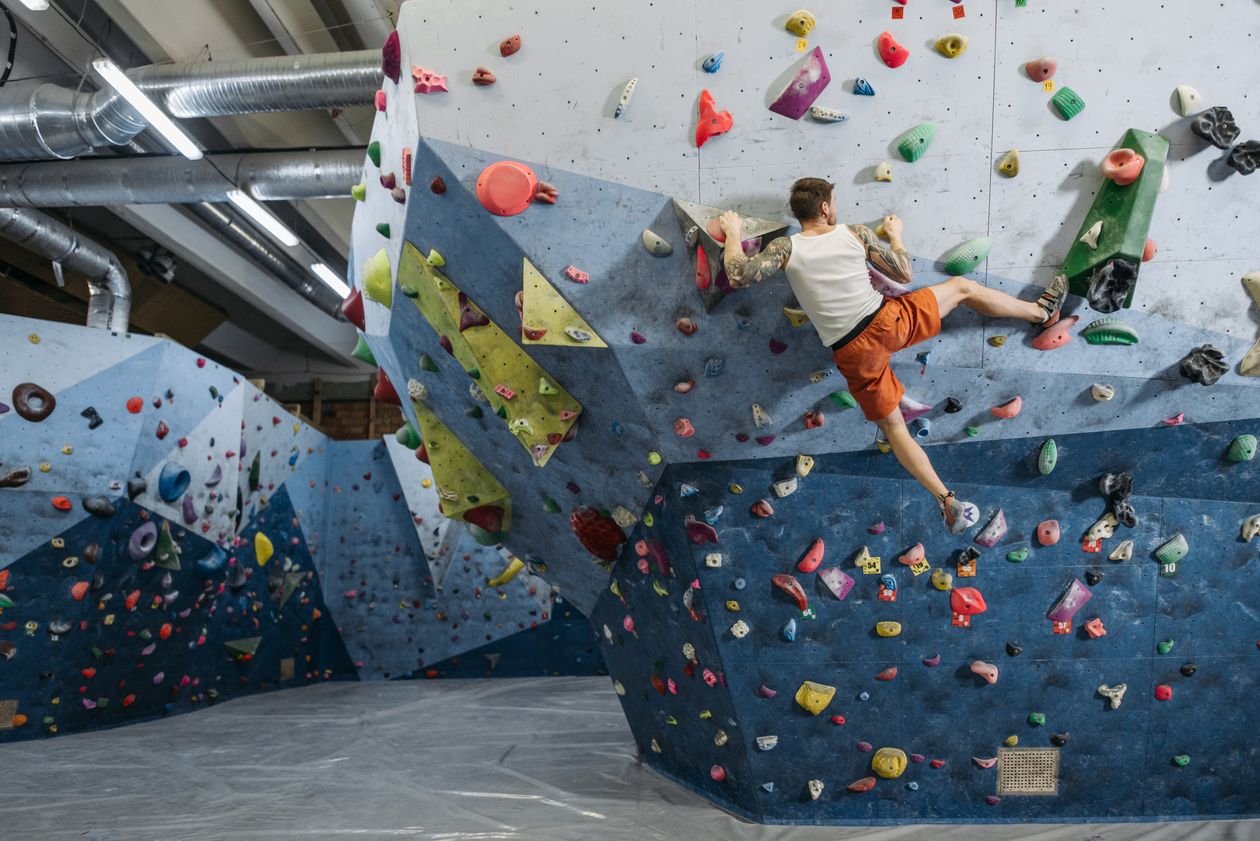
Most gym climbers operate in a state of "randomness." They show up, warm up with a few easy boulders, and then spend the rest of the session attempting the same three moves on a project until they are too exhausted to maintain form. They call this training. It is not. It is exercise. There is a fundamental difference between exercising and training. Exercise is doing something to get tired; training is a structured application of stress designed to produce a specific biological adaptation.
The "gym plateau" happens when a climber reaches a certain grade, usually around V4 or V5, and suddenly stops progressing. They feel they have hit their "limit." In reality, they have simply exhausted the gains provided by random climbing. To break through, you need a protocol. You need to stop climbing "whatever looks fun" and start climbing for a purpose. If every session is just a collection of random boulders, you are not training; you are just playing.
Efficiency in the gym is about the management of intensity and recovery. If you spend your peak energy on boulders that are too easy, you are wasting your output. If you spend it on boulders that are too hard, you are compromising your form and risking injury. The goal is to operate at the edge of your capacity, where the struggle is real but the movement remains controlled.
The Bouldering Session Protocol
A dialed-in bouldering session is divided into three distinct phases: the activation, the power peak, and the technical volume. Most climbers skip the first and last, spending the entire time in the middle. This is an inefficient use of your nervous system.
Phase 1: Activation. This is more than just a warm-up. The goal is to wake up the neuromuscular pathways. Start with a few very easy traverses to get the blood flowing. Then, move to a "benchmark" boulder that is challenging but consistent. This primes your brain for the specific movement patterns of the day. If you jump straight into your project, you are asking your CNS to fire at 100% without a ramp-up, which is a recipe for a failed session and potential injury.
Phase 2: The Power Peak. This is where the real work happens. While you are fully activated and not yet fatigued, tackle your hardest projects. The rule is three attempts per boulder. If you cannot send it in three tries, move to a different project or take a full rest. This prevents the "burnout loop" where you spend an hour on one move, destroy your skin, and lose your mental edge. Focus on maximum intensity and maximum recovery between attempts. Five to ten minutes of rest between burns is not "lazy"; it is necessary for ATP replenishment.
Phase 3: Technical Volume. Once your peak power is spent, do not just go home. Use the remaining energy to work on technique. This is where you climb boulders that are well within your grade but focus on "perfect" movement. Eliminate all unnecessary motion. Focus on precise foot placement and efficient weight transfer. If you can make a V3 look like a V0, you are building the technical base that will support your next grade jump.
Breaking the Mental Loop
Bouldering is as much a mental game as a physical one. The "mental block" occurs when a climber subconsciously decides a move is impossible before they even try it. This manifests as hesitation, "tentative" movement, and a lack of commitment. To break this, you must shift your focus from the outcome (the send) to the process (the move).
The protocol for project breaking is "micro-goals." Do not try to send the whole boulder. Instead, isolate a single move that is causing the failure. Spend the session mastering that one movement. When that move becomes a "given," move to the next. By dismantling the boulder into a series of solved problems, the final send becomes an inevitability rather than a gamble. This removes the anxiety of the project and replaces it with a checklist of achievements.
Stop comparing your progress to the person next to you. The gym is filled with "specialists" who can climb a specific style of hold but fail on everything else. Your goal is a balanced profile. If you are a "crimper," spend your sessions on slopers. If you are a "power-puller," spend your sessions on balance and coordination. The most complete climbers are those who refuse to stay in their comfort zone.
Integration and Recovery
The biggest mistake in indoor climbing is the "every day" mentality. Climbing every single day is a fast track to tendonitis and mental burnout. Your tendons do not grow while you are on the wall; they grow while you are sleeping. If you do not allow for a recovery window, you are simply breaking down your tissues without giving them time to rebuild stronger.
A based gym schedule involves two to three high-intensity sessions per week, separated by at least one full day of rest. On your off days, focus on mobility and light activity. This keeps the blood flowing to the tendons without adding further stress. If you feel a "dull ache" in your finger joints, this is a signal to drop the intensity immediately. Tendons do not give warnings; they give failures. Listen to the ache before it becomes a pop.
The climbing gym is a tool. Use it to build your strength, refine your technique, and test your limits. But remember that the gym is a simulation. The ultimate goal is the rock. Use the efficiency protocols of the gym to prepare your body for the unpredictability of the outdoors. Stop climbing randomly. Start training with intent. The path to the next grade is not through more effort, but through more structure.