Best Weight Training Exercises for Climbing Power-to-Weight Ratio (2026)
Build climbing-specific strength and improve your power-to-weight ratio with science-backed weight training exercises designed for climbers at every level.
Why Your Power-to-Weight Ratio Is the Number That Actually Matters
Your power-to-weight ratio is the single most important physical metric for climbing performance, and most climbers have no idea how to train it properly. You can have the best finger strength in your gym, the most efficient movement patterns, and a body that fits granite pockets like it was designed for them. But if you are dragging excess mass up the wall with average power output, you are leaving sends on the table. Every single grade above V7 requires meaningful power-to-weight improvements. This is not a debate. It is biomechanics. This article covers the weight training exercises for climbing power-to-weight ratio that actually produce results, in the gym and on the rock.
Power-to-weight ratio is simple math. Divide your peak power output by your body mass. A 150-pound climber who can generate 600 watts of power has a ratio of 4.0. A 180-pound climber generating the same 600 watts has a ratio of 3.33. That 150-pound climber will climb harder routes because they move their mass more efficiently through space. Every extra pound of body mass that does not contribute to climbing performance is a liability. This is why the best boulderers in the world are uniformly lean and why top sport climbers look like they could snap in half. Training for power-to-weight ratio means building strength and power while managing body mass. Not one or the other. Both.
Before you touch a barbell, understand that power-to-weight training for climbing is not the same as training for general fitness. You are not trying to look good in a tank top. You are trying to generate maximum force in minimal time while hanging from small holds. The weight training exercises for climbing power-to-weight ratio that matter are the ones that replicate those demands. That means specific movement patterns, specific loading schemes, and specific body composition targets. Everything else is noise.
Compound Lifts That Directly Improve Climbing Performance
The foundation of any serious power-to-weight training program for climbing is built on compound movements. These exercises recruit the largest muscle groups, produce the highest force outputs, and carry over most directly to climbing-specific movement. If you are not doing these movements, you are missing the biggest returns on your training time investment.
The deadlift is non-negotiable. It is the king of posterior chain development and posterior chain strength is what separates climbers who can lock off hard from those who cannot. A strong posterior chain allows you to engage your hips through dynamic movements, maintain body tension on steep terrain, and generate force through your legs when your arms are pumped. For climbing-specific power-to-weight training, focus on trap bar deadlifts and snatch grip deadlifts. Trap bar deadlifts place less stress on the lower back while allowing higher power output. Snatch grip deadlifts force you to pull from a longer position, more closely replicating the pulling mechanics you use on vertical and slightly overhanging terrain.
Perform trap bar deadlifts in the 3-5 rep range with 3-4 sets. Rest 3-5 minutes between sets because you need full recovery to hit peak power output on each set. The goal is force development, not metabolic conditioning. If you are gasping for air between sets, you are training the wrong energy system. Use a controlled tempo on the eccentric phase, around 2-3 seconds down, and explode up as fast as possible. Power output is velocity-dependent. Moving the bar faster with the same load equals more power. More power equals better power-to-weight ratio on the wall.
The squat is equally essential but for different reasons. Leg drive is underrated in climbing. When you are standing up on a foothold and pushing into it, that is a squat pattern. When you are matching a high foot and pressing through your legs to gain height, that is a split squat or pistol squat demand. Weak legs mean you are overloading your upper body on moves that should be shared between limbs. Front squats and split squats are the two variations that matter most for climbers. Front squats maintain the quad-dominant positioning that translates to foot-on volume climbing. Split squats address the single-leg stability and unilateral leg strength that you need when your feet are on tiny edges or in pockets.
Perform front squats in the 5-8 rep range for 3-4 sets. Use 2-3 minutes rest between sets. Split squats should be performed as a single-leg exercise with a rear foot elevated or in a walking pattern. Aim for 6-8 reps per leg, 3 sets. The walking split squat variation adds a dynamic stability demand that more closely mimics the demands of a sustained boulder problem or sport climbing route where you are constantly adjusting foot positions under load.
The overhead press might seem disconnected from climbing but shoulder strength matters more than most climbers realize. A strong overhead press indicates good shoulder health, adequate core-to-upper-body connection, and the ability to maintain body position when reaching for high holds. For climbing-specific benefits, focus on strict pressing variations over push presses or jerks. Strict pressing builds raw strength without relying on leg drive to make up the difference. Use a neutral grip, press in the sagittal plane, and avoid excessive lean back. Aim for 5-6 reps per set, 3-4 sets, with 2-3 minutes rest.
Pulling Variations That Build the Specific Strength Climbing Demands
Climbing is a pulling sport. Your back, biceps, and grip are doing the work while your legs and core support and position your body. Weight training exercises for climbing power-to-Weight ratio must include serious pulling work. Not the light lat pulldown circuits you see climbers doing between routes. Real pulling strength that transfers to the wall.
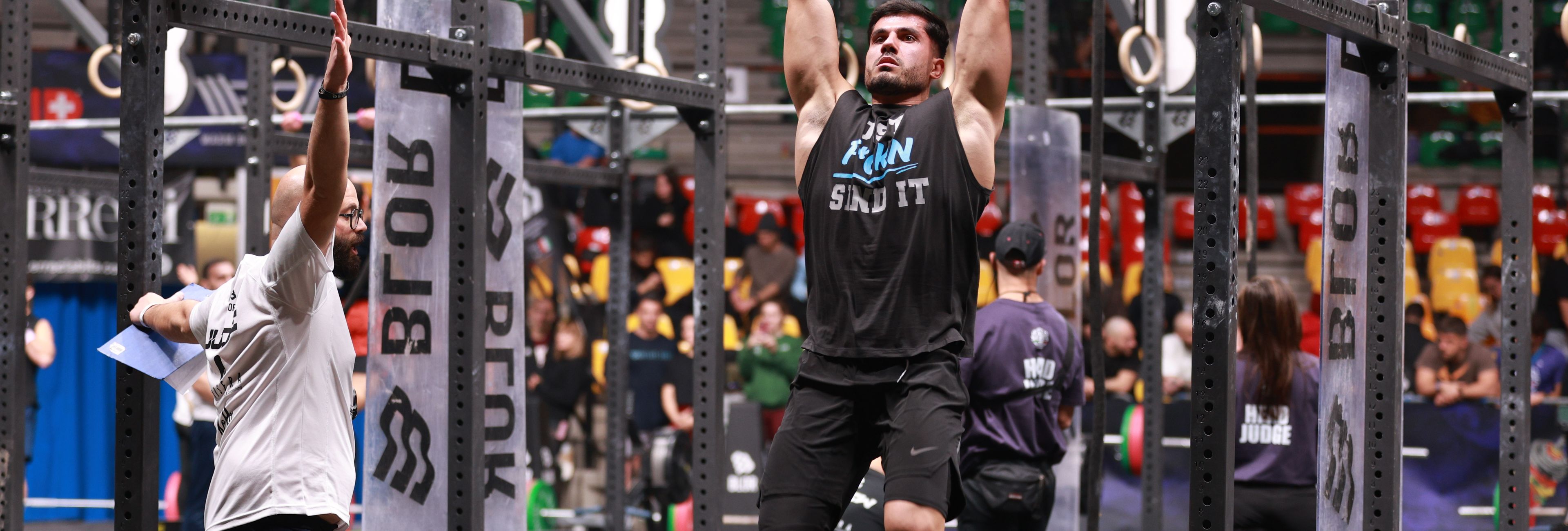
Weighted pull-ups are the gold standard for climbing-specific pulling strength. A one-arm pull-up requires roughly your body weight plus additional load. If you can do 3 strict one-arm pull-ups with 20 pounds added, your power-to-weight ratio has improved substantially because that extra force production comes without additional body mass. Program weighted pull-ups in the 3-5 rep range with 3-4 sets. Rest 2-3 minutes between sets. Add weight gradually. The goal is not metabolic pump. The goal is maximum force production. If you are doing 15 reps per set, you are training the wrong quality of strength for hard climbing.
The chest-to-bar pull-up variation matters for climbing-specific transfer. The full range of motion from dead hang to chest touching the bar requires serratus anterior engagement and lat recruitment that partial range pull-ups do not develop. On the wall, you need to pull from fully extended arms into lock-off positions. Chest-to-bar pull-ups train that exact range of motion under load. If you cannot pull to chest with your body weight, you are not ready to lock off to a high hand hold under the fatigue of a hard route.
Heavy rows should complement pull-ups in your programming. Bent-over barbell rows and chest-supported dumbbell rows both develop the mid-back thickness and scapular stability that prevent shoulder injuries and improve pulling power. Bent-over barbell rows target the lats, rhomboids, and lower traps in a compound movement. Chest-supported dumbbell rows allow higher isolation of the rear delts and upper back while eliminating lower back fatigue that can accumulate from heavy barbell rows. Program 4-5 sets of 5-6 reps with 2-3 minutes rest. The weight should be heavy enough that 5-6 reps is genuinely challenging. If you can do 12 reps, add weight.
Unilateral and Core Exercises That Prevent Weak Links
Power-to-weight ratio is only as good as your ability to apply force through your strongest limb in positions that climbing demands. That means unilateral strength and core stability are not optional. Weakness in either area becomes the limiting factor on your sends.
Pistol squats address leg dominance and single-leg power directly. Most climbers have a dominant leg that does more work when standing up or pushing. This imbalance means your power-to-weight ratio is actually limited by your weaker leg. Pistol squats identify and develop that weakness. The movement also builds the hip mobility and ankle dorsiflexion that allow you to get low on steep terrain and maximize your reach from a given foothold. Program pistol squats as a body weight exercise to failure across 3-4 sets. Rest 90 seconds between sets. When body weight becomes easy, add weight in a vest or hold a dumbbell.
The Turkish get-up is the single best core exercise for climbing because it develops anti-rotation, anti-extension, and shoulder stability simultaneously while requiring a coordinated hip hinge and leg drive. Climbing constantly demands these qualities. Every time you flag, twist, or adjust body position on steep terrain, your core is resisting unwanted motion. The Turkish get-up trains that exact capacity. Use a light weight. The demand is neurological and coordination-based, not load-based. A 20-30 pound kettlebell is sufficient for most climbers. Perform 3-4 repetitions per side, slowly and with control.
Ab wheel rollouts and hanging leg raises round out the core work. Ab wheel rollouts develop anti-extension strength that keeps your lower back safe when you are tensioning on overhangs. Hanging leg raises develop the hip flexor and lower abdominal control that allows you to bring your feet to your hands for dynamic moves. Program ab wheel rollouts for 3 sets of 8-12 reps with good form. Hanging leg raises for 3 sets of 10-15 reps. Both exercises should be performed with control throughout the full range of motion. Kipping or swinging defeats the purpose. You are training position and tension, not movement speed.
Programming Your Training for Maximum Power-to-Weight Transfer
Knowing which exercises to do is only half the problem. How you program them determines whether you actually improve your power-to-weight ratio or just get better at doing exercises in the gym. Climbing performance requires a specific blend of strength, power, and work capacity. Your weight training must address all three qualities in the right proportions.
Split your training into strength days and power days. Strength days focus on heavy compound lifts in the 3-5 rep range with long rest periods of 3-5 minutes. Power days focus on explosive variations, plyometrics, and climbing-specific power output. This division allows you to develop maximum force production without interference between the strength and power adaptations. Performing both in the same session compromises both.
On strength days, start with your heaviest compound lift first while you are fresh. Deadlifts or trap bar deadlifts should be first in your sequence on their day. Front squats should be first on their day. Rest 3-5 minutes between heavy sets to allow full ATP replenishment. Perform 3-4 working sets. Then move to accessory exercises in the 6-10 rep range with 2-3 minutes rest. This volume addresses muscular endurance and hypertrophy without compromising your heavy lift recovery. Close the session with core work and mobility.
On power days, focus on explosive movements that do not require maximum loads. Jump squats, box jumps, clap pull-ups, and campus board work all develop rate of force development. Rate of force development is the speed at which you can apply force. On the wall, fast application of force means committing to moves, sticking dynamic catches, and generating power from positions of mechanical disadvantage. Perform 3-4 sets of 3-5 explosive reps with 2-3 minutes rest. The load should be submaximal. You are training velocity, not maximum strength.
Manage your body mass intentionally. Power-to-weight ratio improves either by increasing power output, decreasing body mass, or both. Most climbers see better results from decreasing body fat while maintaining strength than from adding muscle mass while body composition stays constant. Target 10-12 percent body fat for optimal climbing performance. Below 10 percent requires unsustainable dietary practices for most climbers. Above 12 percent means carrying mass that does not contribute to climbing performance. Calculate your maintenance calories, subtract 300-500 calories, and prioritize protein intake at 1.6-2.2 grams per kilogram of body weight. This combination allows fat loss while preserving strength and power output.
What Actually Kills Your Power-to-Weight Gains
Most climbers train hard but not smart. They accumulate volume that exceeds their recovery capacity, plateau at intermediate grades, and wonder why their power-to-weight ratio is not improving. The problem is almost never insufficient training. It is poor programming, insufficient recovery, or both.
Training too frequently is the most common mistake. You cannot accumulate meaningful strength gains if you train the same movement patterns every day. Your body needs 48-72 hours between heavy sessions targeting the same muscle groups. If you are deadlifting three times per week, you are not recovering fully between sessions. You are performing submaximal work disguised as heavy training. Two sessions per week for heavy compounds is sufficient for long-term strength development. More frequent training does not equal more gains. It equals accumulated fatigue and eventual injury.
Neglecting sleep and nutrition is the second killer of power-to-weight progress. Strength gains happen during recovery, not during training. If you are sleeping less than 8 hours per night, you are leaving gains on the table. Your body repairs and rebuilds during sleep. Growth hormone release peaks during deep sleep cycles. Skimping on sleep is skimp on gains. Same with nutrition. Inadequate protein intake means your body cannot rebuild the muscle tissue damaged during training. Inadequate total calories means your body cannibalizes muscle for energy rather than building it.
Chasing pump and metabolic conditioning instead of heavy strength work is the third mistake. Nothing wrong with doing repeater circuits and limit bouldering on the wall. That is climbing-specific training and it matters. But if your weight training sessions are designed to give you a pump and make you tired, you are not developing the maximum force production that improves power-to-weight ratio. Your gym sessions should feel underwhelming in terms of perceived exertion. You should leave feeling like you did quality work, not like you survived a beating. Hard effort in the gym translates to fatigue on the wall. Quality effort translates to strength gains.
Your power-to-weight ratio is not fixed. It responds to intelligent training stimulus, adequate recovery, and intentional body composition management. The weight training exercises for climbing power-to-weight ratio that matter are not complicated. Compound lifts, pulling variations, unilateral work, and core stability trained with appropriate loading and sufficient recovery. That is the entire program. Stop overcomplicating it. Pick a few heavy movements, get strong, get lean, and climb harder. The send is waiting.