Best Hangboard Exercises for Climbing Finger Strength (2026)
Master hangboard training with this complete guide to finger strength exercises for climbers. Learn progressive protocols, grip variations, and injury prevention techniques to build powerful fingers.
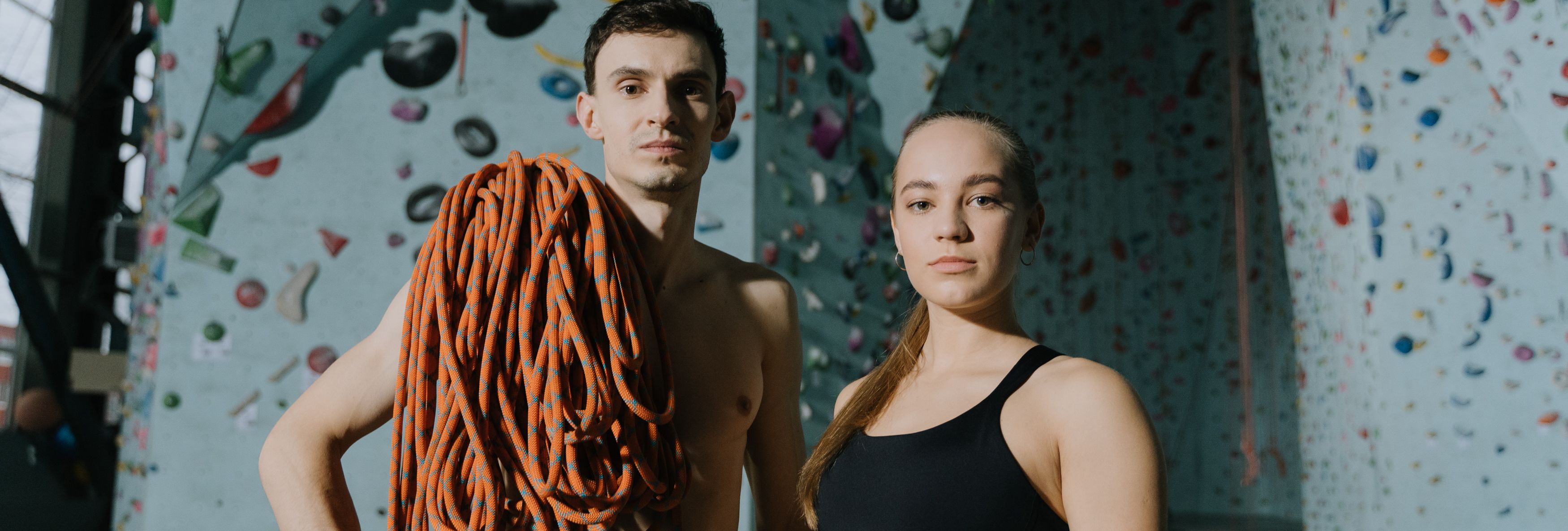
Your Fingers Are the Limit. Do Not Ignore That.
Every climber hits a ceiling. You cruise V5s, maybe knock out a V6 on a good day. Then nothing. Plateaus are frustrating because they feel arbitrary. Your technique is fine. Your power is adequate. Your power endurance holds for most routes. But something is still holding you back, and if you are being honest with yourself, you know exactly what it is. Your finger strength is the bottleneck. It has been the bottleneck since the day you started climbing, and it will remain the bottleneck until you treat it like the limiting factor it actually is.
Hangboard exercises are the most direct way to address this deficiency. Not the only way. Your full range of climbing movement builds tissue capacity and tendon resilience over time. But hangboard training targets the specific adaptations your finger flexors need to handle higher loads, narrower edges, and steeper angles. If you are serious about climbing above your current ceiling, you need to address finger strength specifically. Hangboards let you do that with precision and progressive overload that climbing alone cannot provide.
The problem is that most climbers approach hangboard training wrong. They grab the wrong holds, use the worst protocols, and either quit after two sessions because their skin hurts or push too hard and wonder why their elbows is angry by month three. This guide fixes that. You will learn which hangboard exercises actually work, how to structure your training, and how to progress without destroying the connective tissue you depend on.
Before You Touch the Board: The Prerequisite No One Talks About
Your tendons are not your muscles. This distinction matters more than most climbers realize. Muscle tissue adapts relatively quickly. You can build noticeable strength gains in six to eight weeks of targeted training. Tendons and their surrounding connective tissue operate on a different timeline. A healthy tendon adaptation cycle runs closer to twelve to twenty weeks. This means if you are coming to hangboard training fresh, you need to earn the right to load incrementally.
The minimum entry requirement is simple. You should be able to hang from a flat 20mm edge with your arms locked off for at least fifteen seconds without your shoulders dropping, your form collapsing, or your elbows complaining. If you cannot do that, spend time on open hand hangs before you move to smaller edges or adding weight. Your body will adapt, but rushing the process is how you get injured.
Once you can meet that baseline, you have choices about how to proceed. The two fundamental protocols are max hangs and repeaters. Both work. Neither is universally superior. The protocol you choose depends on your goals, your schedule, and honestly, what you can recover from consistently.
Max Hangs: The Protocol for Absolute Strength
Max hangs train your nervous system to recruit maximum fiber recruitment under load. You are teaching your body to activate more of what you already have, rather than building additional tissue. This makes max hangs the better choice if your primary limitation is handling high intensity on small holds, steep terrain, or powerful moves that require momentary lock off strength.
The standard protocol is seven seconds maximum effort per hang, followed by enough rest that you can give genuine effort on every rep. Most climbers use a three hang to failure protocol, meaning you stop when your grip gives out on the third hang or when your form starts degrading. Rest intervals run three to five minutes between hangs. You are not doing twenty reps. You are doing three to five hard efforts and calling it done.
Load selection is where most people get sloppy. You want a weight that allows you to hold the position for exactly seven seconds before failure. If you are going longer than seven seconds, add weight. If you are failing before five seconds, remove weight. The sweet spot is hitting that seven second window consistently across all your hangs. Use a weight belt, a counterweight system, or a hangboard with integrated loading capability. Do not guess your added weight. Use a scale or track your numbers in a spreadsheet.
The edge size you train on matters. Most max hang protocols work best on edges between 10mm and 20mm. Train on the edge size closest to the holds that challenge you on the wall. If you struggle with small-crimpy routes, train on 10mm. If your weakness is steep climbing on positive holds, 20mm might be more applicable. You can train multiple edge sizes, but separate them by at least forty eight hours to avoid overtaxing your recovery capacity.
Repeaters: The Protocol for Metabolic Capacity
Repeaters target a different adaptation. Where max hangs train absolute recruitment, repeaters train your muscular endurance and the metabolic capacity of your forearm tissue. You do more reps at lower intensity, teaching your tissue to handle sustained effort. If you climb routes with extended sequences, steep sections, or multiple hard moves without good rest, repeaters address that limitation more directly than max hangs.
The classic repeater protocol is six hangs of seven seconds each, separated by three seconds of rest. That constitutes one set. You perform three to five sets with a two minute rest between sets. You are not going to failure on every rep. You are stopping at seven seconds regardless of whether you feel like you could hold longer. The three second rest between hangs is short enough that your forearms stay pumped, which is the point. You are training your tissue to keep working under metabolic stress.
Load selection for repeaters is percentage based. Start with sixty to seventy percent of your max hang weight. This is substantially lighter than what you use for max hangs because the cumulative fatigue across sets and reps is higher than the fatigue from any single max hang. If you can hold past seven seconds easily on your first set, you are underloaded. If you cannot complete six reps on your fifth set, you are overloaded. Adjust accordingly over subsequent sessions.
The critical difference between repeaters and max hangs is intent. Max hangs are about maximum force output. Repeaters are about sustained work under load. These are fundamentally different training goals. Do not confuse the two. Do not try to combine them in the same session unless you are an experienced climber managing a structured periodization plan.
The Exercises That Actually Build Strength
Beyond protocol selection, you need to understand which specific exercises address which weaknesses. Hangboard training is not just about hanging from edges. Different grip positions target different muscle groups, different tendons, and different movement patterns you encounter on the wall.
Half crimp hangs are where most climbers should spend the majority of their time. This grip position, where your first ring finger is flexed but your second is open, mirrors the position your hand assumes on most climbing holds. Training this position builds the tissue capacity and recruitment patterns you actually use while climbing. Start with open hand hangs if half crimp feels too aggressive, but treat half crimp as your primary objective.
Open hand hangs are useful as a developmental tool and for climbers with pre-existing tendon issues. The open hand position places less load on the pulley system. If you are new to hangboard training, open hand hangs for the first four to six weeks before transitioning to half crimp is a reasonable approach. But understand that open hand is not the goal. It is the on-ramp.
Full crimp hangs should be approached with more caution. This grip position, where both finger joints are fully flexed, places significant stress on the A2 pulley and surrounding tissue. Most climbers should avoid full crimp training until they have built a substantial base of half crimp strength. If you do train full crimp, keep the loads light and the volume low. A single set of three hangs at body weight, twice per week, is sufficient. More than that invites injury.
Gaston hangs train your lateral finger strength and the engagement patterns required for underclings and Gaston moves. These are performed with your palms facing outward, pressing the edges against your body. The biomechanics are different from standard hanging, and the loads are typically lower. Gastons are useful for climbers whose weaknesses are or dynamic moves to horizontal features.
Pockets, when your hangboard has them, train two finger and three finger combinations. Two finger pockets are notoriously high risk for pulley injury because load concentration is intense. If you train two finger pockets, start with the lightest load you can possibly manage and progress slowly. Most climbers should avoid two finger pocket training entirely unless they have a specific, documented weakness in that grip position. Three finger pockets are more manageable but still require conservative loading.
How to Structure Your Hangboard Training Week
Frequency matters. For most climbers, two hangboard sessions per week provides sufficient stimulus without compromising recovery. Your tissues need time between sessions to adapt. Training three times per week is possible for advanced climbers with well-established bases, but most recreational climbers should stick to two quality sessions and allocate their third climbing day to actual climbing.
Do not hangboard on days you are doing hard climbing. Your fingers need to be fresh for maximum effort work. If you are projecting a hard route or bouldering at your limit, that session already taxes your finger tissue. Adding hangboard training after is how overuse injuries happen. Space your hangboard sessions at least forty eight hours from your hardest climbing days.
A sample week for an intermediate climber might look like this. Monday: hangboard session focused on max hangs. Tuesday: moderate climbing, moderate volume, no maximumeffort finger work. Wednesday: rest or light movement. Thursday: hangboard session focused on repeaters. Friday: hard climbing or bouldering. Saturday and Sunday: rest or easy movement. This structure gives you two quality finger sessions, separates them from your hard climbing, and builds in adequate recovery time.
Track your sessions. Write down the edge size, protocol, weight, sets, reps, and how you felt. This data is how you know whether you are progressing. If you are stuck at the same weight for six sessions and form is degrading, something needs to change. Either you are not recovering enough, your protocol needs adjustment, or you have a technique issue in your execution.
Common Mistakes That Stall Your Progress
Too much too soon is the most common failure mode. Climbers read about hangboard training and immediately want to train like the pros. They jump to maximum loads on small edges before their tissue can handle moderate loads on larger edges. The result is usually a tweaky finger within the first month, sometimes a full pulley injury that sidetracks training for a season. Respect the process. Earn your incrementally.
Ignoring warm up is the second major mistake. Your fingers need a specific warm up before you load them. A few minutes of light traversing, some dead hangs at body weight, and gradual progression to working weight prepares the tissue for load. Jumping straight to maximum weight hangs is how you get injured. Warm up your fingers the same way you warm up your shoulder or knee before physical effort.
Chasing numbers instead of protocol integrity is a trap experienced climbers fall into. You add weight every session because you want to see the numbers go up. But if the protocol suffers, if you are failing before seven seconds consistently, if your form is breaking down, those numbers are meaningless. Better to train at a weight you can execute properly than to fail your way through sessions with heavier loads. The adaptation comes from the stimulus of appropriate effort, not the number on the scale.
Skipping the deload is how you stall permanently. Every four to six weeks, take a reduced week. Drop your volume and intensity by thirty to forty percent. Your tissue needs this recovery to absorb the training you have done and come back stronger. If you are grinding through session after session at maximum intensity without deloads, you are accumulating fatigue faster than you are adapting. The result is stagnation or injury.
When to Stop and What to Expect Instead
You will not always get stronger in a linear fashion. Training cycles involve periods of performance decline before breakthrough adaptation. Your first three to four weeks of hangboard training might feel easy. Weeks five through eight often feel hard. You are fatigued from accumulated training but have not yet expressed the adaptation. This is normal. Do not quit. Do not add more volume. Do exactly what you have been doing and trust the process.
Pain is different from discomfort. Soreness in your forearms after a session is normal. Tenderness at a specific pulley that persists for more than a few days is not. Sharp pain during a hang is a stop signal. Do not train through acute pain. The difference between productive training and destructive training is sometimes just knowing when to back off. If something feels wrong in your finger, rest for several days before testing it again. A week of rest is nothing compared to three months of rehab for a pulley tear.
Your skin matters more than most climbers acknowledge. Hangboard training is brutal on your skin. Properly maintained skin allows you to train consistently. Torn flappers and flappers mean you cannot train. Take care of your hands. File down calluses before they rip. Keep your skin moisturized between sessions but not so soft that it tears easily. This is unglamorous maintenance, but it is the foundation that allows you to train.
Finger strength takes time. Real time. Not the timeline fitness influencers promise. You should expect to see meaningful changes in six to eight weeks for muscle adaptations and twelve to sixteen weeks for tendon adaptations. If you are training intelligently, you will notice changes in your climbing within two to three months. Full expression of hangboard training adaptations on your climbing performance often takes six months or longer. This is a long game. The climbers who make real progress treat it that way.
The Bottom Line Is Simplicity
Hangboard training for finger strength is not complicated. Pick a protocol. Execute it with integrity. Progress the load gradually. Respect recovery. Track your sessions. Stop when something hurts. Come back when the pain resolves. Do not overthink it. Do not overcomplicate it. The climbers who make the most progress are usually the ones who show up consistently and do the basic work without getting distracted by the latest protocol variation or supplement stack.
You have been plateaued long enough. Your fingers are telling you something. Listen to them. Give them what they need: systematic, progressive overload delivered through exercises that target the tissue you use when you climb. Hangboard training is the most direct path from where you are to where you want to be. The only variable is whether you have the discipline to do it correctly.