Finger Strength Training for Climbing: Complete Protocol (2026)
Build unstoppable grip power with this science-backed finger strength training protocol. Learn the exact methods elite climbers use to develop elite-level finger strength and send harder routes.
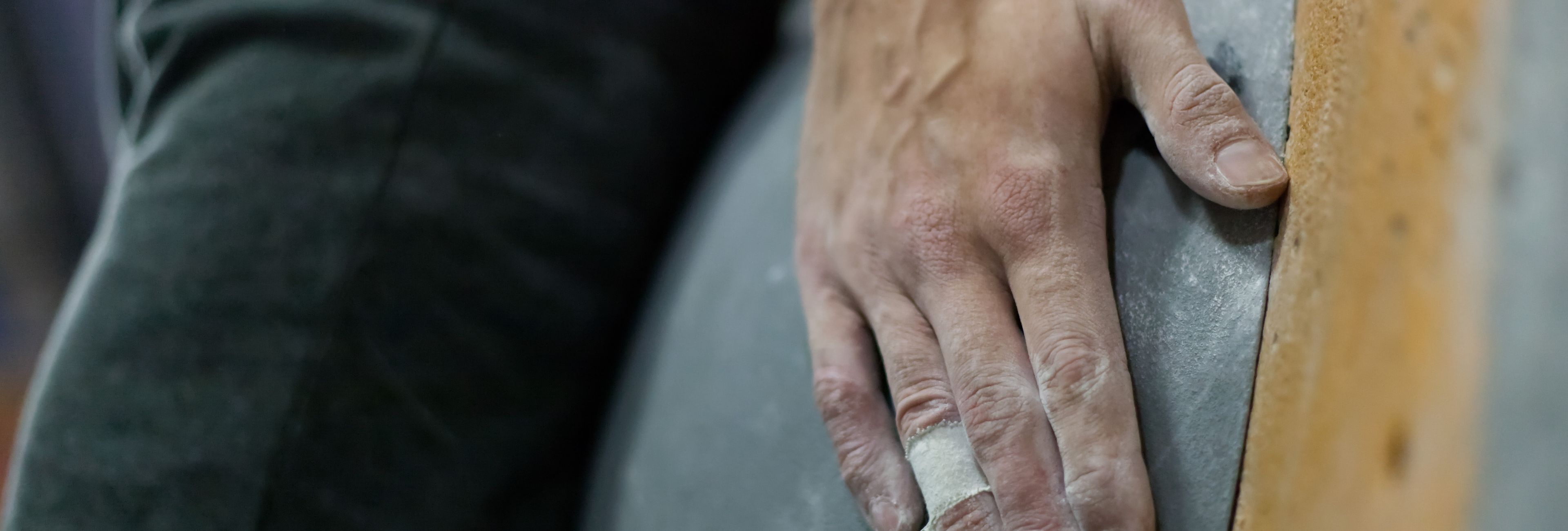
Your Fingers Are the Engine. Everything Else Is the Chassis.
If you have ever watched a strong climber cruise through technical terrain while you are grunting and shaking on the same wall, you already know the truth: finger strength is the limiter. Not technique, not cardio, not mental game. Your fingers and the connective tissue that holds them to the wall is the first thing to fail when the difficulty climbs. This is not a soft tissue metaphor. This is load-bearing fact. The protocol laid out here is not for beginners who are still learning to trust their feet. It is for intermediate and advanced climbers who have plateaued at V6, V7, 5.12, or 5.13 and cannot figure out why their climbing feels stuck. The answer is almost always finger strength, and the solution is systematic, progressive overload applied to your hand and forearm system with enough patience to let tissue adaptation happen.
Most climbers approach finger training like they approach climbing itself: sporadic, emotional, and governed by enthusiasm rather than logic. They hang on a hangboard when they feel strong, skip sessions when the skin is trashed, and wonder why they cannot hold a one-arm hang on a 20mm edge after two years of inconsistent effort. Consistency beats intensity in finger training. Every time. Tissue adaptation takes months, not weeks. You cannot rush the process without breaking something, and you cannot skip sessions without losing the neurological adaptations that make your fingers feel lock-off ready.
The protocol below is designed for climbers who can already hang their body weight on a 20mm edge for at least 10 seconds. If you cannot do that, stop here and work up to it with density hangs and campus board foot assists before touching any of the following. Skipping this prerequisite is the most common reason climbers end up with pulley injuries that sideline them for three to six months. There are no shortcuts through tissue that is not ready to handle load.
The Load Management Framework: How Much Is Too Much
Before any specific protocol makes sense, you need to understand how to structure load across a training week. Finger training lives and dies by volume management. You can train finger strength three to four times per week maximum without accumulating damaging fatigue in the connective tissue. More than that and you are not training. You are rehabilitating from training you did the day before. The tissue needs 48 to 72 hours between sessions to lay down the collagen repairs that actually make your fingers stronger over time.
The simplest framework is a four-day cycle: two sessions focused on maximum load, one session focused on repeater endurance, and one rest day in the middle that still involves climbing. Your climbing on the rest day is not finger training. It is movement practice, footwork refinement, and mental engagement. Keep it easy, keep it technical, and keep the hard locking and full-crimp grip positions to an absolute minimum. If you climb hard on your rest day, you are negating the adaptation you worked for the previous two sessions.
Volume for maximum load days should be low. Think 6 to 10 total hangs, distributed across 3 to 4 sets with 3 to 5 minutes of rest between sets. You are not doing a pumpout session. You are applying maximum tension to the finger flexors under controlled conditions. The goal is to recruit as many muscle fibers as possible and teach your nervous system to produce maximum force through a specific grip position. This is not about time under tension. This is about peak force production. If you can hang longer than 12 seconds on your target edge, the edge is too easy. Drop weight or move to a smaller hold.
Maximum Load Protocol: Building the Foundation
The maximum load phase lasts 6 to 8 weeks and should be the first block in any structured training cycle. You will need a hangboard, a weight vest or a harness with an adjustable weight stack, and a timer that displays tenths of seconds. The protocol is simple because the simplicity is the point. Complexity is the enemy of adaptation when it comes to finger training.
Choose a grip position that allows a full open-hand or half-crimp position depending on your primary climbing style. Boulderers and sport climbers should prioritize half-crimp on edges ranging from 20mm down to 12mm. Trad climbers and route climbers who spend more time in open-hand positions should spend the majority of their time in deep open-hand pockets and sloping edges. You can train both positions, but designate one as your primary load position per session.
Load yourself to a weight that allows a maximum 10-second hang on your target edge. If you can hang longer than 12 seconds, add weight. If you cannot hang 8 seconds, remove weight. The goal is a consistent 10-second max effort, every single rep, across every set. You are not grinding through bad reps. If rep three feels slow and sticky, you are done for that set. Bad reps teach bad patterns and increase injury risk. Rest 3 to 5 minutes between sets to allow full ATP replenishment in the forearm flexors.
Perform 3 sets of 1 hang at maximum load per session during weeks one and two. Move to 3 sets of 2 hangs per session during weeks three and four. Add a fourth set in weeks five and six if recovery allows. This is not a protocol you rush. The progressive overload comes from adding weight or decreasing edge size, not from adding more hangs per session. More hangs per session is a trap that leads to cumulative fatigue and eventual tendinosis. Trust the process. The load is doing the work, not the volume.
Repeater Protocol: Building the Engine for Hard Sequences
Repeater protocols are misunderstood by most climbers. They are not about building a massive forearm pump. They are about teaching your finger flexors to sustain repeated submaximal contractions under conditions that simulate hard climbing sequences. The energy system you are training here is the glycolytic pathway, which is the primary energy source for efforts lasting 10 to 30 seconds of sustained hard climbing with short rests between moves.
Use a 7-second hang followed by 3 seconds of rest. This is one rep. Perform 6 to 8 reps in a set, which totals roughly 60 seconds of cumulative hanging time. Rest 90 seconds between sets and perform 3 to 4 sets per session. Choose an edge size that is one step easier than your maximum load edge, or use a two-pad pocket if you are training on a wooden hangboard with that feature. The goal is not failure. The goal is controlled, consistent performance across all reps and all sets. If your last rep of set three looks like your first rep of set one, you have the intensity correct. If you are falling off the edge or barely locking off, the edge is too small or you have too much added weight.
Repeat this protocol for 4 to 6 weeks following your maximum load block. The two protocols complement each other. Maximum load builds peak force production for single hard moves and deadpoints. Repeaters build the capacity to recover between hard moves on a route or boulder problem where the rest is insufficient to fully restore your fingers.
Systematic Progression: When to Add Weight and When to Go Smaller
Progression in finger training is not linear and it is not automatic. You earn progression by demonstrating consistency at your current level across multiple sessions. If you are hitting your target hang times with good form and adequate recovery between sessions, you are ready to progress. If you are missing target times, grinding through reps, or noticing lingering soreness in your pulleys or A2/A4 joints, you are not ready and the current level is already at your ceiling for this training block.
Add weight in 2.5 to 5 pound increments when you can hit your target hang time for every rep across every set for three consecutive sessions without any degradation in form. This applies to both maximum load hangs and repeater sessions. If you add weight and immediately fall off the edge or cannot lock the position, remove the weight immediately and do not chase ego loads. The hangboard does not care how much you can lift. It cares whether you can hold the position under control.
Decrease edge size when you can comfortably hang your body weight plus your standard added load for 12 seconds or longer on your current edge. Move from 20mm to 18mm, or from 18mm to 16mm. Do not jump more than one size at a time. The perceived drop in difficulty when moving to a smaller edge is significant and the load on the pulleys increases substantially. This is where most climbers get hurt because they underestimate the structural demand of a smaller edge. Go slow. The difference between 18mm and 16mm on your fingers is not a 12 percent decrease in difficulty. It is closer to a 30 percent increase in tissue load because of the mechanics of the joint angles involved.
Recovery, Deload, and the Long Game
Finger tissue takes longer to adapt than muscle tissue. The pulleys and tendons involved in grip are dense, avascular structures that receive limited blood flow compared to the bellies of the forearm flexors. This means recovery from finger training is measured in days, not hours. You should feel 100 percent recovered between sessions, not 80 percent recovered and getting by on motivation. Working through residual fatigue in finger training is how you develop chronic tendinosis that requires six months of rest and rehab to resolve.
A proper deload week drops finger training volume by 50 percent every fourth week. You still hang, but you use fewer sets, shorter holds, and less added weight. The deload week is not optional. It is when the adaptation from the previous three weeks is consolidated into lasting structural changes in the tissue. Training through a deload week is like studying a new climbing move every day without sleeping. The consolidation does not happen without the rest.
Long-term, plan for 12 to 16 weeks of structured finger training followed by 4 to 6 weeks of maintenance. Maintenance looks like one maximum load session per week with 4 to 5 total hangs at your previously established working weight. This is enough to hold your gains without accumulating the fatigue that comes from high-frequency finger training. If you stop finger training entirely for more than three weeks, expect to lose 15 to 20 percent of your peak strength within a month. The neurological adaptations fade faster than the structural ones. You can rebuild faster than you can build initially, but the tissue still needs load to maintain.
The Protocol in Practice: What It Actually Looks Like
Here is what a sample week looks like on this protocol once you have established baseline loads and are progressing through the maximum load phase. Monday: maximum load session, 3 sets of 2 hangs at your working weight on your primary grip position. Wednesday: repeater session, 4 sets of 7 reps on 7-and-3, one step easier edge than your max load edge. Friday: maximum load session, 3 sets of 2 hangs, optional to switch to secondary grip position if you train multiple positions. Saturday: easy climbing, technical terrain, focus on precision and footwork, no hard locking or full-crimp throws.
Track every session. Write down the edge size, added weight, hang times, and perceived exertion on a scale of 1 to 10. This data is not optional. It is how you know whether you are progressing, plateauing, or accumulating hidden fatigue that will manifest as a pulley tweak three weeks from now. The journal is not for motivation. It is for pattern recognition. When your hang times start dropping without a change in load, you are either accumulating fatigue or approaching a plateau. Either way, the data tells you to adjust before something breaks.
If you are serious about climbing harder, you have to take finger strength training seriously. Not as an afterthought or something you do when you have five minutes left at the gym. As a structured, progressive, non-negotiable part of your weekly training. Your fingers are the engine. Build it right, maintain it consistently, and it will carry you through every hard sequence you have ever dreamed of sending.