Core Training for Climbers: Why Your Abs Are Sabotaging Your Sends
Your core is the connection between your hands and your feet. If it is weak, every move on steep terrain costs double. Here is the complete core training protocol for climbers.
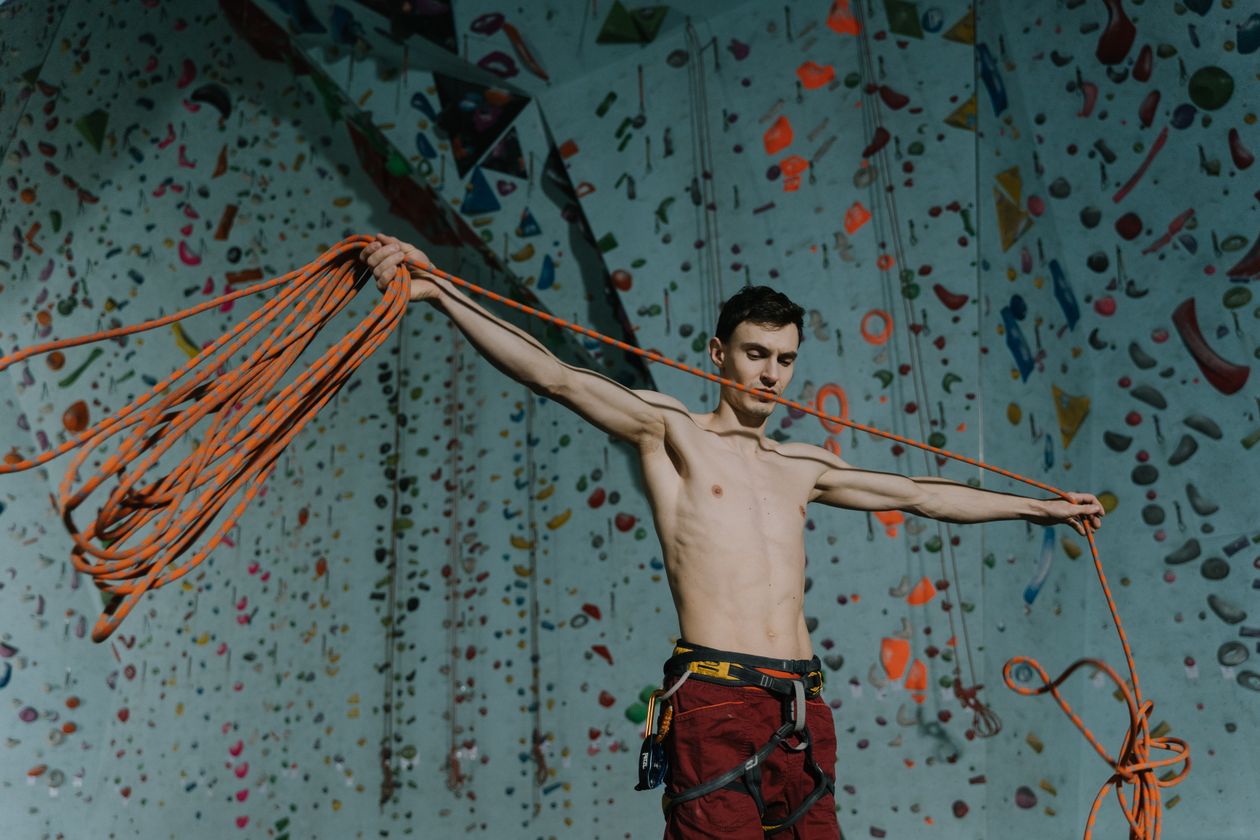
Photo by cottonbro studio via Pexels
Your Core Is Not Your Abs
When most climbers hear "core training," they picture crunches. This is exactly wrong. Your core for climbing is not a six pack. It is the entire system of muscles that connects your upper body to your lower body: rectus abdominis, transverse abdominis, internal and external obliques, erector spinae, multifidus, quadratus lumborum, hip flexors, and the deep stabilizers of the pelvis. Every one of these muscles has a job on the wall, and if any of them is weak, the system leaks power.
Think about what happens when you cut feet on an overhang. Your arms instantly take the full load of your body weight. Now think about what happens when you keep your feet on the same overhang. Your core transfers force from your hands through your torso to your feet. The stronger that transfer, the less your arms carry. A strong core does not make you climb harder moves. It makes every move cost less. Over a forty move route, that difference is the send.
The problem with most climbers' core training is that it targets the wrong muscles. Crunches train the rectus abdominis in a short range of motion. Hanging leg raises train hip flexors more than abs. Planks train isometric endurance but miss the rotational stability that keeps you from barn dooring. You need a protocol that trains all the core functions that matter on rock: anti extension, anti rotation, hip flexor endurance, and full body tension under load.
The Four Core Functions Every Climber Needs
Anti extension is your ability to prevent your lower back from arching under load. On steep terrain, gravity wants to pull your hips away from the wall, which extends your spine and transfers all your weight to your arms. Anti extension strength is what keeps your hips close and your feet on. The best exercise for this is the ab wheel rollout. Start from your knees if you need to, progress to full rollouts from your feet. Three sets of eight to twelve controlled rollouts, with a two second pause at full extension, will build the kind of tension that keeps your feet on overhangs.
Anti rotation is your ability to resist twisting forces. Every time you reach laterally on the wall, your body wants to rotate. On a vertical face, this is manageable. On steep terrain, a barn door swing means you are coming off. The best exercise for anti rotation is the pallof press. Attach a resistance band to a fixed point, stand sideways, and press the band away from your chest without letting your torso rotate. Three sets of ten per side, slow and controlled. You will feel this in your obliques, but the real benefit shows up when you reach for a hold at full extension and your body stays stable.
Hip flexor endurance is what keeps your feet on when you are hanging from small holds. Your hip flexors lift your legs, but more importantly for climbing, they hold your legs in position against the wall. When they fatigue, your feet start to cut. The best exercise for this is the hanging knee raise, but done with a twist: hold a light dumbbell between your feet. The weight forces you to engage your hip flexors and lower abs together. Three sets of ten to fifteen raises, with a one second hold at the top, builds the kind of endurance that keeps your feet on through long pump fests.
Full body tension is the integration of all three functions into a single movement pattern. This is what you actually use on the wall. When you lock off on a small edge and reach for the next hold, your core, back, and legs all fire together. The best exercise for full body tension is the front lever progression. Start with a tucked front lever, progress to a straddle lever, then a full lever. Even holding a tucked lever for ten seconds will translate directly to your ability to stay close to the wall on steep terrain.
The Six Week Core Protocol
This protocol runs three sessions per week, each taking fifteen to twenty minutes. Do it after climbing, not before. Pre fatiguing your core before a session is a fast track to injury. The protocol cycles through three workouts: Anti Extension, Anti Rotation, and Integration. Each workout builds on the previous one.
Workout A: Anti Extension. Ab wheel rollouts, three sets of eight to twelve. Hollow body holds, three sets of thirty to sixty seconds. Dead bugs, three sets of ten per side. Focus on keeping your lower back pressed into the floor throughout every rep. If your back arches during any of these, regress the movement. A clean rep at an easier progression beats a sloppy rep at an advanced one.
Workout B: Anti Rotation. Pallof press, three sets of ten per side. Cable or band woodchoppers, three sets of eight per side. Side planks with leg lifts, three sets of eight per side. The key on anti rotation work is tempo. Slow and controlled. If you are jerking through the movement, you are using momentum instead of muscle. Reduce the resistance and own the pattern.
Workout C: Integration. Hanging knee raises with weight, three sets of ten to fifteen. Front lever progressions, three sets of five to ten second holds. Dragon flags or dragon flag negatives, three sets of five to eight. This is where it all comes together. If you cannot hold a tucked front lever for ten seconds, substitute with hollow body rocks for three sets of fifteen.
Progression happens in two ways: adding reps within the set range, and adding resistance. When you can complete the top of the rep range for all sets with good form, add weight or move to the next progression. Do not skip steps. A five pound ab wheel rollout with perfect form will build more climbing specific strength than a sloppy bodyweight rollout where your back sags and your hips drop.
Translating Core Strength to the Wall
Strength without movement is wasted gym time. The reason climbers do endless core work without seeing results on the wall is that they train the muscle in isolation but never integrate it into climbing movement. The bridge between gym core and wall core is intent. When you are on the wall, you have to actively engage your core on every move. This is not automatic. It is a learned skill.
Start every climbing session with five minutes of core engagement on the wall. Find a steep boulder or route that is two to three grades below your max. Climb it with only one focus: keeping your hips as close to the wall as possible on every move. You will feel the difference immediately when your core is engaged versus when it is not. Your feet will stick better. Your arms will feel lighter. This is what core strength actually does for climbing.
Once you can feel the engagement on easy terrain, start applying it on progressively harder problems. The goal is to make core engagement a default state, not something you remember to do when you are already pumped. The climbers who float through overhangs are not thinking about their core on every move. They have trained it until it is automatic. That automatic engagement is what you are building, first in the gym, then on the wall.
The final piece is rest. Core muscles recover faster than finger flexors, but they still need recovery time. Two days between heavy core sessions is the minimum. If your core is still sore when you climb, you are training it too often or too hard. Reduce the volume and increase the intensity. Ten perfect reps beat twenty sloppy ones. The six week protocol will build real strength if you respect the progression and the rest days.
Your core is not an accessory muscle group. It is the transmission that connects your engine to your wheels. Without it, you are just a pair of strong arms attached to a weak body, pumping out on every steep route. Train the core with the same discipline you bring to your hangboard, and the steep routes that used to shut you down will start feeling manageable. Not easy. Never easy. But manageable. That is what core strength buys you.


