Best Core Exercises for Climbing: Build Functional Power (2026)
Discover the most effective core exercises specifically designed for climbers to maximize power transfer and reduce energy waste on the wall.
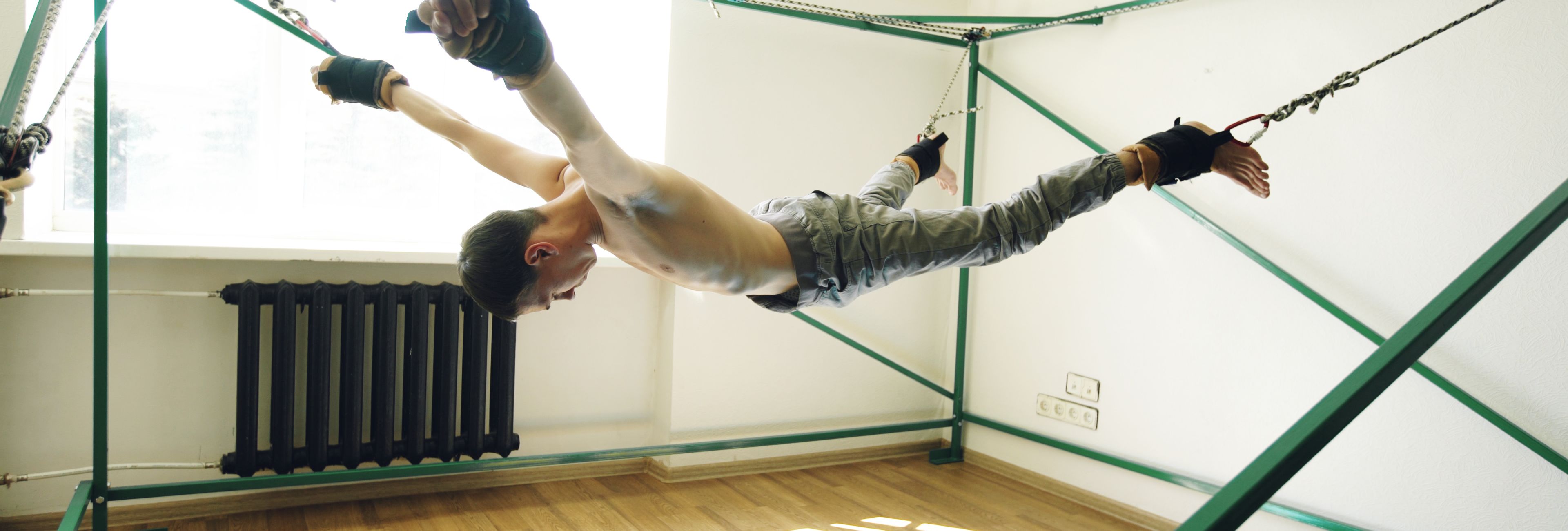
Your Core Training Is Built for Gym Rats, Not Climbers
You are doing crunches. You are doing planks. You are doing Russian twists with a med ball like someone told you that would transfer to your climbing. It will not. At least not in the way you think it will, and here is why your core routine is probably sabotaging your climbing performance instead of supporting it.
Most climbers approach core training like they approach the wall: they imitate what they see other people doing and assume the motion itself is the answer. Planks, sit ups, Russian twists. These are movements that belong in a general fitness context, not a climbing-specific strength context. The core you need for climbing is not the core that looks good on a beach. It is a core that resists extension under load, controls rotation during dynamic movement, and maintains stiffness while your limbs are generating force in every direction simultaneously.
Functional power in climbing comes from a system that transmits force, not generates it. Your legs drive. Your arms hold. Your core maintains position so the chain stays intact. When your core fails under load, you leak power. When it fails during a dynamic move, you swing. When it fails during a static lock off, you barn door. The difference between a climber who can hold a difficult lock off and one who cannot is rarely arm strength. It is almost always core stability. Your anterior core, posterior core, and obliques need to function as an integrated unit that you do not consciously think about during a climb. That only happens with specific, intentional training that transfers to the wall.
This is not a critique of your effort. It is a critique of your specificity. Crunches build hip flexors and load your spine in compression. Planks build endurance in a static position that never exists on a route. Russian twists train rotational speed in a standing position with a resistance profile that has nothing to do with locking off on a vertical wall with your feet far below you. None of these movements are inherently bad. They just do not train what climbing demands from your core. You need training that mirrors the loading patterns, movement demands, and positions you actually encounter on rock and plastic.
The Anti-Extension Foundation: Building a Core That Earns Its Place
Every hard move on a steep wall is a battle against your own body wanting to extend. When you pull hard on a gaston, when you lock off on a side pull, when you press into a slab runout, your spine wants to extend under the load. Your core's first job is to prevent that extension. Not generate it. Not flex. Resist. The climbers who fall off hard moves often do so not because they cannot generate force but because their core collapses under the tension they are applying and their body lengthens just enough to lose the position that was working.
Dead bugs are the foundation of anti-extension core training. Not crunches. Not sit ups. Dead bugs. The movement requires you to maintain contact between your lower back and the floor while alternating arm and leg movement, which forces your anterior core to stay engaged without the help of hip flexor compensation. The key is the quality of the posterior pelvic tilt and the inability to let your lower back lift. If your back comes off the floor, you are no longer training anti-extension. You are training spinal flexion under load, which is not what you need. Keep the pressure. Keep the position. Move slowly.
After you can own the standard dead bug for three sets of 10 per side without losing back position, progress to single arm variations. Driving the arm while maintaining core stiffness trains anti-extension under asymmetrical loading, which mirrors the demands of a single arm lock off on a traverse. Add a pause at full extension to build time under tension, which is the variable most climbers ignore in their core training. Three sets of eight per side with a two second hold at the top. That is the baseline before you move to anything more advanced.
Bird dogs extend this principle and add anti-rotation, which makes them more climbing specific than dead bugs alone. The challenge is maintaining a neutral spine while moving your opposite arm and leg through space. Most climbers will immediately compromise their back position because their posterior chain is weak in this context. This is useful information. You have found a weakness. You are now training it. Single leg bird dogs after the standard variation will expose imbalances between left and right that almost every climber has, and if you have been climbing for more than a year, those imbalances are affecting your performance more than you realize.
Rotational Power: The Movement That Determines Your Dynamic Climb
Your body rotates on every climb. Every time you swing a leg around an arete, every time you press through a heel hook and extend your hip, every time you perform a stem on a boulder problem, you are generating and controlling rotation. If your core cannot manage rotational forces efficiently, you lose energy to movement that does not contribute to upward progress. You also lose position when the wall demands rotation and your engine is not built for it.
The standard cable rotation or band rotation that most gyms have is fine but it trains rotation in isolation from the demands of climbing. What you need is rotation under load with your feet engaged and your center of mass displaced. Pallof presses are the foundation, but they need to be progressed. A standing Pallof press with your feet in a climbing stance forces anti-rotation in a position that is relevant to how your body actually works on a route. Feet shoulder width apart, slight bend in the knees, press the band away from your body while resisting rotation. The key is the resist, not the press. If you are letting the band pull you into rotation, you are training the wrong thing. Three sets of eight per side with a two second hold at full extension.
Once you own the standard Pallof, progress to single leg variations. This is where the transfer to climbing actually happens. Standing on one leg forces your core to manage rotation and maintain balance simultaneously, which is exactly what happens when you press into a foothold with one foot while generating force with your upper body. Three sets of six per side with the hold. Then progress to split stance Pallof presses where the trailing leg is elevated on a step, which forces your core to manage rotation with your center of mass shifted, which is a more accurate simulation of steep terrain.
Rotational lock offs on a tension board or hangboard offer the most specific training available for this system. Set a move where you pull hard and rotate your torso away from the wall, then resist the rotation on the lock off. The key is resisting the momentum, not generating the rotation at speed. Tempo is the variable. Slow eccentric, controlled lock off, maybe a two second pause at maximum tension. Three sets of five per side. This trains your core to maintain stiffness while your upper body is generating force in a dynamically relevant context.
Loaded Carries: The Functional Strength Coach That Climbers Ignore
Loaded carries are underutilized in climbing preparation. Not because they are new. Because they are boring and they do not look impressive in a gym, which means climbers skip them. This is a mistake. The suitcase carry, the overhead carry, the single arm farmer's carry. These are not glamorous movements. They are also some of the most effective transfers to climbing stability that you can train.
The suitcase carry builds lateral core stiffness, which is essential for steep terrain where you are often loading one side of your body while the other side resists. Hold a heavy kettlebell or dumbbell in one hand and walk. Your core will fight you on every step. That fight is the training. Do not let your hips drop. Do not lean away from the load. Maintain a vertical torso. That is harder than it sounds and it gets harder as the weight increases. Start with a weight you can hold for 30 seconds per side and build from there. Three sets of 40 meters per side with the same weight before increasing.
The single arm farmer's carry is more relevant to climbing than the symmetrical carry because it forces anti-rotation and lateral stiffness simultaneously while your legs are working. You are carrying load in one hand while walking, which is a more accurate model for how your core functions when you are locking off on one arm. Pick a weight that allows you to maintain a neutral spine and vertical posture for the full distance. If your posture breaks, the weight is too heavy. Three sets of 50 meters per side.
Overhead carries build tension throughout your entire system. Press the weight overhead in a rack position or locked out position and walk. You will immediately notice how your core braces to manage the load. Climbing requires this kind of global tension during difficult sequences. Train it. Three sets of 30 meters per side. Increase the time under tension by walking slower, which is more effective than increasing weight when your priority is core stability.
Single leg loaded carries are the progression that makes this category most climbing specific. Carry the load in one hand while walking on one leg for the full distance. This eliminates the brace of the planted leg and forces your core to manage everything. Single leg suitcase carries are brutal and highly effective. Three sets of 20 meters per side when you can already own the bilateral version.
The Implementation Protocol: How to Build This Into Your Training Cycle
Your core work should not be separate from your climbing training. It should integrate with it. The worst time to do core is before a climbing session because you are training your core to fatigue before you need it. The best time is after climbing or on non climbing days when your primary objective can be core without interference from climbing-induced fatigue.
Structure your week so that two to three sessions are dedicated to core work on non climbing days or post route days. Post route days are ideal because your technique is already fatigued and your core has to work harder to maintain quality, which adds training volume without adding time. When you are fresh, your core does not have to work as hard to maintain form. When you are pre-fatigued from climbing, the same movement requires more from the system you are training.
On climbing days, keep core work minimal or absent. If you feel a weakness during a session, note it. Address it after the session with specific work that targets the specific deficit. Do not add general core volume on hard climbing days. Your energy needs to go to the wall.
The protocol below is built for climbers who are training four to five days per week and want to build core capacity that transfers to climbing. Three non climbing days dedicated to core and two to three climbing days where core is not trained but may be addressed in post session cool down if a specific weakness was identified.
Day one: Anti-extension work. Dead bugs, bird dogs, single leg bird dogs. Three sets of 10 per side on the standard variations. Three sets of eight with a two second hold on the single leg variations. Quality over volume.
Day two: Rotational work. Pallof presses in the progression described above. Standing, split stance, single leg. Three sets of eight per variation with the hold included. If you have access to a tension board or hangboard, add three sets of five rotational lock offs per side with controlled tempo.
Day three: Loaded carries. Suitcase, farmer's, overhead in the progression described above. Three sets per variation. Walk slower to increase time under tension before increasing load. Single leg variations only when bilateral carries are mastered.
Repeat. Progress by increasing hold time, increasing distance, or decreasing rest intervals before increasing load. Load is last. Stability comes first. If you can only hold the position for 30 seconds, do not add weight. Add time. When you can hold the position for 60 seconds, then add weight.
Your core does not need to be strong in isolation. It needs to be strong when you are already fatigued from pulling, from locking off, from maintaining tension for four minutes on a boulder problem. That is the context. Train the core in that context by keeping the climbing fresh before the core work and training the specific patterns that your climbing demands.
Core training for climbing is not about six pack aesthetics or high rep endurance circuits that leave you unable to walk for two days. It is about building a stiffness engine that keeps your body stable when the wall is trying to extend you, rotates you efficiently when the route demands it, and maintains position when you are generating force from your feet through your legs into your arms. Build that engine. Your climbing will improve because of it.