Climbing Route Reading: How to Visualize the Beta for a First Ascent (2026)
Master the art of climbing route reading to eliminate wasted energy and find the most efficient sequence of moves for any project.
The Fundamentals of Climbing Route Reading
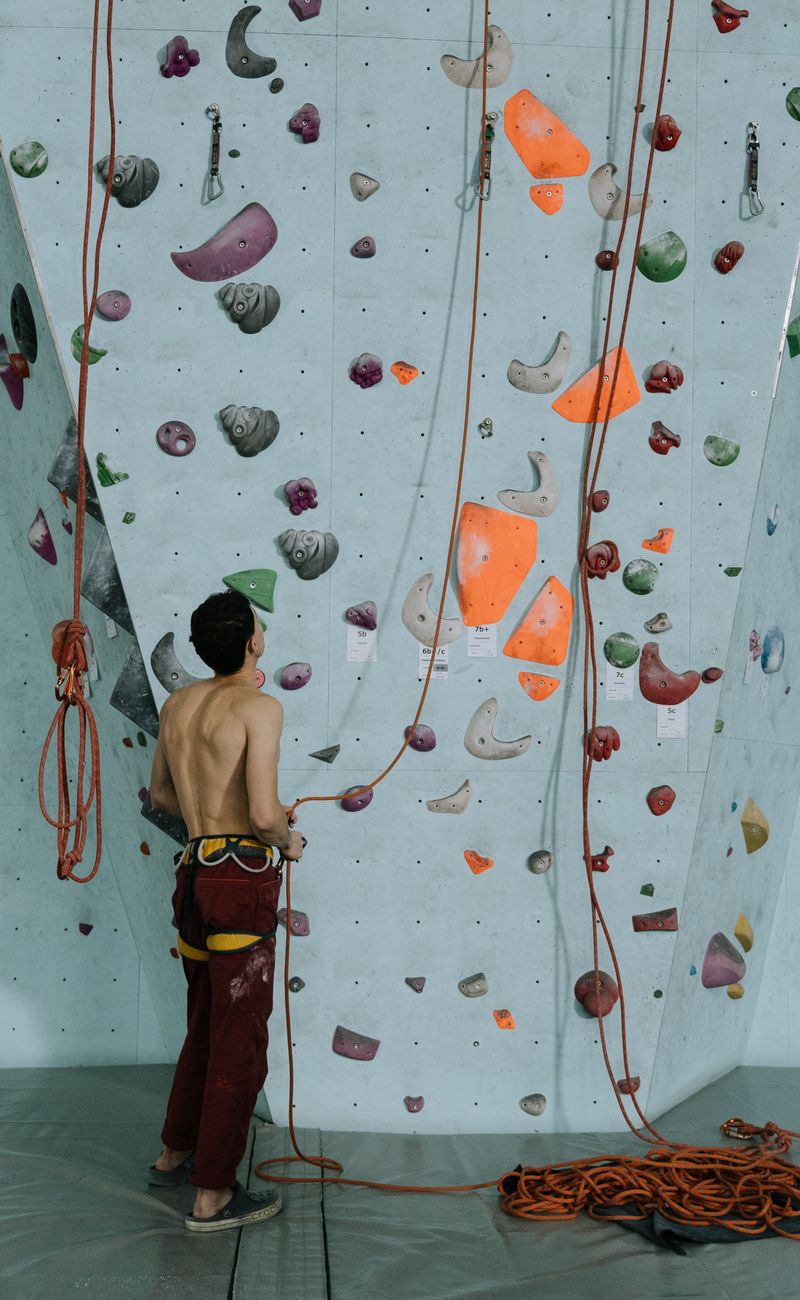
You are standing at the base of a project and you are staring up at a blank wall of rock. Most climbers make the mistake of looking for the holds they want and ignoring the ones that are actually there. They see a crimp they like and they decide that is the move, regardless of whether their center of gravity is positioned to actually use it. This is why you waste energy on the first five moves of a project and find yourself pumped before you even hit the crux. Effective climbing route reading is not about guessing where the holds are. It is about analyzing the geometry of the wall and understanding how your body must interact with that geometry to create stability. You need to stop thinking about holds as isolated points and start thinking about them as anchors for your center of mass.
The first step in professional climbing route reading is to identify the primary line of ascent. This is not always the most obvious path. Often the most intuitive line is a trap that leads you into a position where you are fighting the rock instead of working with it. You must look for the features that suggest a specific body position. A slight outward slope in the rock suggests a hip shift. A vertical crack suggests a jam or a thumb hook. When you are analyzing the route from the ground, you are building a mental map. If that map is vague, your execution will be hesitant. Hesitation on a project is a death sentence for your endurance. You cannot afford to spend three seconds wondering if your foot should be two inches higher. That decision must be made before you leave the ground.
True mastery of climbing route reading requires you to visualize the sequence in reverse. Start at the anchors or the top out and work your way down to the start. This forces you to see the necessary positions for the final moves, which often dictates how you must enter the crux. If you only read from the bottom up, you are merely reacting to the rock. When you read from the top down, you are solving a puzzle. You begin to see the dependencies. You realize that to hit the final jug, your left foot must be on a specific nubbin, which means your previous move must have been a precise deadpoint rather than a slow reach. This reverse engineering is what separates those who project for months from those who send on their second day.
Analyzing Body Position and Center of Gravity
Once you have a general sense of the line, you must apply the physics of climbing route reading to your specific morphology. Your height and reach are constants, but your center of gravity is a variable. The most common error in route reading is failing to account for the hip. Most climbers think in terms of hands and feet, but the send is won or lost in the hips. You need to visualize where your hips will be relative to the wall for every single move. If you are moving toward a hold that is far to the right, your hips should generally move right before your hand does. If you attempt to reach for a hold while your hips are pinned to the wall, you create a lever that pulls you off the rock.
When you are performing climbing route reading, look for the pivot points. Every route has one or two key positions where the entire sequence hinges on a specific balance point. These are the moments where a subtle shift in weight transforms a desperate move into a controlled transition. You must identify these pivots from the ground. Look for the small chips or the slight depressions that allow you to flag or drop a knee. If you ignore these micro features during your initial analysis, you will spend your entire session fighting a losing battle against gravity. The goal is to minimize the amount of force required to stay on the wall, which means maximizing the efficiency of your balance.
Consider the relationship between your points of contact. A common mistake is thinking that more points of contact equals more stability. In reality, the quality of the contact matters more than the quantity. When you are reading a route, ask yourself if a move can be simplified by removing a point of contact. Sometimes a foot that feels secure is actually preventing you from shifting your weight into a more optimal position. This is the paradox of the send. You must be willing to let go of the perceived safety of a hold to achieve the efficiency required for the crux. This level of analysis is only possible if you have spent the time on the ground dissecting the route with a critical eye.
Executing the Mental Map and Refining Beta
The transition from climbing route reading to actual execution is where most climbers fail. They spend twenty minutes analyzing the route and then immediately forget the plan the moment they touch the rock. This happens because they are not visualizing the feeling of the move, only the image of the move. To fix this, you must visualize the tension. Feel the pull of the crimp in your mind. Feel the friction of the smear on your shoe. If you can simulate the physical sensation of the move while standing on the ground, your brain will recognize the position when you are actually in it. This reduces the cognitive load during the climb and allows your subconscious to handle the movement while your conscious mind focuses on breathing and precision.
As you begin your attempts, your initial climbing route reading will inevitably be wrong. This is not a failure; it is the process of data collection. The goal of the first few burns is not to send, but to verify the beta. When you fall, do not just jump off and try again. Stop and analyze why the move failed. Did your foot slip because it was two inches too low? Did you lose your balance because your hip was too far from the wall? This is where the reading moves from the theoretical to the practical. You are now refining the map based on real world feedback. Every fall is a piece of information that allows you to tighten the tolerances of your sequence.
The final stage of the process is the elimination of waste. Once you have a sequence that works, you must look for ways to make it more efficient. This involves questioning every single movement. Do you really need to grip that hold as hard as you are? Can you move your foot slightly to the left to take the pressure off your forearm? This is the advanced application of climbing route reading. You are no longer just looking for a way up; you are looking for the easiest way up. The difference between a struggle and a send is often a matter of three inches of foot placement or a slight adjustment in the angle of your shoulder. If you are not obsessing over these details, you are leaving the send to chance.
Overcoming the Mental Block of Complex Beta
There is a specific kind of frustration that occurs when your climbing route reading tells you a move is possible, but your body refuses to perform it. This is usually not a strength deficit, but a confidence deficit. When the beta is complex, the mind tends to overcomplicate the execution. You start thinking about the three moves that come after the crux instead of focusing on the immediate transition. This creates a mental noise that interferes with your flow. The solution is to compartmentalize the route. Divide the project into distinct sections and treat each section as a separate problem to be solved.
When you encounter a move that feels impossible despite your analysis, go back to the basics of climbing route reading. Strip the move down to its simplest components. Where is the weight? Where is the tension? Often the block is caused by a misunderstanding of the balance. You might be trying to pull when you should be pushing. You might be trying to stay rigid when you should be fluid. By breaking the move down into a series of micro adjustments, you remove the intimidation factor. You stop seeing a scary move and start seeing a series of small, manageable physical requirements.
The final push for the send requires a total commitment to the analyzed beta. There is a dangerous middle ground where you trust the route reading only halfway. You start the move with the planned sequence but then panic and revert to your old habits. This is why you must practice the sequence until it is instinctive. If you have to think about the beta while you are in the crux, you have already lost. The goal is to reach a state where the climbing route reading has been fully integrated into your muscle memory. When you finally move for the send, you are not thinking about the holds or the positions. You are simply executing a plan that you have already proven to be correct. The rock is no longer a mystery; it is a map that you have already memorized.