Outdoor Climbing Trip Planning: The Complete 2026 Guide for First-Timers
Everything you need to know about planning your first outdoor climbing trip, from research and permits to gear checklist and weather windows for 2026.
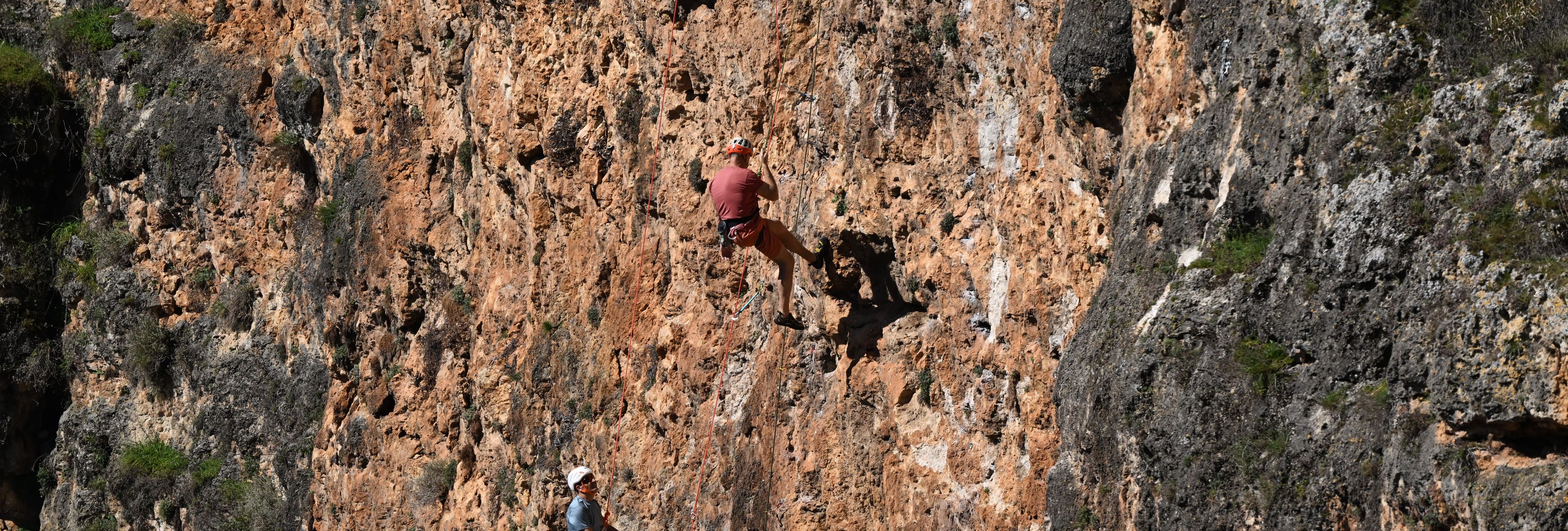
Your First Outdoor Session Is Not About Sending
The single biggest mistake first-time outdoor climbers make is treating their crag day like a gym session with a longer drive. You are not going to the crag to send. You are going to the crag to learn what you do not know. That distinction will save you from poor decisions, bad habits, and the kind of embarrassment that makes experienced climbers shake their heads when you leave. Outdoor climbing operates by a completely different set of rules than indoor climbing. The rock does not grade you. The rock does not reset. The rock just sits there being what it is, and your job is to figure out how to move on it without getting hurt. Your first outdoor trip should be about building awareness, developing new systems, and understanding what you are actually capable of when there are no colored holds to guide you. Set small goals. Toprope something well within your onsight ability. Walk the approach. Study the rock. Watch the local climbers who have been doing this for years. Absorb everything. There will be time for projecting later.
Picking the Right Crag for a First-Timer
Not all crags are created equal for beginners, and choosing poorly will color your entire experience of outdoor climbing. You want a crag with a short approach, good quality rock, reliable conditions, and enough traffic that there are people around who know what they are doing. Sport climbing areas are your best starting point. They have fixed anchors, relatively straightforward bolting, and routes that are well-documented in guidebooks and apps like Mountain Project and The Crag. You do not want to start at a backcountry Trad area where you need to build anchor placements from scratch and navigate talus fields for an hour to reach the wall. That is a different skill set entirely and it will overwhelm you before you have had a chance to figure out what you are doing.
Research your destination thoroughly before you commit to driving there. Read multiple trip reports from the past season. Look at photos of the actual routes you are considering. Check the approach beta because some crags have unmarked trails that wander in ways that make no sense until you have been there. Ideally you would visit with someone who has been to the crag before, but if you are going without that resource, do the research work so you are not showing up blind. Call the local climbing organization if there is one. Many areas have community boards or Facebook groups where you can ask specific questions about current conditions and access issues. Seasonal closures are real and they vary by location. Some cliffs are closed during nesting season for raptors. Some areas have private land agreements that restrict access. Know the rules before you park your car and lace up your shoes.
The ideal first outdoor crag has sport routes in the 5.6 to 5.9 range if you are bouldering V3 or below, 5.9 to 5.10 if you are bouldering V4 to V6, and so on. You want to be climbing at roughly 70 percent of your limit so you can focus on the new variables without white-knuckling every move. Do not pick a crag where you are fighting for every hold. You need mental bandwidth to think about belay stance, rope management, communication signals, and the dozen other things that do not exist inside a gym with padded floors and top-out mats.
The Gear Checklist Your Gym Bag Is Missing
Your gym rack taught you nothing about what you actually need for outdoor climbing. The basic difference is that indoor climbing gives you a controlled environment with staff who manage safety, equipment that gets inspected regularly, and systems that are already built. Outdoor climbing puts all of that responsibility on you. Here is what you actually need beyond your harness, shoes, and chalk bag.
A properly sized rope is not optional. Most gym ropes are 70 or 80 meters. Many outdoor sport routes require 70 meter ropes minimum and some of the newer routing in popular areas goes longer. Know your rope length before you leave the parking lot. A 60 meter rope that was fine at the gym will leave you stranded at the chains on many outdoor routes and that is a serious problem. Check your rope for core shots, flat spots, and any signs of significant sheath slip. If your rope is more than five years old and sees regular use, replace it. Your life depends on that piece of gear in ways that your life inside a gym does not.
You need a quickdraw rack even for toprope if you are eventually going to lead. The number depends on the routes you plan to climb but eight to twelve quickdraws covers most single-pitch sport routes at most crags. Get extra slings because you will use them for anchor setup, extending fixed hardware, and creating personal anchor systems. A personal anchor system is a mandatory piece of safety equipment that too many first-timers skip. This is a tether that allows you to attach yourself to the anchor while you are rapping in or setting up a toprope. Never, under any circumstances, tie into the anchor with your belay loop while you are manipulating the rope or cleaning the route. Your personal anchor is your link to the wall during those moments and without it you are relying on a partner who may not be positioned to catch you.
Other non-negotiable items include a belay device that works with the rope you have, locking carabiners for the anchor, a throw line or tennis ball for rope management on the rappel, a basic nut tool even at sport crags because you will find stuck quickdraws and fixed wires, sunscreen, at least two liters of water per person, and more food than you think you need. Climbing outside burns more calories than climbing inside because the movement is less efficient, the conditions are less controlled, and you are often dealing with approach hiking and technical terrain. Bring real food. Energy bars are fine for the car but you need actual calories during the day.
Reading Conditions and Weather for Outdoor Climbing
Weather is the variable that indoor climbers never have to manage and it will ruin your day faster than anything else if you do not take it seriously. Outdoor climbing requires a working understanding of weather patterns, and not just the temperature forecast on your phone. You need to think about precipitation probability, wind speed and direction, humidity levels, and how those factors change at elevation. The base of a cliff can be 65 degrees and the top of the same route can be 45 degrees with wind chill. Crags that face north stay cool longer in the day and dry out slower after rain. Crags that face south cook in direct sun and become unusable in summer afternoons. Know the orientation of your climbing wall and plan accordingly.
Rain is an automatic rest day. Full stop. Wet rock is dangerous rock and there is no meaningful debate about this in the outdoor climbing community. Sport routes with glue-in bolts are less slippery than traditional cracks but wet holds are wet holds and your friction disappears. The exception is sandstone areas that require specific moisture conditions, but those are specialized situations and not relevant to first-timers at standard sport crags. If there is any chance of precipitation in the forecast, reschedule. This is not being overly cautious. This is the baseline minimum of acceptable risk management.
Temperature is trickier because there are workable windows for most conditions. Summer heat makes smearing on slab feel like walking on glass because your friction is dramatically reduced and your skin is soft from sweat. Winter cold makes finger pads thin and fragile, and cold rock plus cold hands equals a recipe for torn skin and dropped sends. Spring and fall are ideal in most climbing regions but that means crowds at popular crags. You are better off getting up early in the summer heat and climbing the morning shade, or waiting until late afternoon in winter and climbing the areas that catch the last sun. Learn to read your local conditions and adapt your schedule.
The Logistics That Will Make or Break Your Day
Arrive at the crag with enough time to set up properly and never rush your pre-climb checks. Rushing is how people make mistakes that they do not recover from. Give yourself at least 30 minutes of buffer before you plan to start climbing. Use that time to assess the wall, locate your routes, understand the approach to the base, and confirm that your gear is organized and accessible. Walk the entire route from the ground looking up before you climb. Identify where the bolt lines go, where the anchors are located, what the potential hazard zones are below you, and what the rappel path looks like if you need to descend.
Rope management at the crag is a skill that takes practice and it will go wrong your first several times outside. Your rope needs to be flaked cleanly before you clip in for the first time. It needs to run without twists back to the ground when you are lowering. It needs to feed through the anchor cleanly on rappel. When you are rapping off, one person should manage the rappel while the other person checks the system before the first person commits their weight. Communicate clearly. Use standard commands and do not assume your partner knows what you mean by a non-standard call. "On rappel" and "Off rappel" and "Slack" are the three calls you need and they need to be unambiguous.
The walk-off is an option at many sport crags but it is not always the better option. Rapping off is faster and preserves your knees but it requires correct anchor management and rope retrieval. Know which system you are using before you commit to it. Some anchors have chains and require you to thread the rope through. Some have rap rings that you clip with your device. Some have fixed lines that you can just walk down if you are comfortable with exposure. None of these systems are difficult but they all require you to understand them before you are hanging at the top of the route trying to figure out what to do next.
Safety Systems and Why Redundancy Is Not Optional
Your outdoor safety systems need to assume that individual components will fail because that is the only mindset that keeps you alive when the unexpected happens. You have two hands. You should have two independent attachment points to your anchor at all times when you are not in direct physical contact with the rock. When you are tied into the rope and climbing, your harness and belay device are your system. When you are at the anchor and not climbing, your personal anchor and rope system are two separate connections. Never combine these systems in a way that means a single failure removes all your protection.
Belay checks are non-negotiable and you should do them every single time you clip in, even if you have been climbing with the same partner for years. Check that the rope is tied correctly. Check that the belay device is loaded correctly. Check that your partner is actually ready to belay before you step off the ground. These checks take ten seconds and they catch errors that happen more often than you think, especially when you are tired, distracted, or unfamiliar with the environment. The errors that kill climbers are almost always basic errors that the climber knew better than to make but did anyway in a moment of complacency.
Falling at the crag is different from falling at the gym. Inside, you fall onto pads and the worst case is landing weird and twisting an ankle. Outside, you fall onto the ground and the worst case is significantly worse. First-time outdoor climbers often do not understand how to fall safely because they have never had to practice it. You need to learn to fall with your body in a position that protects your head and spine, to land on your feet and roll, and to understand that the fall zone is not always directly below you because rope drag and the geometry of the route can swing you into things. Practice falling on flat ground before you practice falling at the crag. Yes, that sounds ridiculous. Do it anyway.
Climbing Etiquette That Gym Climbers Always Get Wrong
Outdoor crags are shared spaces with fragile ecosystems, historical significance, and social norms that you need to learn quickly to avoid making enemies of the community that you depend on for safety and information. The climbing community at any given crag is a network of people who look out for each other and who will remember you based on whether you respected the place and the people.
Dogma about bolting varies by region and you need to understand the local culture before you drill anything. Many areas have strict rules about where new bolts can be placed and who can place them. Some cliffs are closed to new development. Some areas have ethics around bolt spacing and placement that are not written down anywhere but are deeply felt. Ask before you bolt. Talk to the local climbers. Read the online forums for your area. If you want to leave a permanent mark on a climbing area, make sure you understand what mark you are leaving.
Clean your tick marks if you are climbing in an area where chalk is considered unsightly. Some areas have active stewardship programs where volunteers regularly clean routes and maintain trails. Support those programs. Carry out your trash and carry out other peoples trash when you see it. Do not play music on speakers at the crag. The crag is not a gym and the people there chose to be there for a specific experience that does not include your playlist. If you want to listen to music, use headphones. Keep your voice at a reasonable volume. Be aware of where your group is sitting relative to other parties and do not set up your toprope directly above or below another team without asking.
What Actually Happens Your First Day Outside
Your first outdoor session will be slower than you expect and that is fine. Setting up topropes, managing rope systems, navigating approach trails, and dealing with the mental load of outdoor climbing takes energy and attention that you have never had to spend at the gym. You will climb fewer routes and lower grades than you anticipated and that is the correct outcome. The goal is not to prove anything on your first day. The goal is to build a foundation of competence that lets you come back and do it again.
Your skin will suffer. Outdoor rock is abrasive in ways that gym holds are not and you need to manage it carefully. Tape is your friend on thin skin and skin damage is cumulative over a day. Know when to stop climbing and let your skin recover rather than grinding through painful holds until you have shredded your finger pads and cannot grip anything. Climbing outside is not a race. There is always tomorrow and the day after that. Ruin your skin on day one and you will lose a week of climbing to recovery.
You will make mistakes. You will forget something. You will set up something wrong and have to redo it. You will probably have at least one moment of genuine uncertainty where you are not sure what the right call is. That is normal and expected and it is exactly why your first outdoor experiences need to happen at a crag within your abilities where you have time and space to figure things out. Every experienced climber you see moving confidently at the crag started exactly where you are starting. The difference is that they have made the mistakes already and learned from them.
From Crag Visitor to Crag Regular
The best thing about outdoor climbing is that it never stops teaching you. The rock is different every time you touch it because conditions change, your body changes, your awareness changes, and the relationship you build with a specific wall over time is nothing like the transaction you have with a gym route that you flash in a week and forget. Outdoor climbing will make you a better climber inside the gym because you will develop an understanding of movement, friction, and body positioning that no indoor wall can replicate. It will also make you a more thoughtful and capable partner because you will have to manage real consequences instead of padded floors.
Build your outdoor climbing incrementally. Start with sport topropes at well-traveled crags. Move to leading when you have solid anchor management and rope skills. Eventually consider traditional climbing if it appeals to you because the rope work and protection placement add dimensions to the sport that sport climbing alone cannot provide. Learn to build anchor systems that you trust with your life. Learn to manage gear. Learn to communicate clearly under pressure. These are skills that transfer to every aspect of climbing and they will make you better at all of it.
The crag will become part of who you are if you let it. The people you meet there, the weather you learned to read, the routes you worked through, the moments of fear and focus and movement that only happen when you are actually committed to the rock above your last piece of protection. Outdoor climbing is not just a different way to climb. It is a different relationship with the sport and with yourself as an athlete. Start building that relationship now and do not stop.