Essential Belay Commands for Outdoor Climbing: Stay Safe at the Crag (2026)
Master the critical belay commands every outdoor climber needs to know for safe and effective communication at the crag. This guide covers standard calls, site-specific terminology, and essential protocols for managing risk during multi-pitch and single-pitch outdoor climbing.
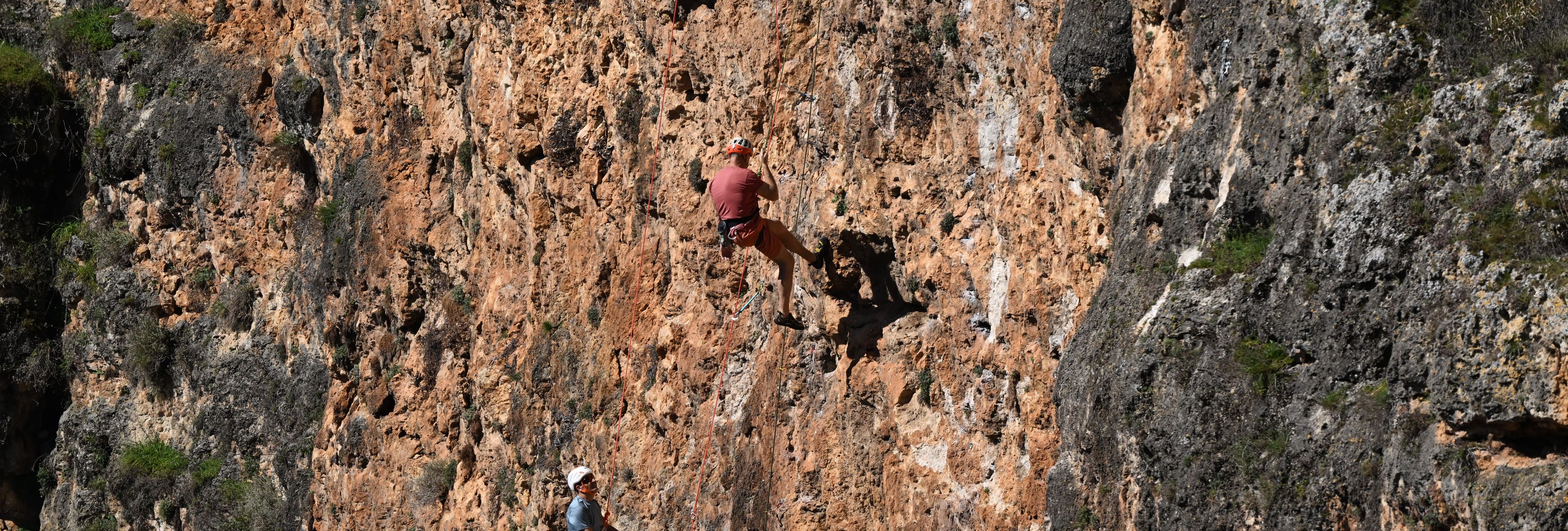
Your Belay Partner Cannot Read Your Mind
Outdoors, the margin for miscommunication is not a gray area. When you are 40 feet off the deck on a runout sport route, the last thing you need is ambiguity between you and your belayer. You need belay commands that land like a punch, that your partner hears clearly the first time, every time. The problem is that most climbers learn indoor climbing commands and assume the same vocabulary works at the crag. It does not. Wind, distance, unfamiliar gear, and mental fatigue change the game entirely. If your standard command set relies on casual phrasing or subtle inflection, you are building your safety system on a cracked foundation.
This is not about being dramatic. This is about the fact that communication failures account for a significant portion of climbing accidents that involve partner error. Not equipment failure. Not rockfall. Partner communication. The commands you use, how you use them, and whether your partner actually hears and acknowledges them are the load-bearing walls of your belay system. Outdoor climbing demands sharper, louder, and more deliberate communication than anything you need inside a gym.
The Non-Negotiable Core Commands
Every belay exchange starts with the same foundation. These are the commands that must be absolute, universal, and unambiguous regardless of what crag you are standing at. If you and your partner have not explicitly agreed on these, your system is broken before you leave the ground.
The first command is the setup. Before you tie in, before you clip the first draw, you establish the system with a check. "Belay on?" is your opener. Your belayer responds "Belay on" only after confirming their device is loaded correctly, the rope is routed properly, and they are ready to take in slack. This is not a formality. This is the last moment to catch a mistake before it becomes a fall. Some climbers skip this because they are excited or because they have done it a thousand times. That is exactly when errors slip through. Treat every single belay setup as if it is the first time you have ever climbed together, because on the day you stop doing that is the day something goes wrong.
"Climbing" is the command you give when you are ready to move. Your belayer responds "Climb" once they have taken in the appropriate amount of slack and are ready to manage your ascent. This seems simple, but the timing matters. If you shout "climbing" while there is a pile of slack between you and your belayer, you are not actually climbing. You are falling with extra steps. The command is only valid when the slack is managed and the belayer is actively engaged. If your partner is fumbling with a snack, checking their phone, or not looking at you, you do not move. You wait. No route is worth bypassing this check.
"Slack" is the command you use when you need more rope. This is not a suggestion. When you call for slack, your belayer should be feeding rope through the device as fast as is safely possible without losing control. If your belayer does not respond immediately and aggressively, you stop moving. A hanging belay with excess slack is not a resting position. It is a liability. In outdoor climbing, you often need quick bursts of slack to clip bolts, especially on technical sequences where you cannot afford to fumble with a stubborn belayer who is feeding rope like they are threading a sewing needle.
"Tension" is the opposite of slack. When you need the rope to go tight, whether to rest, to clip, or to prepare for a fall, you call tension. Your belayer takes in all available slack immediately and locks off. In outdoor climbing, tension is often used to regroup, to chalk up, or to take a controlled rest before a crux sequence. Know the difference between tension and a regular "take" and use the right command for the situation.
"Take" is the command for when you want your belayer to arrest your fall and hold you. This is not subtle. You shout it like you mean it. Your belayer should be ready to lock off the moment they hear it. In outdoor climbing, "take" becomes critical on hard sequences where a slip is likely. You call it before you slip, not after. Calling "take" the split second you feel yourself losing balance gives your belayer reaction time. Calling it after you have already fallen means they are catching you reactively instead of being prepared. The difference in the force generated is substantial.
"Falling" is the command you give when you are falling and did not call take. This is your emergency word. It tells your belayer that the fall is unplanned and they need to lock off immediately without waiting for further instruction. Your belayer should never hesitate when they hear this. The response is instant. Some climbing partnerships use a different word, but "falling" is the most universally understood and requires no translation if you ever need to communicate with a stranger at the crag.
Lower Commands and the End of the Pitch
Getting to the anchors is only half the communication challenge. Getting down safely requires its own vocabulary and more attention than most climbers give it. The lower commands are where outdoor climbing separates itself from indoor climbing in important ways. The rope length is often unknown. The anchors may be two bolts with a fixed rappel station, or they may be a tree and a cam. You do not always know exactly where the end of the rope is until you find it.
"Lower" is the command that initiates your descent. Your belayer confirms they have heard you and begins taking in rope while you control your descent. In outdoor climbing, the critical check before you call lower is confirming the rope is long enough. You do this by finding the end of the rope, not by guessing. Before you call lower, you pull slack until you find the knot at the end of your side of the rope. If there is no knot, you do not lower. You rappel. This is non-negotiable. Climbers have been seriously injured and killed because they called lower on a route where the rope was not long enough, clipped the anchors, and kept lowering until the end of the rope popped through the belay device.
"Rappel" is the command for when you are descending under control on your own gear. Your belayer is not managing your descent in the same way. They may be spot-checking or simply watching. When you rappel, you are responsible for your own safety in the descent. This distinction matters when you are at a multi-pitch anchor and need to get to the ground or the next belay station.
"Off belay" is the command you give once you are safely anchored and no longer need your partner's protection. Your belayer confirms "Belay off" and switches their attention to their own climb or begins packing up. This is another check that often gets skipped in the excitement of sending a route. You do not call off belay until you are physically connected to the anchors with a personal anchor system and have double-checked the connection. Your partner does not take their hands off the rope until they hear your confirmation.
Outdoor-Specific Commands for Wind, Distance, and Multi-Pitch
Indoor climbing trains you in a controlled environment. The walls are short. The air is still. Your belayer is five feet away. Outdoor climbing throws distance, wind, and noise into the equation and expects you to adapt without missing a beat. Your belay commands need to be louder, more deliberate, and sometimes repeated when conditions demand it.
On sport routes where the belay is at the base and you are climbing above, distance is your enemy. A shout that would carry perfectly in a gym will get shredded by wind or eaten by the gap between you and your belayer. The rule outdoors is simple. If you are not sure your belayer heard you, you repeat the command immediately and wait for confirmation. Do not assume. Assume and you are building your safety on hope. If your belayer did not hear "slack" and you start clipping the next bolt with a pile of rope between you, a factor two fall is not outside the realm of possibility.
Multi-pitch climbing adds another layer of complexity because you are not always in visual range. On long pitches, hand signals become part of your communication system. A sharp tug on the rope is often the clearest way to signal "I am at the anchors and need you to come up" or "I need slack." Agree on a tug pattern with your partner before you leave the ground. Two tugs means one thing. Three tugs means another. Four tugs might be an emergency signal. Whatever you decide, write it down mentally and stick to it. Inconsistent tug signals have caused confusion and accidents on multi-pitch routes where verbal communication is impossible.
On rappel, verbal commands are replaced by a tension check. Before you commit to the rappel, you put tension on the rope by leaning back and loading it. You confirm the rope runs cleanly through the rappel anchors and that the ends are equal or that you have found the end if you are rappelling on a single strand. Your belayer or your partner at the bottom should confirm the rope ends are on the ground before you begin descending. This is especially critical when rappelling off fixed anchors where you do not control the rope ends directly.
What Most Climbers Get Wrong
The most common mistake is turning commands into questions. "Slack?" is not a command. It is a request that your belayer may or may not take seriously depending on their interpretation of your tone. "Slack" is a command. You do not ask for the rope you need. You tell your belayer you need it. The same applies to "take." "Take?" sounds like you are asking permission to fall. "Take" is an instruction. Train yourself and your partner to use declarative commands, not interrogative ones.
Another mistake is inconsistent responses. When your partner calls "climbing," you do not just hear it. You respond "climb." When they call "slack," you respond "slack" as you feed rope. This loop is how you know the communication is working both ways. If you are not responding to your partner's commands, they do not know if you heard them. They do not know if the system is active. In high-stress situations, silence on the belay end is terrifying for the climber. Close that loop every time.
A third mistake is assuming the commands you learned in one gym apply everywhere. Belay culture varies. Some areas have local conventions. Some crags have fixed anchors where specific commands are expected. When you climb at a new area, ask around. Watch other climbers at the base. Figure out the local language before you tie in and pull rope. This is not about conformity. It is about safety. If everyone at a crag uses the same command set, you are part of a system where strangers can help each other in emergencies.
The last mistake is treating belay commands as optional once you are comfortable. Competence and complacency look identical until something goes wrong. The climber who has sent 500 pitches and the first-time outdoor climber both need to run the same command checklist before every pitch. The day you decide you are too experienced to call "belay on" is the day you miss a critical check. Stay sharp. Stay loud. Stay deliberate.
Your System Is Only as Strong as Your Worst Command
Outdoor climbing will test your system in ways that indoor climbing cannot prepare you for. Wind that turns your shouts into whispers. Route lengths that put football fields of air between you and your belayer. Anchors that require body positioning adjustments mid-pitch. Your belay commands are the thread that connects you to safety through all of it. If the thread is frayed, if the commands are unclear, if the responses are inconsistent, the system fails when you need it most. Build it right. Use the same commands every time. Respond every time. Check every time. There is no such thing as too careful when the ground is that far away.