Best Trad Climbing Gear for Beginners (2026)
A comprehensive breakdown of essential protection and hardware needed to safely transition from gym climbing to outdoor traditional routes.
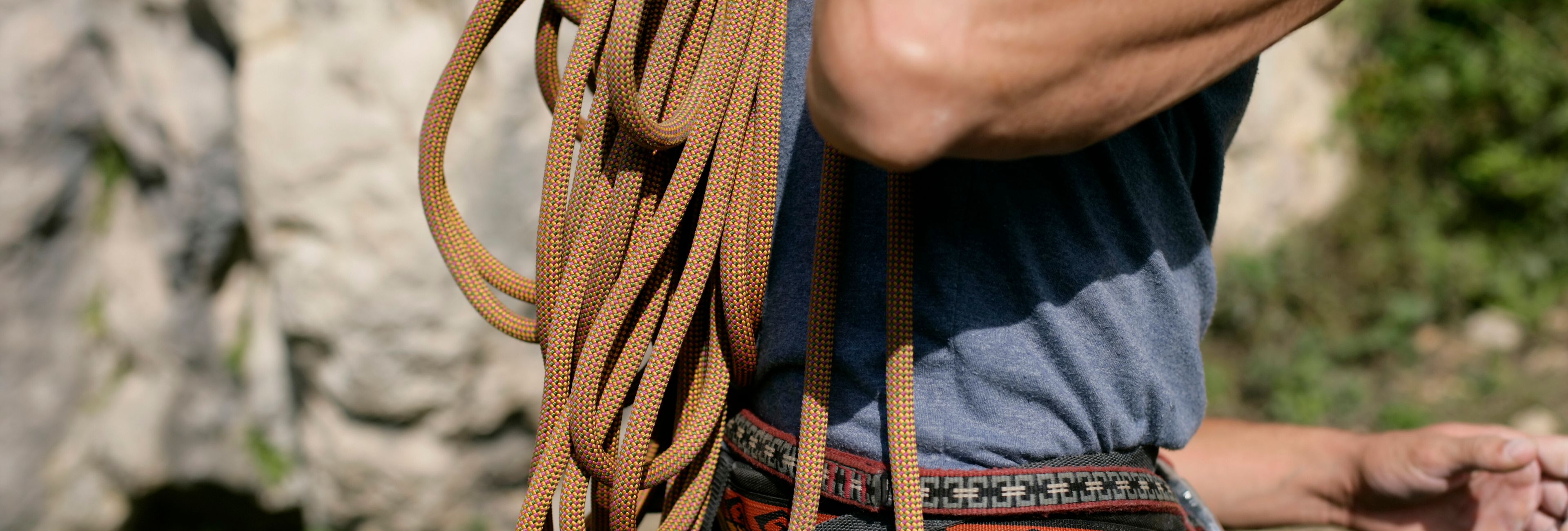
The Truth About Your First Trad Rack
You have spent enough time in the gym. You have the strength to climb the grade, but you have no idea how to protect the line. Transitioning from sport climbing to trad climbing is not about buying a fancy kit and hoping for the best. It is about understanding that your gear is your life support system and a mistake in placement is a mistake in judgment. Most beginners overbuy. They walk into the shop and buy a full set of cams and nuts because a guide told them to, only to find that they only actually use three of them on every single route. You do not need a professional guide rack to start. You need a curated selection of tools that allow you to practice the art of placing gear without spending a thousand dollars before you even know how to tie a Munter hitch.
The goal of your first rack is versatility. You want pieces that fit the most common crack sizes found in your local geography. If you are climbing in the granite of the High Sierras, your needs differ from someone climbing in the sandstone of the Red River Gorge. However, there is a baseline of gear that every single person needs. The focus for a beginner is not on the newest, lightest alloy but on the reliability and ease of use. You need gear that you can place and remove quickly when you are shaking and your heart is hammering against your ribs. When you are forty feet above your last piece of protection, the weight of the gear on your harness matters far less than the confidence you have in the placement.
Your first priority is the set of nuts, also known as stoppers. These are the most cost effective pieces of gear you will ever own. They are passive protection, meaning they do not have a moving mechanism. They rely entirely on the geometry of the rock to hold. For a beginner, a comprehensive set of nuts is the foundation of the rack. They are lightweight and they do not fail due to mechanical malfunctions. If you can master the placement of a nut, you understand the basic physics of how gear stays in a crack. You learn to look for the constriction, the narrowing of the rock where the metal will wedge tight. This is where you develop your eye for the rock, which is a skill that no amount of expensive camming devices can replace.
Then there are the active pro, the spring loaded camming devices. These are the magic tools of trad climbing. They allow you to protect parallel sided cracks where a nut would simply slide out. For a beginner, I recommend starting with a limited set of cams in the most common mid range sizes. You do not need the tiny micro cams that pros use to protect hairline fractures, and you probably do not need the massive cams used for chimneys unless you are specifically targeting those routes. Stick to the gold standard sizes that cover the majority of vertical cracks. The most important part of buying your first cams is ensuring they are from a reputable brand with a proven track record of reliability. You are trusting your life to a few pieces of aluminum and a steel spring. There is no room for budget alternatives when it comes to the primary points of protection.
Finally, you need the connective tissue. This means slings, carabiners, and a high quality belay device. You will need quickdraws, but not the sport climbing variety. You need alpine draws, which are longer and use dyneema or nylon runners to reduce rope drag. Rope drag is the silent killer of a good trad send. If your placements are not perfectly aligned with the direction of travel, a short draw will pull the rope into a zig zag, creating friction that makes the climb feel ten times harder than it actually is. Learning to manage rope drag is part of the learning curve of best trad climbing gear for beginners. You must learn to extend your placements to keep the rope running straight.
Essential Hardware and the Art of Placement
Let us talk about the specific hardware you need to prioritize. Your first set of nuts should be a full range of sizes, usually numbered one through eleven. These are small, wedge shaped pieces of metal on a wire loop. The beauty of nuts is their simplicity. There are no moving parts to break. When you place a nut, you are looking for a bottleneck in the crack. You slide the nut in and give it a sharp tug downward. If it doesn't budge, it is set. The mistake most beginners make is over camming the nut, which means wedging it in too hard. If you hammer a nut into a crack, you might not be able to get it out, or you might actually fracture the rock. The goal is a secure fit, not a permanent installation.
Moving to cams, you should start with a set of four or five mid sized units. These are typically the sizes that fit the average human hand. If a crack is roughly the width of your fingers, a cam is usually the right choice. The mechanical advantage of a cam is that it can be placed in parallel cracks where there is no constriction. The danger here is the walk. If you do not place a cam with the correct tension or if the rock is too slick, the cam can migrate or walk out of the crack as the rope moves. This is why learning the proper retraction of the cam lobes is critical. You want the cam to be seated firmly, but not so retracted that it loses its grip on the rock walls.
Your carabiners should be a mix of locking and non locking. You need locking carabiners for your belay loop and your master point, but for the gear itself, lightweight non locking carabiners are the standard. However, you should invest in a few screw gate lockers for situations where you are building an anchor or if you are worried about a piece of gear shaking loose. The weight difference is negligible compared to the peace of mind they provide. When you are building your first anchor, the simplicity of a locking carabiner removes one more variable from an already stressful equation. You do not want to be wondering if your anchor carabiner accidentally unlocked while you were transitioning to a belay.
Sling material is a point of contention among climbers. You have nylon and you have dyneema. Nylon is heavier and has more stretch, which makes it better for absorbing the force of a fall. Dyneema is incredibly light and strong but has almost no stretch. For a beginner, a mix is best. Use nylon for your primary anchors where you want some elasticity to reduce the peak force on the gear. Use dyneema for your alpine draws to keep the rack weight down. Remember that slings degrade in the sun. UV rays eat the fibers over time. If you find an old sling in your bag from five years ago, throw it away. It might look fine, but it will fail under load. This is the hidden cost of trad gear: the need for periodic replacement of soft goods.
The belay device you choose should be one you can use for both leading and following. A guide mode device is almost mandatory for trad climbing. These devices allow you to belay from the top of the cliff with a self locking mechanism, which is essential when you are managing a second climber who might be struggling with the gear or the movement. Being able to lock off the rope without holding it with a death grip allows you to focus on the safety of your partner. If you are still using a basic tube style device, it is time to upgrade. The ability to load the climber directly from the device is a safety feature that you cannot afford to ignore when you move outdoors.
Managing the Rack and Rope Systems
Carrying your gear is an art form. If you just clip everything to your harness randomly, you will spend half your time fumbling for the right size nut while your legs are shaking. You need a system. Most trad climbers use gear loops, which are reinforced loops of webbing on the harness. You should organize your cams by size, usually from smallest to largest, and do the same with your nuts. This allows you to reach for a specific size without looking. When you are in the middle of a crux move, you should be able to feel for the 2 inch cam and know exactly where it is. If you have to look down at your harness to find your gear, you are wasting precious energy and mental focus.
The rope you choose for trad climbing should be a dynamic single rope, but you must pay attention to the sheath thickness. Trad climbing involves more abrasion than sport climbing. Your rope is rubbing against granite edges, sandstone flakes, and limestone pockets. A rope with a thicker sheath will last longer and handle the abuse of a multi pitch environment. Do not be tempted by the ultra light ropes used by alpine professionals. Those ropes are for people who know exactly how to manage their rope drag and are willing to sacrifice some durability for weight. As a beginner, you want a rope that can take a beating and still be safe. A 9.5mm to 10mm rope is a solid choice for someone learning the ropes.
Understanding the difference between a lead rope and a half rope is also important. For most beginner trad routes, a single rope is sufficient. However, if you start venturing into longer, more wandering routes, half ropes allow you to reduce rope drag by clipping different pieces of gear with different strands. This is an advanced technique, and you should not worry about it until you have mastered the basics of single rope trad. For now, focus on the fundamentals: a strong belay, a well placed piece of gear, and a clean rope path. If you find yourself fighting the rope more than the rock, your draws are too short or your placements are poorly aligned.
Another critical component of the system is the chalk bag and the approach shoes. It sounds trivial, but if you are wearing sneakers that slide on the approach to the crag, you are starting your day with a failure. Get actual approach shoes with a sticky rubber sole. You will often find yourself climbing a few easy pitches or scrambling over boulders to reach the start of the route. Having shoes that grip the rock ensures you arrive at the base of the climb fresh and safe. Your chalk bag should be secure and not interfere with your movement. Trad climbing requires more hip mobility for stemming and bridging than gym climbing does, so make sure your bag is tucked away and does not get snagged on the rock.
The most overlooked part of the best trad climbing gear for beginners is the helmet. In a gym, a helmet is useless. In the outdoors, it is the most important piece of gear you own. Trad climbing involves moving rock. Even a perfectly placed cam cannot stop a loose pebble from falling from a hundred feet above you. Whether it is a rockfall or a fall of your own where you hit a ledge, a helmet is the only thing between you and a traumatic brain injury. There is no excuse for climbing without a helmet in a trad environment. Get a lightweight, ventilated model that you can wear for hours without getting a headache. If it is uncomfortable, you will be tempted to take it off, and that is exactly when the accident happens.
The Mental Game of Gear Trust
Buying the gear is the easy part. Trusting the gear is where the real work begins. There is a psychological shift that happens when you realize there are no permanent bolts in the wall. You are creating your own safety net as you go. This can lead to a phenomenon called gear panic, where you spend ten minutes placing a single nut because you are terrified it will pull. The only way to overcome this is through repetition and mentorship. You need to place a piece of gear, load it, and see it hold. You need to feel the difference between a piece that is just sitting in the crack and a piece that is truly locked off.
One of the most dangerous mistakes a beginner can make is over trusting a single piece of gear. No single placement is infallible. The strength of a trad system comes from redundancy. This is why we use anchors with multiple points of protection. If one piece fails, the others are there to catch the load. This mindset should extend to your climbing. Do not rely on one giant cam to save you; instead, use a series of well placed, medium sized pieces. This distributes the force of a potential fall and reduces the chance of a catastrophic failure. Learning to read the rock to find these multiple points of stability is what separates a beginner from an intermediate climber.
You will also encounter the concept of the psychological grade versus the technical grade. A route might be a technical 5.8, meaning the moves are easy, but if the gear is sparse or the placements are tricky, it can feel like a 5.10. This is where your gear knowledge becomes a tool for mental management. When you know exactly how a cam works and why it holds, the psychological grade drops. You stop fearing the gear and start focusing on the climbing. This is the ultimate goal of investing in the best trad climbing gear for beginners. It is not about having the most expensive kit; it is about having the tools that give you the confidence to push your limits.
Finally, remember that gear is only as good as the person using it. You can buy the most expensive rack in the world, but if you place a cam upside down or fail to seat a nut, it will not hold. Spend your time practicing placements on easy ground. Take your gear to a boulder and practice putting pieces in and taking them out until the motion becomes second nature. The gear should be an extension of your body, not a distraction. When you stop thinking about how to use the gear and start thinking about how to use the rock, you have officially transitioned from a gym climber to a trad climber.
Stop obsessing over the brand of your cams and start obsessing over the quality of your placements. The gear is just metal and fabric; the skill is in your head and your hands. Get a basic rack, find a mentor who knows the local rock, and get outside. The mountains do not care how much you spent on your gear, they only care if you know how to use it. Put the gear in the rock and commit to the move.