Best Indoor Climbing Warm-Up Routine for 2026
A comprehensive warm-up protocol designed for indoor climbers to boost performance, prevent injuries, and maximize training efficiency.
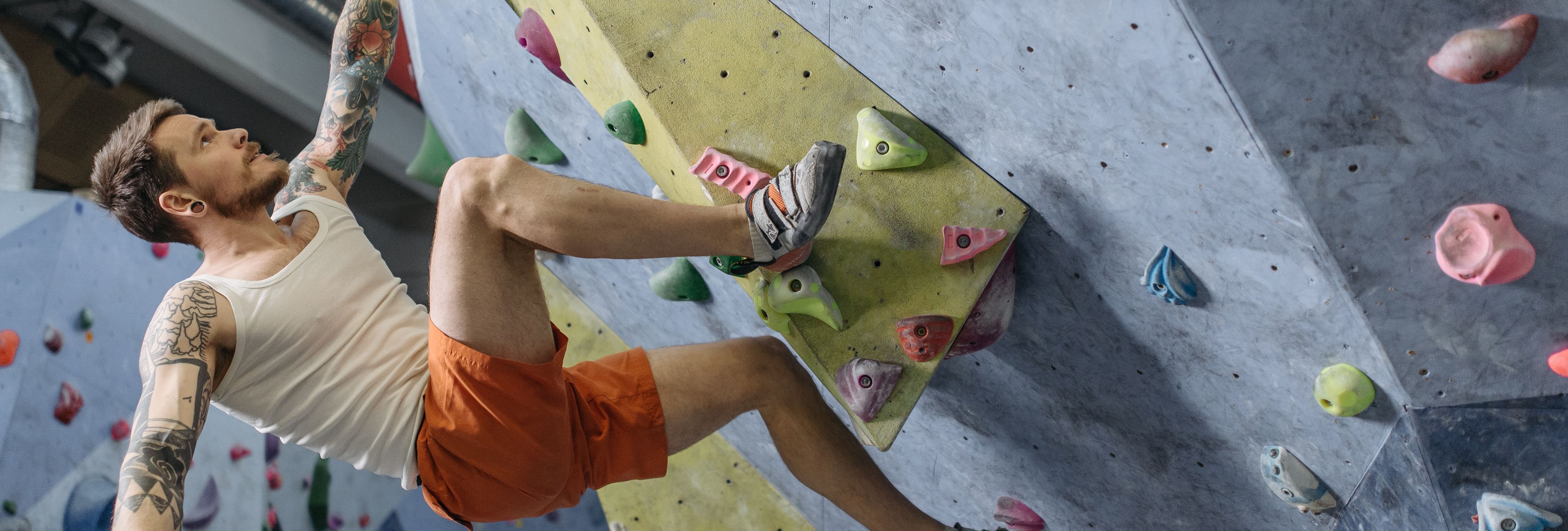
Your Warm-Up Is Holding You Back
You have been climbing for two years. You boulder three times a week. You have done the campus board drills and the antagonist training and the hangboard protocol you found online. You still feel stiff at the start of every session. Your fingers take twenty minutes to feel normal. You are not getting injured, but you are also not progressing at the rate you should be, and the reason is simpler than you think. Your warm-up routine for indoor climbing is garbage. Not bad, not incomplete. Garbage. And most climbers in 2026 are still running the same ineffective five-minute shuffle-and-pull that they cobbled together from watching other people at the gym, and then wondering why they feel like they are climbing in a pool of warm concrete for the first hour of every session.
The warm-up is not optional preparation. It is the first training session of every day. The decisions you make in the first twenty minutes of your climbing session determine how hard you can climb, how long you can sustain effort, and whether you will be able to absorb the training load you are trying to place on your body. A proper indoor climbing warm-up protocol activates the exact tissues you will load, primes the nervous system for precise finger loading, raises muscle temperature to the point where connective tissue becomes compliant, and puts your shoulder complex in a position where it can handle asymmetric loading without compensations. Most climbers skip the first three of those four goals and call it done when they have done some light traversing. The result is a slow-motion talent suppression machine disguised as a climbing routine. Time to fix it.
The Four-Phase Protocol Explained
A complete indoor climbing warm-up for 2026 is not a sequence of climbs. It is a graduated loading program that progresses through four distinct physiological phases, each with a specific purpose, a specific method, and a specific endpoint that you must reach before moving on. Skipping phases or rushing through them is not a time-saving strategy. It is a performance-limiting strategy that costs you more in lost climbing quality than the fifteen extra minutes you think you are saving.
Phase one is general mobility and tissue temperature. This phase lasts eight to twelve minutes and has nothing to do with climbing. You are raising your core body temperature, increasing synovial fluid in your joints, and beginning to increase blood flow to the tissues that will receive load. The best tools for this phase are ropes, light cardio on an elliptical, or a dynamic stretching sequence that includes hip circles, thoracic rotations, ankle mobility work, and shoulder girdle circles. The goal is visible perspiration and a feeling of warmth in your extremities. When your hands feel warm, you have reached the endpoint for phase one. Skipping directly from the parking lot to the bouldering wall is the single most common warm-up error in indoor climbing, and it explains why so many climbers report feeling stiff and disconnected from their first move to their twentieth.
Phase two is specific joint preparation and activation. This phase lasts six to ten minutes and focuses on the joints that bear the most asymmetric load during climbing: the shoulders, the elbows, the wrists, and the fingers. You are not stretching these structures. You are activating the musculature surrounding them so that they can stabilize the joint under load. For the shoulders, perform band pull-aparts, external rotations with a light band, and prone Y-T-W raises on a bench or on the floor. For the elbows and wrists, perform wrist curls with a light dumbbell, wrist extensions, and pronation-supination circles with a cable or band. For the fingers, perform active flexion and extension drills with a light grip, and controlled range-of-motion exercises that take each finger through full flexion and extension. The endpoint for phase two is the ability to perform a full hang from a jug without any sensation of stiffness or hesitation in the finger flexors. If you cannot hang comfortably from a large hold, you have not completed phase two.
Phase three is progressive climbing load. This phase lasts fifteen to twenty-five minutes and is where most climbers make their second-biggest warm-up mistake. They treat phase three as a ramp from easy to hard, which is correct, but they ramp too fast and stop too early. The correct protocol is to spend a minimum of five minutes traversing easy terrain, then move to problems that are three to four grades below your current maximum, then two grades below, then one grade below. At each level, you should complete a minimum of three to four problems before progressing. The reasoning is neurological. The motor patterns required for difficult climbing are not simply stronger versions of the motor patterns for easy climbing. They require a specific activation sequence in the finger flexors, extensors, and stabilizers that takes time to prime. Each problem at each grade level refines that activation sequence. Stopping after two V0s and a V2 means you are sending your nervous system into hard climbing with a rough draft of the motor pattern, not a refined one. The endpoint for phase three is completing three problems at one grade below your current maximum, all with controlled movement and no gripping tension above what the move requires. When you can do this, you are ready for hard climbing.
Phase four is psychological priming and commitment rehearsal. This phase is the most commonly skipped but the most important for performance. Your nervous system is physically ready to climb hard. Your brain is not. Phase four involves visualizing your first hard project, rehearsing the sequences mentally, and then doing a final physical run-through of the critical sections on easy terrain. Spend three to five minutes in this phase. The goal is to arrive at your first hard burn with a clear mental picture of what you are about to attempt, and a physiological arousal state that is neither too flat nor too anxious. This is not visualization fluff. This is motor planning, and it has a measurable effect on the quality of your first several attempts on a project.
Common Mistakes in 2026
The warm-up mistakes that climbers make in 2026 are largely the same mistakes that climbers made in 2016, and the same mistakes they will make in 2036, because most climbers treat warm-up as boring logistics rather than as the first technical skill of the day. Understanding these mistakes will not prevent you from making them, but it will help you recognize when your session is going sideways because of preparation failure rather than fitness failure.
The first mistake is insufficient duration. The average climber spends four to six minutes warming up before attempting hard climbing. That is phase three and nothing else. Phase three cannot do the work of phases one and two. The finger flexors require a specific temperature and blood flow state to handle hard loading without microdamage accumulation. The shoulder complex requires activation work that cannot be replaced by pulling on holds. When you skip phases one and two and go straight to easy climbing, you are asking your body to accomplish the goals of those phases incidentally, through climbing. It partially works. It never works completely. You will always leave performance on the table.
The second mistake is insufficient progression within phase three. Climbers warm up by climbing one V0, one V1, one V2, and then jumping on their project. The grade gap between V2 and your project is too large. Your nervous system is not prepared for the specific loading pattern required by hard climbing when it has only practiced easier versions of that pattern. The solution is to add intermediate grades. If your project is V6, you need to complete three to four problems each at V3, V4, and V5 before you are ready. The time cost is real, but the performance gain is larger. You will send your project faster after a thirty-minute warm-up than you will after a ten-minute one, because you will be climbing it with a nervous system that is actually prepared.
The third mistake is treating the warm-up as separate from the session. Climbers who are most consistent with their warm-up protocols are the ones who understand that the warm-up is the beginning of the session, not the prelude to it. The warm-up is where the training actually starts, because it is where you are establishing the conditions for quality effort. A climber who warms up correctly will climb harder in their first hour than a climber who skips the warm-up will climb in their first three hours, because the second climber is spending their first several burns essentially warming up during the session, which means they are climbing at reduced capacity while accumulating fatigue. The compounding effect over weeks and months is enormous.
The fourth mistake is inconsistent application. You cannot warm up effectively on the days you feel like it and skip it on the days you do not. Your body does not care about your motivation level. The physiological requirements for safe hard climbing are the same whether you are feeling strong or feeling sluggish. A climber who skips the warm-up on sluggish days and performs the full protocol on strong days is creating an injury risk profile that is heavily weighted toward the days they most need the preparation. The protocol must be non-negotiable. It is not a suggestion. It is the minimum requirement for doing what you came to the gym to do.
Modifications for Different Goals
The protocol described above is the comprehensive version. Climbers with different goals and different time constraints can modify it, but only by cutting from the front, never by cutting from the back. Phases one and two can be compressed when time is short, but they cannot be eliminated. Phase three can be shortened when you are specifically training limit bouldering and your session structure calls for fewer burns, but the grade-by-grade progression still matters. Phase four can be reduced to two minutes of mental rehearsal on days when you are bouldering for volume rather than projecting, but eliminating it entirely means you are approaching hard climbing without the psychological readiness that precedes quality effort.
For climbers who are primarily focused on endurance and system board work, phase two should be extended to include more extensive wrist and elbow activation work, because the sustained isometric loading in endurance climbing places unique demands on those structures. For climbers who are primarily focused on finger strength and hangboard training, phase two should be extended to include specific finger activation drills using a finger trainer or light hanging protocol, because the jump from system board to hangboard loading requires a specific readiness state in the finger flexors that is not achieved by climbing alone. For competition climbers, phase four should be expanded to include competition-specific visualization and performance routines that replicate the psychological arousal state required for competing. These modifications do not change the fundamental structure of the protocol. They change the emphasis and duration of specific phases based on the demands of the session.
Age and injury history also modify the protocol. Climbers over thirty-five should extend phase two by five to eight minutes and include more extensive soft tissue preparation for the shoulders and fingers. Climbers with a history of finger or elbow injury should perform specific rehabilitation exercises during phase two and should never progress to phase three until they have achieved full pain-free range of motion in the affected structures. The goal is not to push through discomfort. The goal is to arrive at hard climbing with tissues that are prepared to receive load without compensations. Compensations are how chronic injuries begin, and they begin during the warm-up when you shortcut the preparation in the interest of time.
The Bottom Line
Your warm-up routine is not a box to check. It is the foundation on which every hard session is built. You have been treating it as optional, which is why your fingers take twenty minutes to feel normal, why you climb poorly in your first hour, and why you are not progressing at the rate you should be. The protocol is not complicated. It is four phases, thirty-five to fifty minutes total, and it is non-negotiable on every session. If you do not have thirty-five minutes to warm up, you do not have time to climb. What you have is time to injure yourself on a wall. The fifteen minutes you think you are saving by skipping phases one and two will cost you multiple sessions per month as you recover from the accumulated microdamage that comes from climbing with tissues that are not prepared for load. Performance and longevity are not in conflict. They are both served by the same protocol, and that protocol starts before you touch the wall.