How to Break Through Indoor Climbing Plateaus: The 2026 System That Works
Feeling stuck at the same grade? This proven system helps climbers break through indoor climbing plateaus using targeted technique fixes, smarter training adjustments, and mental strategies that actually deliver results.
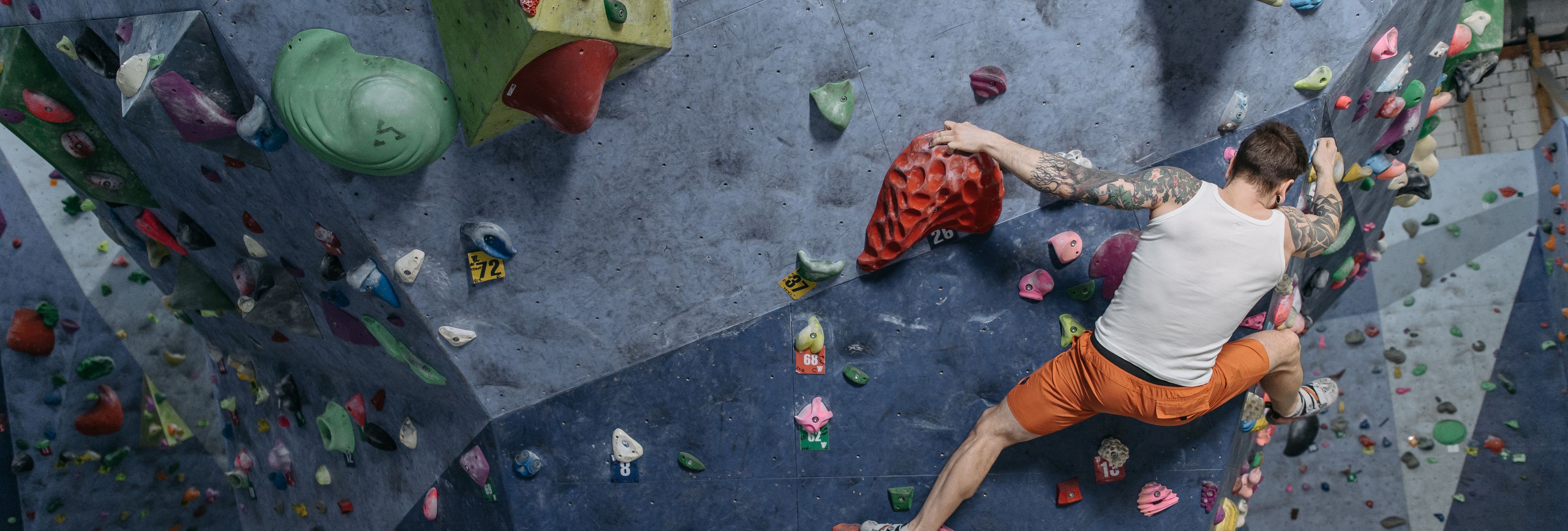
Your Plateau Is Not a Mystery. It Is a Signal.
If you have been climbing the same grade for more than three months, you are not stuck. You are plateauing, and there is a difference. Stuck implies you are lost. Plateauing means your body has adapted to what you are doing and is waiting for you to do something different. Most climbers treat plateauing like a personal failure. They climb harder routes, add more sessions, buy new shoes. None of that works because plateauing is not a motivation problem. It is a stimulus problem. Your training is not providing a novel stress strong enough to force adaptation. Until you change the input, the output will not change.
The 2026 system for breaking through indoor climbing plateaus is not a magic protocol. It is a framework built on three pillars: targeted strength work, intelligent periodization, and the mental commitment to train at your limit without tipping into chronic injury. If you have been climbing four days a week for six months and your max grade has not moved, one of these three pillars is missing or weak. You do not need to climb more. You need to climb with more intent and structure what you do on the wall around what your body actually needs to adapt.
Why Indoor Climbing Plateaus Happen: The Adaptation Problem
Your body does not care about your project. It cares about homeostasis. When you repeat the same movement patterns at the same intensity, your nervous system learns to be efficient at those specific tasks. Efficiency is great for sending your current project. It is terrible for grade progression. The plateau happens precisely because you have gotten good at doing what you already do. To break through, you need to introduce deliberate stressors that push past your current adaptation ceiling.
The most common plateau trap for indoor climbers is volume dependency. You climb a lot, so you assume more volume will break you through. But volume alone does not create strength adaptation. Volume creates work capacity and endurance. If you want to send harder routes, you need to spend meaningful time at the limit of your ability. That means fewer sends, longer rest intervals, and higher intensity on the moves that matter. Your finger pulp, your tendon sheath, and your rate of force development do not respond to casual climbing. They respond to specific, loaded, progressive stress applied over time.
Another factor most climbers ignore is recovery capacity. If you are climbing every day and not making progress, your recovery is likely lagging behind your training stress. You are accumulating fatigue without enough time for your body to supercompensate. The fix is not less climbing. It is smarter scheduling that gives your connective tissue and nervous system adequate recovery between high intensity efforts.
The 2026 Framework: Structure That Forces Adaptation
The 2026 system divides your training week into two distinct stimulus types: limit climbing sessions and accessory strength work. This is not revolutionary. It is the same principle that has driven sport specific training for decades. The difference is how strictly you apply it and how you modulate the intensity across the week.
A limit climbing session is when you work routes or problems at or above your current max grade with full commitment. This means proper warm up, then attempting moves that you cannot currently do, then working sequences until you can link them, then sending if the conditions align. The goal is not to send. The goal is to expose your weaknesses under load and force your body to adapt to higher demands. Limit sessions should be no more than two per week, and they should be separated by at least 48 hours of recovery or light movement.
Accessory strength work covers the deficits that limit climbing performance but do not get addressed by climbing alone. Finger strength on a hangboard or system board. Pulling strength through locked off positions. Core tension and anti rotation control. Leg engagement through compression and heel hook positions. Each of these can be trained with targeted exercises outside the wall, and each contributes directly to your ability to hold harder moves longer.
The 2026 system recommends a four day training week structured as follows: one limit climbing session focused on power endurance, one limit climbing session focused on maximum strength, one dedicated hangboard session, and one technique or movement session on moderate terrain. The remaining days are rest or active recovery. This structure ensures you are always providing novel stimulus while allowing adequate recovery between high intensity days.
Hangboard Protocol: The Right Way to Load Your Fingers
If you have been climbing for more than a year and you do not have a structured hangboard protocol, your fingers are your first bottleneck. This is not gatekeeping. It is biomechanics. Your finger flexors are the primary load bearing structures when you grip small holds. If they cannot generate and sustain force, no amount of technique will compensate above a certain grade.
The 2026 hangboard protocol is simple and effective. You perform max hangs twice per week on edge sizes that correspond to your current limit. If you are projecting V5 to V6, train on a 20mm edge. If you are projecting V7 to V8, train on a 14 to 18mm edge. Protocol is 10 seconds on, 50 seconds off, 6 to 8 sets. The weight should be heavy enough that you cannot complete 10 seconds comfortably by the end of the set, but not so heavy that you fail before 6 seconds. Weight selection is personal and changes as you get stronger. This is not a test. It is a training dose.
The mistake most climbers make with hangboarding is inconsistency. They do one session, feel sore, take two weeks off, then wonder why their fingers are not stronger. The protocol works only when applied consistently over months. Your tendon sheath and connective tissue adapt slowly, on the order of 8 to 12 weeks for measurable changes in load tolerance. If you quit after three sessions because you do not feel immediate results, you will plateau indefinitely. Commit to the protocol for a full training cycle before evaluating its effectiveness.
The Mental Game: Commitment Is a Trainable Skill
You can have the strongest fingers and the best power to weight ratio in your gym, and still plateau if you cannot commit to moves above your comfort zone. Fear of falling is not a personality trait. It is a nervous system response that can be trained and managed. The climbers who break through plateaus fastest are not the ones without fear. They are the ones who have learned to act despite fear and to calibrate their risk exposure systematically.
Indoor climbing gives you a controlled environment to practice commitment. When you are working a hard sequence, you have the option to skip the crux and downclimb, or to commit and find out whether your body can actually do the move. Most climbers choose the safer option, reinforce their fear response, and wonder why they cannot send when it counts. The fix is deliberate practice at the edge of your ability with padded falls and a spotter or controlled landing zone. You practice falling safely until falling safely becomes your default response instead of gripping harder and holding on longer.
Another aspect of the mental game is goal specificity. Vague goals like "send harder" do not produce the focused training sessions that drive adaptation. Specific goals like "I will send my current V7 project this session" or "I will hold a one arm lock off for 3 seconds on my right arm" create measurable outcomes you can track and adjust. When you can see your numbers improving over time, the plateau feels temporary rather than permanent.
Periodization: Managing Fatigue Across Weeks and Months
Training without periodization is like driving without a map. You might end up somewhere interesting, but you will waste a lot of time and energy getting there. Periodization is simply the planned variation of training stress across time to maximize adaptation while avoiding overtraining.
The 2026 system uses a three week loading cycle. Week one is moderate intensity and moderate volume. Week two increases intensity and reduces volume. Week three is a deload with reduced volume and intensity. After the deload, you repeat the cycle with a slightly higher baseline. This wave loading pattern prevents accommodation, where your body stops responding to a constant stimulus, and it manages cumulative fatigue that leads to injury.
Within each week, alternate your hard and easy days. If Monday is a limit climbing session, Tuesday should be active recovery or a technique focused easy session. Wednesday might be hangboard work. Thursday is rest or light movement. Friday is your second limit session. Saturday is technique or movement drilling on moderate terrain. Sunday is complete rest. This rhythm gives your nervous system time to recover from high intensity work while maintaining consistent climbing exposure.
Plateau Busters: When You Need a Push Past the Wall
Sometimes the systematic approach is not enough on its own. You need a specific intervention to break past a ceiling that has been stuck for months. The most effective plateau busters are simple, intense, and uncomfortable.
First, try a focused flash or send attempt day where you warm up thoroughly and then spend your entire session attempting to flash problems at your current max grade. The goal is not to send everything. The goal is to practice the focused attention and commitment that flashing requires. Flash attempts at limit grade train a different mental and physical state than working sequences over multiple attempts.
Second, try power endurance intervals. Find a route at your max grade or slightly below, and do 4 by 4 training. Climb the route 4 times in a row with 30 seconds rest between attempts. Rest 5 minutes. Repeat for 2 to 3 rounds. This destroys your forearm endurance and teaches your body to produce force under metabolic stress. It is miserable. It works.
Third, try climbing outside if you have access to outdoor climbing. Indoor climbing develops specific skills that do not always transfer to outdoor climbing, and vice versa. Time spent on real rock will expose technical gaps and mental habits that indoor climbing has masked. Coming back to the gym after a cragging trip, you often find that your movement has improved and hard indoor routes feel more manageable.
The Hard Truth About Plateaus
Nobody breaks through a plateau by doing what they have always done. If you have been climbing the same grades for months and you keep expecting different results, you are not training. You are maintaining. The difference is that maintenance feels comfortable and progression feels hard. Pick hard. That is the only path through a plateau that actually works.